Sie befinden sich hier:
  • CrossAsia.org > Information > CrossAsia Blog
CrossAsia
  • Startseite
  • CrossAsia in Zahlen
  • Erwerbungskonzept
  • CrossAsia Mailingliste
  • CrossAsia Talks
  • CrossAsia Classroom
  • Regionen
  • Newsletter
  • Über CrossAsia
    • FID Asien
    • Datenmanagement
    • Suche
    • Lizenzierung
      • European Asia Licensing Initiative (EALI)
    • Kooperationspartner
    • Sammlung Ost-, Südost- und Zentralasien
    • Virtuelle Fachbibliothek Ost-, Südost- und Zentralasien (2005-2015)
    • Virtuelle Fachbibliothek Südasien (2005-2015)
    • DFG-Projekt: Aufbau einer virtuellen Forschungsumgebung für die Ostasienwissenschaften
  • Menü Menü

Sammlungen

Digitale Ausstellung: Zwischen Identitätsfindung und Spurensuche online

15. Oktober 2026/in Aktuelles, Ausstellungen, Sammlungen, Themenportale/von CrossAsia

Im Jahr 2025 beging die Mongolei das 100-jährige Jubiläum einer eigenen Verfassung. Diese Gelegenheit griffen wir gemeinsam mit Dr. Corff, freier Wissenschaftler, der sich aktuell unter anderem mit der Mongolischen Verfassungsgeschichte beschäftigt, auf und richteten im Oktober 2025 eine Veranstaltung zur Verfassungsgeschichte samt einer kleinen Ausstellung verschiedener Verfassungen aus. Daraus erwuchs die Idee die Ausstellung dauerhaft zur Verfügung zu stellen. Erneut kuratiert von Dr. Corff ist die Ausstellung nun digital verfügbar.

Ausstellung Mongolische Verfassungsgeschichte


Die digitale Ausstellung ist, wie auch die physische, in vier Themenkomplexe unterteilt. Es werden Prachtausgaben, Ausgaben aus der sozialistischen Zeit, Ausgaben der demokratischen Verfassung seit 1992 und Übersetzungen gezeigt. Zu jedem Themenkomplex hat Dr. Corff eine kurze Einleitung beigesteuert. Weitere Informationen finden Sie in der umfangreichen Bibliographie.

https://blog.crossasia.org/wp-content/uploads/2026/08/Mongolische-Verfassungsausstellung-1.png 1080 1920 CrossAsia CrossAsia2026-10-15 10:48:362026-10-15 13:47:52Digitale Ausstellung: Zwischen Identitätsfindung und Spurensuche online

Im Fokus: Buddhistische Unterwelten

9. Oktober 2026/in Aktuelles, Sammlungen, Veranstaltungen/von Antje Ziemer

Wir freuen uns, am Mittwoch, 21. Oktober 2026 von 16-17 Uhr im Rahmen der Stabi-Veranstaltungsreihe „Im Fokus: Auf Entdeckungsreise durch unsere Sammlungen“ einen Einblick in unsere Sammlung zu geben.

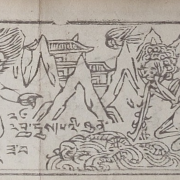
Vorgestellt werden: Buddhistische Unterwelten – Höllenfahrtstexte aus Tibet und der Mongolei 

Die vorgestellten mongolischen und tibetischen Höllenfahrtstexte sind Zeugnisse religiöser Praxis und kulturellen Austauschs. Im Mittelpunkt stehen ihre materielle Beschaffenheit, Produktionstechniken und Sammlungsgeschichten. Von handgeschriebenen Manuskripten bis zu Blockdrucken erzählen die Objekte von Überlieferungswegen, Sammlungskontexten und wissenschaftlicher Erschließung.

Ansprechpartnerin: Antje Ziemer

Termin: Mittwoch, 21. Oktober, 16-17 Uhr

Veranstaltungsort: Staatsbibliothek zu Berlin, Unter den Linden 8, 10117 Berlin, Raum Oxford

Bitte beachten Sie, dass eine Anmeldung erforderlich ist.

Die Veranstaltungsreihe „Im Fokus: Auf Entdeckungsreise durch unsere Sammlungen“ zeigt jeden Monat ein ausgewähltes besonderes Objekt aus den Sammlungen der Staatsbibliothek zu Berlin – von aktueller Buchkunst bis zu gefälschten Zeitungen. In kleiner Runde können Sie die Stücke aus nächster Nähe betrachten und mit unseren Expert:innen ins Gespräch kommen.


Während der Veranstaltung werden Video- und Bildaufnahmen für die Öffentlichkeitsarbeit der Staatsbibliothek zu Berlin angefertigt. Mit Ihrer Anmeldung stimmen Sie der Veröffentlichung zu nichtkommerziellen Zwecken zu.


https://blog.crossasia.org/wp-content/uploads/2026/10/Im-Fokus-.png 1080 1920 Antje Ziemer Antje Ziemer2026-10-09 13:34:532026-10-09 13:34:53Im Fokus: Buddhistische Unterwelten

Small Forms in a Long Malay Romance: The Berlin Manuscript of Hikayat Dewa Mandu

8. Oktober 2026/in Aktuelles, CrossAsia Stipendiaten, Digitalisierung, Sammlungen/von CrossAsia

Gastbeitrag von Dr. Kris Ramlan 

“Seven of you, and I alone.” With this playful challenge, Angkaran Dewa, companion to the hero of a Malay romance, invites the princess’s attendants to a contest in verse. The princess smiles and urges them to answer. Dang Areka Warna draws her bow across the rebab, a bowed string instrument, and replies with a teasing four-line poem. Music, teasing and verbal skill converge in a few lines of a handwritten copy of the story preserved at the Staatsbibliothek zu Berlin (SBB).

Such exchanges became the focus of my two-month research residency at the SBB in 2026, supported by the Stiftung Preußischer Kulturbesitz Research Grant Programme. In the Berlin manuscript of Hikayat Dewa Mandu, passages of embedded verse allow characters to tease, console, challenge and persuade one another. Yet their presence on the page is uneven. Red marks distinguish some passages of verse, while elsewhere the writing continues in black ink without a clear break. The project therefore examined how verse is made recognisable within prose and how its meaning emerges from the exchanges in which it occurs.

The manuscript and its pantun

My research at the SBB began with a broader study of pantun and syair, two Malay poetic forms commonly composed in quatrains and transmitted through both performance and writing. The programme’s theme, “Small Forms – Between Materiality, Mediality, and Genre”, offered a framework for considering their brevity, portability and manuscript presentation.
Direct work with the collection gradually centred the project on Hikayat Dewa Mandu, SBB Ms. or. fol. 404. In the Malay literary tradition, hikayat refers broadly to prose narratives, often involving royal courts, adventure, romance and encounters with the supernatural. This long romance follows Dewa Mandu through separation, courtship and warfare, including his relationship with the princess Lela Ratna Kumala, before culminating in the recognition of his royal identity and enthronement. Throughout the story, characters repeatedly turn to pantun.
A pantun usually consists of four lines with alternating rhyme. Its opening two lines often present an image from everyday life or the natural world, while the closing two turn towards a thought, feeling or social situation. Sound, suggestion and association connect the two parts. In dialogue, a speaker may also take up a word, image or rhyme from the preceding quatrain and reshape it into a reply.

The story circulated widely across the Malay literary world and beyond. Henri Chambert-Loir’s critical edition (1980) was based principally on one Malay manuscript and comparison with fourteen others, all nineteenth-century witnesses. He considered the story itself much older, possibly reaching back to the fifteenth century. Javanese translations and the Cham verse adaptation Akayet Deva Mano show that the narrative also travelled across languages and literary forms.

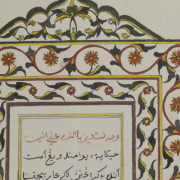
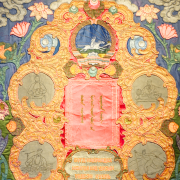
This codex contains 286 numbered pages, preceded by a two-page decorated frontispiece. It is written in Jawi, the Arabic-derived script used for Malay, generally with 21 lines to a page. Its paper bears a watermark dated 1809, providing an earliest possible date for the copying. Neither the scribe nor a completion date is named.

The relationship between the long narrative and the small forms embedded within it became central to the project. A single pantun may condense a feeling, challenge or response, while a sequence can build an extended exchange. Each pantun has a material presence on the page, a voice within the narrative and a recognisable poetic form. In this sense, the Berlin manuscript brings materiality, mediality and genre into close relation.

What the red ink reveals

Chambert-Loir’s critical edition presents the pantun as clearly separated quatrains. In the Berlin manuscript, the visual boundaries are less regular. Verse often continues within the same block of writing as prose. A poetic line need not coincide with a line of manuscript writing, and a quatrain may end without a blank space. The shift from prose to verse can therefore depend on signals beyond layout.

Red ink, or rubrication, provides one set of signals. On page 56, red marks identify parts of a pantun exchange without consistently distinguishing every poetic line. On page 59, the marking is more systematic. A red sign marks each poetic line, although the quatrains remain within the continuous text block.
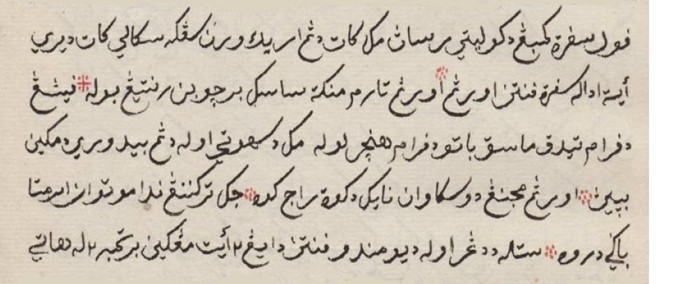
Figure 1. Red marks identify parts of a pantun exchange about remembered longing, but do not consistently distinguish each poetic line. Hikayat Dewa Mandu, Ms. or. fol. 404, p. 56 [image 69], Staatsbibliothek zu Berlin – Preußischer Kulturbesitz. Bracketed image numbers refer to the full digital image sequence. Digital image via Qalamos/Mirador. Detail selected by the author.
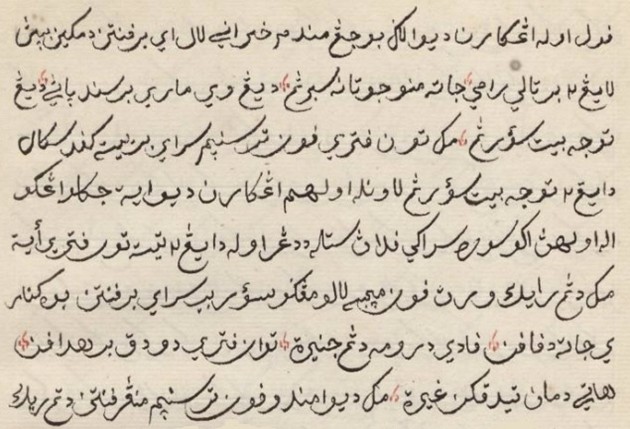
Figure 2. Red marks distinguish each poetic line in a courtly pantun contest, while the quatrains remain within the continuous text block. Hikayat Dewa Mandu, Ms. or. fol. 404, p. 59 [image 72], Staatsbibliothek zu Berlin – Preußischer Kulturbesitz. Digital image via Qalamos/Mirador. Detail selected by the author.

Elsewhere there is no colour cue. On page 68, an extended exchange of sung pantun is copied entirely in black. Here the turn to verse is signalled by the formal pattern of the quatrains, phrases introducing song and the alternation of speakers.

Red ink also marks prose openings and transitions, so rubrication cannot be treated as a consistent marker of poetry. I compared these passages with two other digitised copies of Hikayat Dewa Mandu and two early witnesses of Hikayat Isma Yatim, another Malay prose narrative rich in embedded verse. In the passages examined, I found no comparable rubrication. This limited comparison cautions against treating the Berlin practice as representative of the wider tradition.

The language used to introduce poetic speech provides another cue. The narrative uses terms such as berpantun (speaking in pantun), bersyair (reciting syair) and bernyanyi (singing), alongside a wider vocabulary of song and stylised speech. Earlier Malay literary terminology was often more fluid and situational than the distinctions familiar from modern literary handbooks. Terms for poetic form, vocal delivery, emotional register and social occasion can overlap without becoming interchangeable. A pantun may therefore remain recognisable from its formal pattern and narrative context even when neither rubrication nor an explicit genre label sets it apart from prose.

A contest in which every word counts

The exchange on page 59 shows why these pantun need to be read as part of a sequence. The Malay passages below follow my transcriptions, with punctuation added. English translations follow each passage. Angkaran Dewa sings.

Layang-layang bertali rami,
Jatuh menuju tanah seberang,
Dayang wai, mari bersindir nyanyi,
Dayang tujuh beta seorang!

A kite with a ramie string,
Falling towards the farther shore,
Come, maidens, trade teasing songs,
Seven of you, and I alone!


At the princess’s encouragement, Dang Areka Warna takes up the challenge.


Buah kenari jatuh di papan,
Padi di rumah Dang Jenirat,
Tuan puteri duduk berhadapan,
Hati di mana tidakkan ghairat?

A kenari fruit falls on the board,
Rice is in Dang Jenirat’s house,
The princess sits here face to face,
What heart would not stir with ardour?


In both quatrains, concrete images in the opening lines lead into the social and emotional situation of the closing couplet. Much of the connection depends on sound and association and is difficult to reproduce in translation. In Angkaran Dewa’s quatrain, for example, seberang (“farther shore”) rhymes with seorang (“alone”).

Dang Areka Warna redirects the challenge. Angkaran Dewa has presented himself as one man facing seven attendants. She turns attention instead to the princess seated before him. The word ghairat (“ardour”) makes that visual and social proximity part of the teasing. As the contest continues, speakers reuse words from preceding quatrains and turn them towards new meanings. In one later reply, Dang Jenirat reuses several words from Angkaran Dewa’s preceding pantun before ending with the mocking question, “Why have you no beard?” The wit depends on memory, quick response and the ability to turn an opponent’s words to a new purpose.

The scene also shows how mediality operates within the narrative. Angkaran Dewa first strikes up a tune, while Dang Areka Warna answers as she plays the rebab. The princess and attendants listen and judge the contest. Written verse is therefore embedded in a scene of voice, music and social interaction. These descriptions of performance help signal poetic speech, but they do not establish how this particular codex was read aloud or whether it functioned as a performance script.

When longing becomes action

and stars illuminate the palace grounds, while a gentle breeze carries the fragrance of flowers. Dewa Mandu, separated from Lela Ratna Kumala, begins to sing in an attempt to console himself. His quatrain ends with these lines.

Ayo Allah matikan aku,
Tidak kuasa duduk bercinta.

O God, take my life,
I can no longer bear this longing and sorrow.
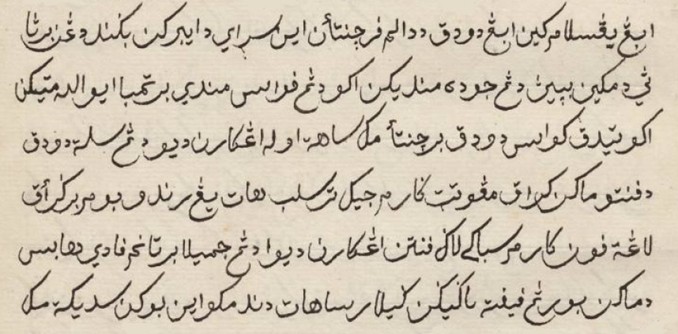
 

Figure 3. A lament and its replies are copied entirely in black ink, with no red marks distinguishing verse from prose. Hikayat Dewa Mandu, Ms. or. fol. 404, p. 68 [image 81], Staatsbibliothek zu Berlin – Preußischer Kulturbesitz. Digital image via Qalamos/Mirador. Detail selected by the author.

Here cinta carries more than the modern sense of romantic love. Muhammad Haji Salleh (2011) notes that in earlier Malay literary usage the word can also convey worry, sadness and unhappiness. In this scene, the surrounding language of rindu (longing), gila (madness) and dendam (deeply lodged longing or hurt) intensifies that sense of distress. Angkaran Dewa answers with two pantun that amplify rather than dispel his companion’s emotion, imagining the earth shaking and the heavens sinking beneath the force of longing. Dewa Mandu then agrees with his companion and moves towards the palace where Lela Ratna Kumala is staying. The sequence turns longing into narrative action.

A different pair of pantun on page 66 brings affection and obligation together.

Hutang emas boleh terbayar,
Hutang kasih seumur hidup.

A debt of gold can be repaid,
A debt of love lasts a lifetime.


 Here kasih is broader than romantic love. It can encompass affection, care and favour, and in this context it also carries an expectation of reciprocation. The next quatrain takes up two lines from the first, including Hutang kasih seumur hidup, and closes by offering body and life in repayment. In the surrounding prose, Lela Ratna Kumala remembers Dewa Mandu’s willingness to risk his life to bring her home. The vocabulary of poetic reply also carries a sense of moral reciprocity. Balas refers to answering the preceding pantun, but it can also express the obligation to repay kasih or budi.

Together, these scenes show why embedded pantun need to be read alongside the speech and action that surround them. Their narrative force often becomes clear through what follows, which may be another pantun, a remembered act, a decision or a bodily response. Even without an answering quatrain, the prose may record the listener’s compassion, tears or bodily reaction.

Extending the Berlin research

During the residency, I transcribed 81 quatrains in 18 exchanges. Further work expanded the corpus to 106 quatrains across 25 episodes. Seventeen episodes involve two or more voices exchanging verse, while eight contain pantun spoken by a single character. The predominance of exchange reinforces the importance of reading each pantun with the speech that prompts it and the response that follows.

I presented the expanded study at the Fourth International Seminar on Malay Manuscripts (SEMALU IV), held at Universiti Kebangsaan Malaysia on 21 July 2026. The paper also examined selected older Malay lexical usages preserved in the manuscript.

The manuscript’s digital images, available through Qalamos and IIIF, also open possibilities for substantial collaborative philological work beyond the reading room. Researchers working in different locations could use the same manuscript images to compare difficult readings, develop transcriptions and annotations, examine older lexical forms and discuss alternative interpretations. Image-linked work could also make editorial decisions more transparent by showing where poetic lines that run together on the manuscript page have been separated in transcription or edition. Comparison with other manuscript copies and language versions could further trace changes in wording, sequence and presentation.

The Berlin research shows what can be obscured when embedded pantun are detached from the manuscript page and the narrative exchanges in which they occur. Modern page layout can obscure features of the manuscript’s presentation, while an isolated quotation can lose the challenge, reply or action that gives it force. Reading the page together with the scene brings those relationships back into view. In Hikayat Dewa Mandu, a four-line pantun can give form to feeling, provoke a reply and redirect an encounter.

I am grateful to the SBB team, especially Claudia Götze-Sam, Tristan Hinkel, Thoralf Hanstein and Heinz-Jürgen Bove, whose guidance and assistance supported this work.


References

Chambert-Loir, Henri. 1980. Hikayat Dewa Mandu: Épopée malaise I. Texte et présentation. Paris: École française d’Extrême-Orient.

Muhammad Haji Salleh. 2011. “In Search of Literary Love in Malay Literature: The Early Stages of Relationship.” Asiatic 5 (2): 17–39.


Frau Dr. Kris Ramlan, Goethe Universität Frankfurt, war im Rahmen des Stipendienprogramms der Stiftung Preußischer Kulturbesitz im Jahr 2026 als Stipendiatin an der Staatsbibliothek zu Berlin. Forschungsprojekt: „Embedded Pantun, Rubrication, and Small Forms in Hikayat Dewa Mandu“

https://blog.crossasia.org/wp-content/uploads/2026/10/Gastbeitrag-Ramlan.png 1080 1920 CrossAsia CrossAsia2026-10-08 10:10:502026-10-08 10:10:50Small Forms in a Long Malay Romance: The Berlin Manuscript of Hikayat Dewa Mandu

Staatsbibliothek zu Berlin | CrossAsia and HKUST Launch Collaboration on Manchu OCR

5. Oktober 2026/in Aktuelles, Digitalisierung, Forschungsdaten, OCR, Sammlungen/von Jing Hu

The Staatsbibliothek zu Berlin | CrossAsia has recently signed a Memorandum of Understanding (MoU) with the Hong Kong University of Science and Technology (HKUST) to collaborate on the OCR processing of its Manchu collection.

A Major Manchu Collection and a New Collaboration

The Staatsbibliothek zu Berlin holds one of the world’s largest Manchu collections, comprising around 550 titles. Following several years of digitization efforts, nearly the entire collection has now been digitized. To date, 406 Manchu works in 584 volumes have been made openly accessible through the Digitized Collections of the Staatsbibliothek zu Berlin. (For a brief history of the collection, see CrossAsia’s Theme Portal about the Manchu Collection.)

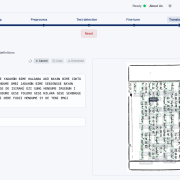
The collaboration with HKUST aims to advance OCR technologies for Manchu materials and thereby enable a wider range of services and research possibilities based on full-text data. The project at HKUST is led by Dr. Michael Yan Hon Chung, Assistant Professor in Digital Humanities at HKUST’s Division of Humanities. As a historian specializing in the early Qing dynasty, Dr. Chung has been developing a Manchu OCR system based on fine-tuned Vision Language Models (VLM). Remarkably, it was the Staatsbibliothek’s digital Manchu collection itself that became the starting point for his exploration into Manchu OCR.

A Research Need Behind Manchu OCR

We interviewed Dr. Chung about how the project began and the development of his Manchu OCR system:

“It is a great pleasure to see the Hong Kong University of Science and Technology (HKUST) and the Staatsbibliothek zu Berlin (SBB) sign a Memorandum of Understanding to advance the digitization and OCR processing of SBB’s substantial collection of Manchu documents. The significance of this collaboration is deeper than it may first appear, for the Manchu OCR project itself began with SBB.

In fall 2023, while conducting research for my doctoral dissertation, I came across the Digitized Collections of the Staatsbibliothek zu Berlin. I was immediately struck by the quality and scale of SBB’s publicly available scans of Manchu materials, including the Manchu version of the Baqi Tongzhi 八旗通志 (Han i araha jakūn gūsai tung jy bithe), which was crucial to my research. Yet I soon realized that I was also lost in the vastness of the collection. With roughly 250 volumes to consult, I needed a computer-assisted method to identify Manchu keywords across large quantities of scanned documents. This was the beginning of the Manchu OCR project.

The first Manchu OCR system, developed in collaboration with Mr. Martin Leong, was modest in scope. It could identify only two Manchu words: poo, meaning “artillery,” and cooha, meaning “army” or “military.” These two terms were chosen specifically for my research on the Hanjun Eight Banners (baqi hanjun). What began as a small, research-driven tool soon grew into a much larger project. With Dr. Donghyeok Choi joining the team, we turned to fine-tuning state-of-the-art machine learning models for Manchu OCR. Two and a half years later, we have developed a general Manchu OCR system that achieves over 96% word-recognition accuracy on woodblock-printed texts and well-written Qing documents and Manchu books. We are now excited to digitize SBB’s Manchu corpus so that it can support keyword search, copy-and-paste access, computational analysis, and other forms of digital humanities research. We also plan to launch a public-facing Manchu OCR web service in the near future.

The Manchu OCR project demonstrates the importance of collaboration among libraries, archives, and universities, especially in the field of digital humanities. Without SBB’s initial digitization work and its decision to make high-quality scans openly accessible, this project would not have taken off. I sincerely hope that this collaboration will become one example among many of how open cooperation between cultural institutions and universities can prepare the humanities for the emerging age of artificial intelligence.”

From Digitized Collections to Full-Text Research

We believe that this collaboration marks an important step toward making Manchu-language sources more accessible to scholars worldwide. As a next step, Dr. Chung plans to make the OCR platform (https://ocr.manchu.ai) publicly available by the end of this year. The OCR output will be integrated into our existing digital collections and made openly accessible to the public. This will enable full-text searching across our Manchu holdings. Full texts will be freely available for download and will significantly improve the usability of these materials for research and teaching.

Meanwhile, we warmly welcome scholars around the world to make use of our open-access digital resources and to explore new possibilities for research through digital methods. We also look forward to further collaborations that advance digital scholarship and foster new connections between libraries, universities, and the wider research community. Please feel free to contact us with any questions or inquiries about potential collaboration!

https://blog.crossasia.org/wp-content/uploads/2026/09/Screenshot-Manchu-OCR.png 828 1305 Jing Hu Jing Hu2026-10-05 15:59:372026-10-05 15:59:37Staatsbibliothek zu Berlin | CrossAsia and HKUST Launch Collaboration on Manchu OCR

Digitalisierte Sammlungen: Photography Database of the National Taipei University of Education und The Tomoe Takagi Collection

9. September 2026/in Aktuelles, Datenbanken, Digitalisierung, Forschungsdaten, Sammlungen, Themenportale/von CrossAsia

[English see below]

Ende August sind zwei neue digitale Bild- und Datenpräsentationen auf CrossAsia online gegangen. Sie erweitern das Portfolio elektronischer Ressourcen zu Taiwan im CrossAsia Datenbankportal um Materialien, die sonst unsichtbar geblieben wären, bereitgestellt unter der Lizenz CC-BY-NC-SA:

Photography Database of the National Taipei University of Education und The Tomoe Takagi Collection.

Mit diesen Neuveröffentlichungen sind nunmehr 10 Projekte auf CrossAsia publiziert, die aus wissenschaftlichen Projekten von Forscher:innen und Forschungsgruppen hervorgegangen sind und in Zusammenarbeit mit dem CrossAsia | FID Asien nun dauerhaft öffentlich zugänglich, sowie auffindbar und durchsuchbar gemacht wurden.

Die von CrossAsia geschaffene Infrastruktur stellt nicht nur die wissenschaftlich annotierten Datensätze für die Forschung bereit, sondern sichert auch die langfristige Bewahrung und Sichtbarkeit dieser Quellen. Wie schon bei den anderen Präsentationen auf Basis von iiif-Manifesten, werden wir auch hier die Manifeste noch als Forschungsdatensatz im CrossAsia OpenAccess Repository publizieren.

Die Fotodatenbank der National Taipei University of Education

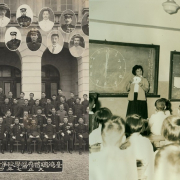
In Kooperation zwischen Prof. Ho I-lin 何義麟 von der National Taipei University of Education (NTUE), Prof. Dr. Christine Moll-Murata von der Ruhr-Universität Bochum (RUB), Prof. Chien Hung-yi 簡宏逸 von der National Cheng Kung University und der Staatsbibliothek zu Berlin (Stabi) wurde eine öffentlich zugängliche Datenbank für historische Fotografien der NTUE geschaffen. Die NTUE ist die älteste moderne Bildungseinrichtung Taiwans, gegründet während der japanischen Kolonialzeit. Als bedeutende Institution der Lehrerbildung hat sie über Jahrzehnte zahlreiche Fotografien des Schul- und Studentenlebens hervorgebracht. Die digitale Fotosammlung umfasst mehr als 3.000 Fotografien aus der Zeit zwischen 1895 bis 1991. Sie dokumentiert unter anderem die Lehrerausbildung, das studentische und akademische Leben, die Organisation der Hochschule sowie ihre Beziehungen zu Institutionen in Taiwan und im Ausland.

Zur digitalisierten Sammlung

Das begleitende Themenportal gibt einen Überblick über das Forschungsprojekt, die Geschichte der NTUE und den wissenschaftlichen Kontext.

Zum Themenportal

The Tomoe Takagi Collection

Einen einzigartigen Einblick in das Leben und Wirken des japanischen Arztes Tomoe Takagi (1858–1943) bietet die zweite neu bereitgestellte Ressource. Takagi war in Japan, Europa und Taiwan aktiv und die historische Sammlung umfasst Fotografien, Postkarten und persönliche Korrespondenzen. Sie beinhaltet auch Fotografien zu bedeutenden diplomatischen Ereignissen dieser Zeit.

Die Datenbank entstand in Kooperation zwischen der Ruhr-Universität Bochum (RUB) und der Stabi. Die Erschließung der Sammlung ist das Ergebnis der Forschung von Dr. Yu-Yin Hsu (RUB) im Rahmen des BMFTR-geförderten Forschungsprojektes Taiwan als Pionier (TAP) in Zusammenarbeit mit Kolleg:innen der Changhua Senior High School in Taiwan, die die Originaldokumente aufbewahrt.

Zur digitalisierten Sammlung


Viel Spaß beim Stöbern!

Ihr CrossAsia Team


At the end of August, two new digital image and data presentations went online on CrossAsia. They expand the portfolio of electronic resources on Taiwan within the CrossAsia database portal to include materials that would otherwise have remained invisible, made available under the CC-BY-NC-SA license:

Photography Database of the National Taipei University of Education and The Tomoe Takagi Collection.

With these new releases, a total of 10 projects have now been published on CrossAsia; these originated from scholarly projects led by researchers and research groups and—through collaboration with CrossAsia | FID Asia —have now been made permanently publicly accessible, discoverable, and searchable.

The infrastructure created by CrossAsia not only makes scholarly annotated datasets available for research but also ensures the long-term preservation and visibility of these sources. As with other presentations based on IIIF manifests, we will also publish the manifests here as a research dataset in the CrossAsia Open Access Repository.

Photography Database of the National Taipei University of Education

A publicly accessible database of historical photographs from the National Taipei University of Education (NTUE) has been created through a collaboration between Prof. Ho I-lin 何義麟 (NTUE), Prof. Dr. Christine Moll-Murata (Ruhr University Bochum/RUB), Prof. Chien Hung-yi 簡宏逸 (National Cheng Kung University), and the Staatsbibliothek zu Berlin (Stabi). The NTUE is Taiwan’s oldest modern educational institution, established during the Japanese colonial period.

As a significant teacher training institution, it has produced numerous photographs of school and student life over the decades. The digital photo collection comprises more than 3,000 photographs spanning the period from 1895 to 1991. It documents, among other things, teacher training, student and academic life, the organization of the institution, and its relationships with institutions in Taiwan and abroad.

Access the digitized collection

The accompanying thematic portal provides an overview of the research project, the history of the NTUE, and the scientific context.

Access the thematic portal

The Tomoe Takagi Collection

The second new resource offers a unique insight into the life and work of the Japanese physician Tomoe Takagi (1858–1943). Takagi was active in Japan, Europe, and Taiwan, and the historical collection comprises photographs, postcards, and personal correspondence. It also includes photographs documenting significant diplomatic events of the era.

The database was created through a collaboration between Ruhr University Bochum (RUB) and the Staatsbibliothek zu Berlin (Stabi). The cataloging of the collection is the result of research conducted by Dr. Yu-Yin Hsu (RUB) as part of the BMFTR-funded research project „Taiwan as a Pioneer“ (TAP), in cooperation with colleagues from Changhua Senior High School in Taiwan, where the original documents are housed.

Access the digitized collection

Please enjoy to explore the new resources!

Yours, CrossAsia Team

https://blog.crossasia.org/wp-content/uploads/2026/09/TAP_NTUE_Blog2.jpg 577 1030 CrossAsia CrossAsia2026-09-09 15:34:152026-09-09 18:41:04Digitalisierte Sammlungen: Photography Database of the National Taipei University of Education und The Tomoe Takagi Collection
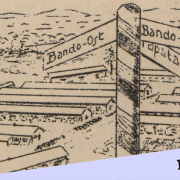
Fremdenführer durch das Kriegsgefangenenlager Bando, Japan : herausgegeben von der Lagerdruckerei Bando gelegentlich der Ankunft der von Kurume nach Bando verlegten Kameraden, August 1918. Krieg 1914/25024. Public Domain 1.0

Im Fokus: Materialien aus dem Kriegsgefangenenlager Bandō (Japan)

20. Mai 2026/in Sammlungen, Veranstaltungen/von CrossAsia

Wir freuen uns, am Mittwoch, 10. Juni 2026 von 16-17 Uhr im Rahmen der Stabi-Veranstaltungsreihe „Im Fokus: Auf Entdeckungsreise durch unsere Sammlungen“ einen Einblick in unsere Sammlung zu geben.

Vorgestellt werden Materialien aus dem Kriegsgefangenenlager Bandō (Japan).

Während des Ersten Weltkriegs befanden sich rund 1000 Deutsche im Lager Bandō (Japan) in japanischer Kriegsgefangenschaft. Sie entwickelten ein vielfältiges Lagerleben mit Theater- und Konzertaufführungen, druckten Zeitungen, betätigten sich sportlich und boten diverse Gewerke im Lager an. Vorgestellt werden ausgewählte Lagerdrucke und Fotos aus dem Bestand der Stabi sowie der Bandō-Sammlung des Deutschen Instituts für Japanstudien (Depositum).

Ansprechpartnerin: Dr. Ursula Flache

Termin: Mittwoch, 10. Juni 2026, 16-17 Uhr

Veranstaltungsort: Staatsbibliothek zu Berlin, Haus Potsdamer Str. 33, 10785 Berlin, Konferenzraum 1

Treffpunkt: am Einlass zum Lesesaal

Bitte beachten Sie, dass eine Anmeldung erforderlich ist.

Die Veranstaltungsreihe „Im Fokus: Auf Entdeckungsreise durch unsere Sammlungen“ zeigt jeden Monat ein ausgewähltes besonderes Objekt aus den Sammlungen der Staatsbibliothek zu Berlin – von aktueller Buchkunst bis zu gefälschten Zeitungen. In kleiner Runde können Sie die Stücke aus nächster Nähe betrachten und mit unseren Expert:innen ins Gespräch kommen.


Während der Veranstaltung werden Video- und Bildaufnahmen für die Öffentlichkeitsarbeit der Staatsbibliothek zu Berlin angefertigt. Mit Ihrer Anmeldung stimmen Sie der Veröffentlichung zu nichtkommerziellen Zwecken zu.


https://blog.crossasia.org/wp-content/uploads/2026/05/Im-Fokus-2026-06-Bando-Blog-_kl.jpg 475 845 CrossAsia CrossAsia2026-05-20 14:27:402026-05-20 14:27:40Im Fokus: Materialien aus dem Kriegsgefangenenlager Bandō (Japan)

Elefanten in der Schatzkammer

18. März 2026/in Aktuelles, Ausstellungen, Digitalisierung, Handschriften, Sammlungen/von Claudia Götze-Sam
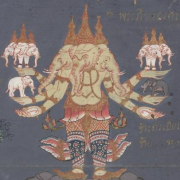
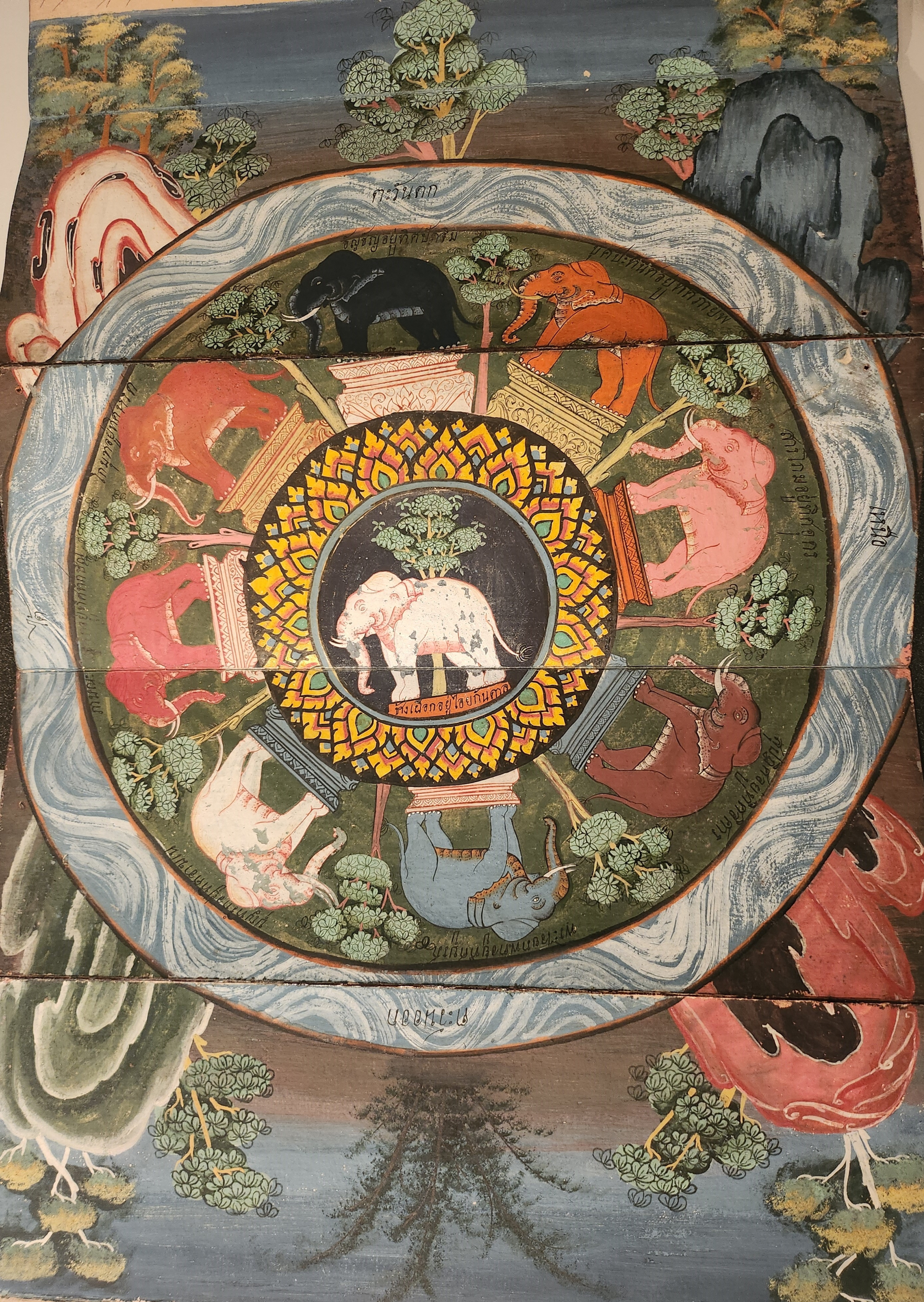
Elefanten der 8 Himmelsrichtungen

Elefanten der 8 Himmelsrichtungen

Die Abhandlung über die Typologie von Elefanten (Hs. or. 6570), eines unserer „Lieblingsstücke“, ist zurzeit in der Schatzkammer des Stabi Kulturwerks zu sehen.

Dieses prachtvolle aus Thailand stammende Leporello hat einen aus hinduistischer Tradition adaptierten Schöpfungsmythos der Elefanten zum Inhalt. Es wurde im Jahr 1819 für König Rama II. (1767-1824) angefertigt. Alle 69 Illustrationen sind kunstvoll und mit vielen Details ausgeführt. Die verschiedenen Elefanten werden in kurzen Texten anhand ihrer Äußerlichkeiten und Charaktere beschrieben.


Die aktuell in der Ausstellung aufgeschlagene Illustration zeigt die Elefanten der 8 Himmelsrichtungen, die nach indischer Mythologie den Wächtern der Himmelsrichtungen dienen. In der Mitte befindet sich ein weißer Elefant, der in der Mythologie als Reittier Indras eine zentrale Rolle spielt. Die Illustration geht über 5 Seiten des Leporellos.


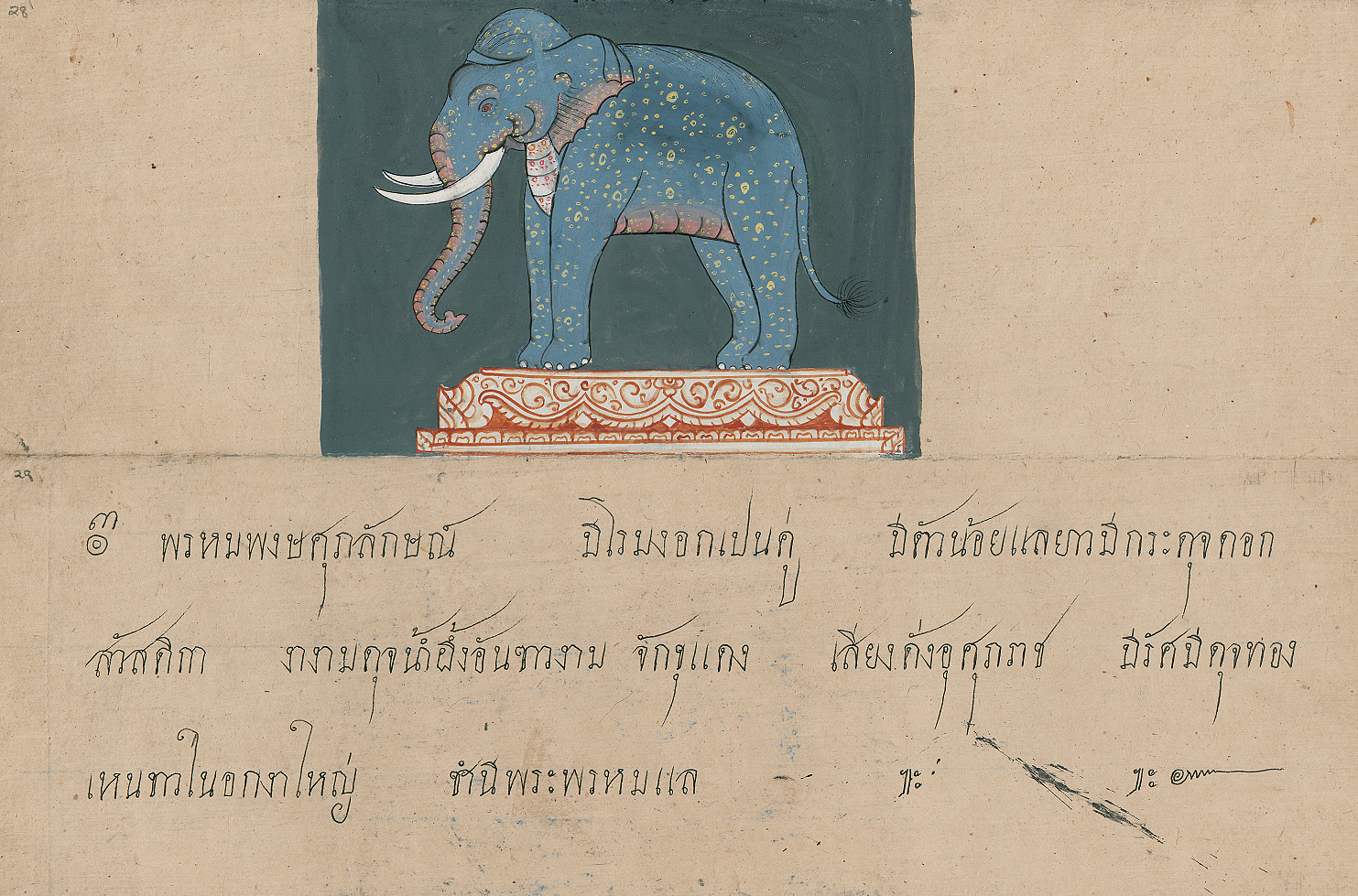
In der digitalisierten Handschrift können Sie selbst blättern und zoomen und weitere schönen Illustrationen entdecken wie zum Beispiel die des Elefanten Brahmapong Suphalak, der im Text wie folgt beschrieben wird: Seine Fellhaare wachsen paarweise. Er hat einen schmalen und langen Körper und Sprenkel, die wie Blumen aussehen. Seine Stoßzähne sind so schön wie glatt gerührter Honig. Die Augen sind rot. Seine Stimme klingt wie die von Usabharaja (Gefährt von Shiva). Er strahlt wie Gold. Seine Brust ist weiß und die Stoßzähne sind groß. Er ist das Gefährt von Brahma.


Elefant Brahmapong Suphalak

Elefant Brahmapong Suphalak

Weiterführende Literatur:

Ginsburg, Henry, Thai manuscript painting, London, 1989

Grabowsky, Volker und Peera Panarut, „Fünf besondere Thai-Manuskripte aus der Sammlung der Staatsbibliothek zu Berlin“, In: Sammellust und Wissensdrang: vier Jahrhunderte Asiatica in Berlin = A passion for collecting, a thirst for knowledge : four centuries of Asiatica in Berlin, herausgegeben von Achim Bonte, Berlin 2024, S. 70-76

Ringis, Rita, Elephants of Thailand in Myth, Art, and Reality, New York 1996


https://blog.crossasia.org/wp-content/uploads/2026/03/Elefanten-Schoepfungsmythos.jpg 406 1027 Claudia Götze-Sam Claudia Götze-Sam2026-03-18 14:31:252026-03-18 14:31:25Elefanten in der Schatzkammer

Von Meridiantheorie bis Marx – eine neue Schenkung von 180 Büchern in Thailändisch

12. Februar 2026/in Aktuelles, Erwerbungen, Newsletter 36, Sammlungen, Services/von Claudia Götze-Sam

Der Staatsbibliothek wurden von der Deutsch-Thailändischen Gesellschaft e.V. Bücher in Thailändisch aus der Sammlung des 2023 verstorbenen aus Thailand stammenden Arztes Dr. Suam Choke Kanokvichitra als Schenkung angeboten. Aus der umfangreichen Sammlung, deren Schwerpunkt erwartungsgemäß im Bereich der Medizin lag, haben wir über 180 Bücher auswählen können, die in unser Erwerbungsprofil passen und unseren Bestand hervorragend ergänzen.

Die ausgewählten Titel umfassen eine außerordentliche Themenvielfalt: Traditionelle Chinesische und Thailändische Medizin, Psychologie, Alterssoziologie, Buddhismus, Politik, Recht, Geschichte, Astrologie, Literatur und Humor, Sprachwissenschaften, Sprachführer, Namenskunde, Musik und Tanz, Übersetzungen von Sigmund Freuds Forschungen zur Psychoanalyse, Das Kapital von Karl Marx, die Bibel, der Koran u.v.m.

Herr Suam Choke Kanokvichitra wurde 1941 in der südthailändischen Provinz Surat Thani geboren und kam als junger Mann 1973 mit einem DAAD-Stipendium nach Deutschland, um Medizin zu studieren. Nach Studium, Facharztausbildung, Promotion und diversen Weiterbildungen (u.a. in Nanjing in Traditioneller Chinesischer Medizin), praktizierte er als Internist, Psychotherapeut und Akupunkturarzt in Hagen.

Techniken der Fußmassage für die Gesundheit (วิธีการนวดเท้าเพื่อสุขภาพ)

Techniken der Fußmassage für die Gesundheit (วิธีการนวดเท้าเพื่อสุขภาพ)

Aus seiner sehr großen Sammlung über westliche Medizin in Thailändisch haben wir exemplarisch nur ca. 20 Titel ausgewählt, da allgemeine Medizin nicht zu unserem bevorzugten Sammelgebiet gehört. Zirka 25 Bücher über Traditionelle Chinesische und Thailändische Medizin zu den Themen Akupunkturtheorie, Akupunkturpunkte, Akupunktur am Ohr, Moxibustion, Meridiantheorie, Akupressur, Schröpfen, Massage, gesundheitliche Fußmassage, Diagnostik, speziell Zungendiagnostik, Kräutermedizin, Schmerzbehandlung ergänzen sehr gut unsere vorhandenen Sammlungen zu der Thematik in verschiedenen Sprachen. Die bedeutendste ist die Sammlung Unschuld, die hunderte von chinesischen medizinischen Handschriften aus dem 16. bis Mitte des 20. Jahrhunderts umfasst.

Neben seinem Beruf als Arzt bildeten die deutsche und die thailändische Sprache einen Interessenschwerpunkt im Leben von Herrn Suam Choke Kanokvichitra. Aus eigener Erfahrung beim Erlernen der schwierigen deutschen Sprache entwickelte er für Thailänder das dreibändige Selbstlernbuch Deutsch für Thai (เยอร

มันฉบับกันเอง), das mit zahlreichen interkulturellen Beispielen aus eigenem Erleben ausgestattet ist und sogar die Erklärung deutscher Schimpfwörter und

Empfehlungen für deren (Nicht-) Gebrauch umfasst. Außerdem ist Herr Suam Choke Kanokvichitra Autor des 872seitigen Wörterbuchs Deutsch-Thai: Grundwortschatz mit Aussprachehilfe (เยอรมัน-ไทย : พจนานุกรมคำศัพท์เบื้องต้น พร้อมด้วยการออกเสียงและภาคผนวก). Aus dem Bereich Sprache/Sprachwissenschaft konnten wir ca. 20 Bücher übernehmen. Besonders interessant sind die Publikationen über thailändische Redewendungen und Fachwortschätze wie z.B. ein Comic für Schüler mit dem Titel Königlicher Wortschatz (คำราชาศัพท์ ฉบับการ์ตูน), in dem sowohl das Sondervokabular für die Kommunikation mit Angehörigen der königlichen Familie als auch mit Mönchen und hohen Beamten erklärt wird. Anhand dieses kleinen Büchleins werden die sehr komplexen hierarchischen Beziehungen in der thailändischen Gesellschaft deutlich.

Weitere ca. 25 Bücher betreffen thematisch den Buddhismus, besonders die buddhistische Praxis und Gebete (teilweise mit Anleitung für das Verhalten der Gläubigen bei Zeremonien). Das Buch Karma verstehen (ความเข้าใจเรื่องกรรม) liefert Antworten auf die Fragen vieler Buddhisten über die Folgen ihres Handelns für ihr gegenwärtiges Leben, denn viele Menschen stellen sich die Frage, wieso einige Menschen trotz schlechter Taten reich, angesehen und berühmt geworden sind, während andere, die viel Gutes getan haben und immer ehrlich waren, in Not und Armut leben (vgl. Vorwo
rt). Der erste Teil des Buches enthält die Erklärung des Karma-Konzepts von Somdet Phra Nyanasamvara Suvaddhana (1913-2013), einem bedeutenden thailändischen Mönch und ehemaligem Oberstern Mönchspatriarch Thailands, und der zweite Teil enthält das Karma-Gesetz, wie es im Tripitaka dargestellt ist. Das Buch Leben, Bewusstsein/Geist, Tod (ชีวิต วิญญาณ ความตาย) wirft die Frage auf, was nach dem Tod geschieht. Die Schilderungen spiritueller Erlebnisse unterschiedlicher Menschen im Zusammenhang mit Tod und Wiedergeburt sollen zum Nachdenken über dieses Thema anregen.

Handbuch für Astrologie und Wahrsagen anhand von Tierkreiszeichen, Geburtstagen, körperlichen Merkmalen wie Leberflecke und Gesichtszüge, Traumdeutung, Kartenlesen, Handlesen. Das Buch enthält auch die „Übungen des Eremiten“ (ฤๅษีดัดตน), einer traditionellen thailändischen Übungsform, die Dehnung, Atmung und Selbstmassage umfasst und dem körperlichen Wohlbefinden dient (ตำราพรหมชาติ ฉบับราษฎร์ ประจำบ้าน ดูด้วยตนเอง).

Handbuch für Astrologie und Wahrsagen anhand von Tierkreiszeichen, Geburtstagen, körperlichen Merkmalen wie Leberflecke und Gesichtszüge, Traumdeutung, Kartenlesen, Handlesen. Das Buch enthält auch die „Übungen des Eremiten“ (ฤๅษีดัดตน), einer traditionellen thailändischen Übungsform, die Dehnung, Atmung und Selbstmassage umfasst und dem körperlichen Wohlbefinden dient (ตำราพรหมชาติ ฉบับราษฎร์ ประจำบ้าน ดูด้วยตนเอง).

Etliche Einzelbände ergänzen unsere bestehenden Sammlungen oder schließen Lücken. Die „Erinnerungsbücher“ (หนังสือ อนุสรณ์งานศพ) für Herrn Phrō̜m Čhunlachāt und Herrn Siri Būranasomphop ergänzen unsere über 400 Bände umfassende Sammlung von Erinnerungsbüchern. Bei dieser spezifisch thailändischen Literaturtradition enthält jedes Buch außer den biografischen Angaben zu der verstorbenen Person, Bilder von der Einäscherungszeremonie und Beileidsbekundungen zusätzlich ganz verschiedene Dokumente. Im Falle von Herrn Phrō̜m Čhunlachāt, einem ehemaligen Direktor einer Handelsschule, sind das Artikel über Nierenerkrankungen und das Khon-Maskentanzdrama (der Verstorbene war Gründer einer bekannten Khon-Maskentanzgruppe) und in dem Fall von Herrn Siri Būranasomphop Artikel über Psychotherapie sowie Aspekte der Anwaltstätigkeit in Thailand und thailändisches Recht.

Der Band Sammlung von Geschichten aus der Drei Freunde-Reihe (รวมเรื่องชุด สามเกลอ) von Preecha Indrapalit ergänzt die bereits zu unserem Bestand gehörenden

Bände dieser beliebten Reihe mit witzigen und satirischen Geschichten über die thailändische Gesellschaft der 1930er bis 1960er Jahre. Die Reihe steht auf der Liste der 100 wichtigen Bücher, die Thailänder lesen sollten.

Hier geht es zu allen 184 Titeln der Schenkung

https://blog.crossasia.org/wp-content/uploads/2026/02/CrossAsia-Blogbeitraege-2025-2.png 1080 1920 Claudia Götze-Sam Claudia Götze-Sam2026-02-12 15:08:082026-02-26 12:54:33Von Meridiantheorie bis Marx – eine neue Schenkung von 180 Büchern in Thailändisch

Kooperatives Erschließungsprojekt für den Nachlass Isrun Engelhardt

4. Februar 2026/in Aktuelles, Newsletter 36, Sammlungen/von Antje Ziemer

(See English below)

Liebe Nutzer:innen,

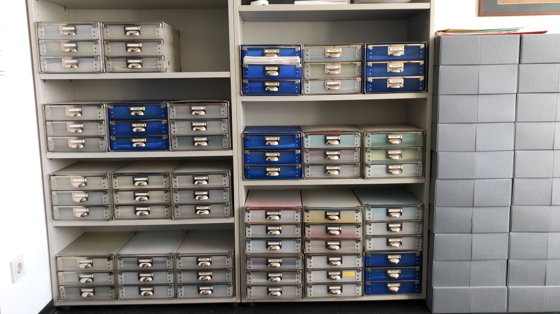
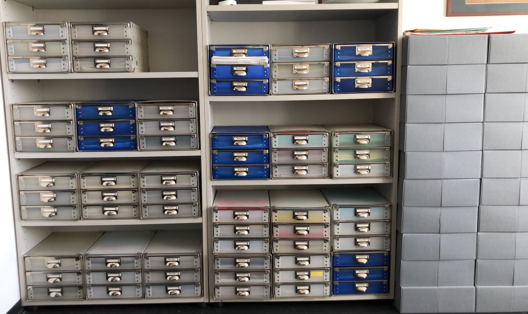
Nachlass von Dr. Engelhardt in den Räumen des IAAW, Copyright (c) Diana Lange

Nachlass von Dr. Engelhardt in den Räumen des IAAW, Copyright Diana Lange

im April 2025 startete ein Erschließungsprojekt zwischen der Ostasienabteilung der Staatsbibliothek zu Berlin und der Professur für Geschichte und Kulturen Zentralasiens am Institut für Asien- und Afrikawissenschaften (IAAW) der Humboldt-Universität zu Berlin. Das Ziel ist die Aufarbeitung des Nachlasses der Tibetologin Isrun Engelhardt (1941-2022) und dessen Vorbereitung für die Übernahme an die Staatsbibliothek zu Berlin. Das Projekt wurde maßgeblich von Prof. Diana Lange und Dr. Bianca Horlemann initiiert, auf deren Vermittlung der Nachlass an die Staatbibliothek gekommen ist.

Die Erschließung wird von zwei studentischen Hilfskräften am IAAW durchgeführt, die sich intensiv mit dem Nachlass auseinandersetzen.  Der Nachlass wird katalogisiert und in Kalliope nachgewiesen. Dabei unterstützt die Abteilung für Handschriften und Historische Drucke der Staatsbibliothek zu Berlin das Projekt mit ihrer umfangreichen Expertise zur Nachlasserschließung.

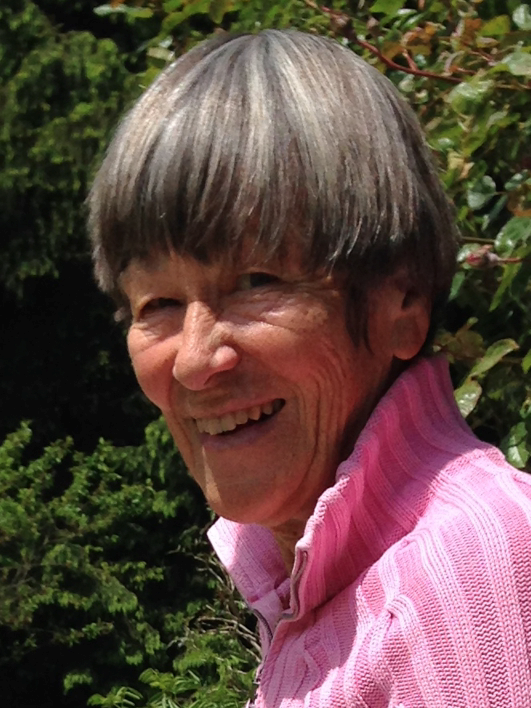
Dr. Isrun Engelhardt; Copyright Prof. Dr. Hans Dietrich Engelhardt

Dr. Isrun Engelhardt (1941-2022) war eine renommierte deutsche Tibetologin und unabhängige Forscherin. Sie promovierte 1974 über byzantinische Mission und wandte sich erst später der Tibetforschung zu, nachdem sie in den 1970er Jahren Nepal und Ladakh bereist hatte. In den frühen 1990er Jahren studierte sie Tibetologie in Bonn. Ihre Hauptforschungsgebiete waren die Schäfer-Expedition nach Tibet (1938-1939), die Kapuziner-Missionen in Tibet und die tibetische Zeitung „Melong“ (1925-1963). Ihre Forschung zu Nikolai Roerich blieb unvollendet und unpubliziert. Engelhardt war für Ihre Großzügigkeit beim Teilen von Quellenmaterial und ihre Hilfsbereitschaft gegenüber Kolleg:innen bekannt. Das ihr Nachlass demnächst erschlossen für die Wissenschaft zur Verfügung steht, kann also als ganz in ihrem Sinne betrachtet werden.

Der Nachlass umfasst umfangreiches Quellenmaterial, darunter Akten, Fotographien und weitere Unterlagen zur Schäfer-Expedition, eine vollständige Kopie des Melong sowie die Quellen für ihre Forschung zu Nikolai Roerich.

Wenn Sie bereits jetzt Interesse haben mit den Materialien aus dem Nachlass von Dr. Engelhardt zu arbeiten, dann wenden Sie sich gern an antje.ziemer@sbb.spk-berlin.de.

Einen umfangreichen Nachruf auf Dr. Engelhardt finden Sie hier.

Informationen zur Professur für Geschichte und Kulturen Zentralasiens der Humboldt-Universität zu Berlin finden Sie hier.

***

Dear users,

Dr Engelhardt’s estate in the rooms of the IAAW, Copyright Diana Lange

In April 2025, a cataloguing project was launched between the East Asian Department of the Staatsbibliothek zu Berlin and the Chair of Central Asian History and Cultures at the Institute for Asian and African Studies (IAAW) at Humboldt University in Berlin. The aim is to process the estate of Tibetologist Isrun Engelhardt (1941-2022) and prepare it for transfer to the Staatsbibliothek zu Berlin. The project was initiated primarily by Prof. Diana Lange and Dr. Bianca Horlemann, through whose mediation the estate came to the State Library.

The cataloguing is being carried out by two student assistants at the IAAW, who are working intensively on the estate. The estate is being catalogued and recorded in Kalliope. The Department of Manuscripts and Early Printed Books at the Staatsbibliothek zu Berlin is supporting the project with its extensive expertise in estate cataloguing.

Dr Isrun Engelhardt; Copyright Prof. Dr Hans Dietrich Engelhardt

Dr. Isrun Engelhardt (1941–2022) was a renowned German Tibetologist and independent researcher. She obtained her doctorate in 1974 with a thesis on Byzantine missions and only turned to Tibetan studies later, after travelling to Nepal and Ladakh in the 1970s. In the early 1990s, she studied Tibetology in Bonn. Her main areas of research were the Schäfer expedition to Tibet (1938-1939), the Capuchin missions in Tibet, and the Tibetan newspaper ‘Melong’ (1925-1963). Her research on Nikolai Roerich remained unfinished and unpublished. Engelhardt was known for her generosity in sharing source material and her helpfulness towards colleagues. The fact that her estate will soon be made available to scholars can therefore be considered entirely in keeping with her wishes.

The estate includes extensive source material, including files, photographs and other documents relating to the Schäfer expedition, a complete copy of Melong, and the sources for her research on Nikolai Roerich.

If you are already interested in working with the materials from Dr Engelhardt’s estate, please contact antje.ziemer@sbb.spk-berlin.de.

A comprehensive obituary for Dr Engelhardt can be found here.

Information on the Chair of History and Cultures of Central Asia at Humboldt University in Berlin can be found here.

https://blog.crossasia.org/wp-content/uploads/2026/01/Nachlass-Engelhardt-1.png 1080 1920 Antje Ziemer Antje Ziemer2026-02-04 12:50:282026-02-26 12:55:08Kooperatives Erschließungsprojekt für den Nachlass Isrun Engelhardt
Fig. 1: View of Bandō’s ‘commercial district’ Tapatau with the camp bakery “Geba” visible. Note the stylistic influence of Japanese woodblock (ukiyo-e) prints. Die Baracke II, no. 22 (25 August 1918). SBB-PK. Bandō-Sammlung A 2-2.

Highlighting a ‘Forgotten’ Perspective on the First World War: German POWs in Japan and the Bandō-Sammlung

23. September 2025/in Aktuelles, CrossAsia Stipendiaten, Newsletter 35, Sammlungen/von CrossAsia

Gastbeitrag von Prof. Sarah Panzer

The staggering quantity of literature on the First World War can give rise to the mistaken impression that scholars have already said all that there is to say on the topic, especially in the wake of the many fine publications which emerged out of the centenary commemorations of the conflict. Growing recent interest in the conflict’s global dimensions, as well as the diverse experiences of captivity and internment faced by military prisoners and civilians alike, however, have illuminated new directions for scholars to pursue. Even within this literature, the East Asian front of the First World War has been largely relegated to the status of a historical footnote, a function both of its geographic distance and its brevity, at least militarily.

On 23 August 1914, Japan declared war on Imperial Germany, using its alliance with Great Britain as a convenient pretext in claiming Germany’s colonial possessions in Asia for its own. By mid-October the Japanese Navy successfully occupied German Micronesia and on 7 November the German garrison at Tsingtao (Qingdao) surrendered to the 18th Infantry Division of the Japanese Imperial Army, supported by a symbolic contingent of British troops. The nearly 4,700 German and Austrian servicemen captured at Tsingtao were subsequently transported to the Japanese mainland, where they were housed in a series of temporary camps throughout central Japan. Once it became clear that the war would not be ending as quickly as initially predicted, these camps were replaced by larger, more comfortable facilities intended to mitigate the prisoners’ boredom and loneliness.

Repatriation of the POWs only began in 1919, with the final prisoners returning to Germany (excepting those who chose to remain in Asia) in 1920. Over the course of their five-year captivity, these men produced a significant archival record of their lives in Japan, including camp newspapers, printed objects such as concert programs and postcards, personal diaries and memoirs, and dozens of photographs. The Bandō-Sammlung, held since late 2021 in the Ostasienabteilung of the SBB-PK, sheds invaluable light on a dimension of that conflict which has been so far largely overlooked by researchers outside of Japan.

The Best Camp in the World

Camp Bandō was one of the ‘second generation’ camps opened during the war; it opened in early April 1917 and was officially closed three years later, on 1 April 1920. Located on the island of Shikoku and built to accommodate the prisoners previously held in the camps in Matsuyama, Marugame, and Tokushima, Bandō quickly acquired a reputation as a model camp because of its many well-resourced facilities and opportunities for cultural and social diversion. The camp included living quarters, administrative buildings, kitchens, and baths, as well as two small lakes (one of which was used by the prisoners for boating) and a small ‘commercial district’ with some eighty shops, specializing in everything from bookbinding and photography to furniture construction and musical instrument repair. (Fig. 1) Just outside the camp the prisoners also had access to a large sports complex, which boasted a soccer field, a Turnhalle, and eight tennis courts.

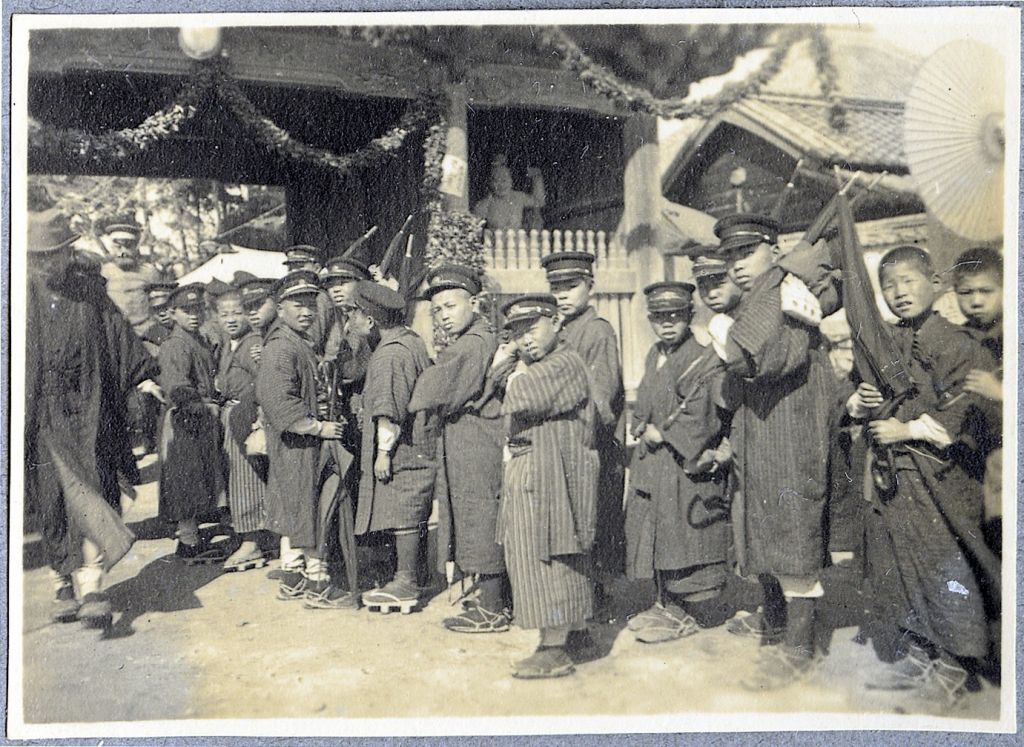
Fig. 2: A group of students waits in line to enter the exhibition of “visual arts and handicrafts” organized by the residents of Bandō POW camp. The exhibition was hosted by the nearby Ryōzenji temple, hence the statue in the center of the image. A no less imposing bearded German soldier is visible on the lefthand side of the photo. SBB-PK. Bandō-Sammlung H 57-07.

Fig. 2: A group of students waits in line to enter the exhibition of “visual arts and handicrafts” organized by the residents of Bandō POW camp. The exhibition was hosted by the nearby Ryōzenji temple, hence the statue in the center of the image. A no less imposing bearded German soldier is visible on the lefthand side of the photo. SBB-PK. Bandō-Sammlung H 57-07.

Even at the time, prisoners referred to Bandō as the “best camp in the world,” and both the camp and its commander—Lieutenant Colonel Toyohisa Matsue—have become synonymous in contemporary popular memory in Japan with a humane and tolerant approach to internment, which facilitated not only a (relatively) pleasant experience for the prisoners themselves, but also a mutually beneficial circuit of cultural and intellectual exchange between the German prisoners and their Japanese neighbors. One striking example was the exhibition of “visual arts and handicrafts” organized by Bandō’s residents in March 1918. Visitors could peruse the works on display—which included everything from oil paintings to technical models to taxidermied local birds—at their leisure or receive a guided tour by a prisoner-translator, visit one of the concession stands and sample ‘authentic’ German baked goods, try their luck at one of the carnival games operated by the prisoners outside, or simply relax and listen to music performed by one of the camp’s multiple ensembles. (Fig. 2) With a reported total attendance of just over 50,000 visitors over twelve days, Bandō’s camp newspaper Die Baracke concluded that the exhibition had been a triumph of cultural diplomacy:

“Thousands of inhabitants of the country which holds us captive have admired the works of German POWs with their own eyes, and hundreds of thousands have heard about them through word of mouth and newspapers. To those who had been repeatedly exposed to the image of the German Barbarian since the beginning of the war, we were able to show them with our exhibit ‘Hie gut Deutschland alleweg!’—Thus, even with our modest resources, we were able to render a service to the Fatherland.”

(Die Baracke I, no. 25 [17 March 1918], 42. SBB-PK. Bandō-Sammlung A 2-1)

This quotation is a useful reminder that, their official status as POWs notwithstanding, the residents of Bandō saw themselves as participants in the ongoing global war. The activities and groups with which they occupied themselves were never simply about staying busy; they were also meant to project an image of German resilience, strength, and cultural superiority meant to function as ‘counter-programming’ to British and French propaganda.

Fighting Vicariously

The POWs held in Japan were avid consumers of news about the war’s progress, militarily and politically. Far from being isolated from the events back in Europe, prisoners were kept up-to-date through regular telegram transmissions—in the case of Bandō, these transmissions were recorded daily and made available to the camp’s residents through a subscription-based bulletin—from New York, London, Paris, and Moscow. German-language media was less consistently available, but newspapers, books and other printed materials shipped from Europe provided prisoners with an invaluable sense of connection to the German war effort. This ongoing interest in the war was, in one sense, eminently practical—although rumors of prisoner swaps or early parole persisted, most recognized that they were ‘stuck’ in Japan until the war ended—but it also speaks to the powerful sense of national unity and purpose which emerged in German-speaking Europe during the First World War.

Die Baracke featured monthly articles summarizing the major battles, personalities, and strategic developments on the war’s various fronts, as well as significant political events like the October Revolution in Russia. Likewise, President Woodrow Wilson’s public comments and speeches denouncing German autocracy and claiming that the US was fighting to secure a just and lasting peace for the peoples of the world, was met with scathing commentary in the pages of Die Baracke, with one article sarcastically responding, point-by-point, to Wilson’s rhetoric:

“‘America refuses to impose its will by exploiting the weakness and internal unrest of other countries.’

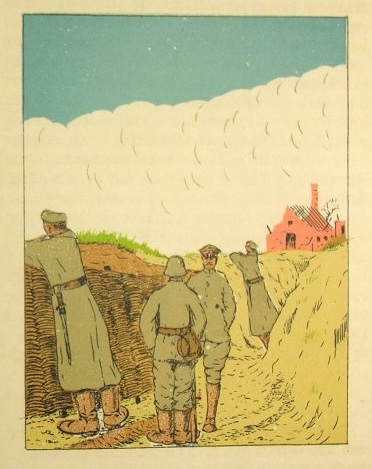
Fig. 3: Illustration of German trenches on the Western Front. The almost bucolic scene betrays the illustrator’s lack of familiarity with the realities of trench warfare. Drei Märchen von E. Behr. SBB-PK. Bandō-Sammlung B 06.

But you should not have said that Herr Professor… Mr. President! Or has your noble life’s work, the study and destruction of brutal German militarism, so completely occupied you that you have never heard of the Spanish-American War – it was in 1898? Your high-minded country has its own delicate American militarism, which was quite involved at the time ‘exploiting the weakness of other countries,’ to thank for the not quite so independent, rich island of Cuba and the likewise not entirely poor, not entirely independent Philippines.”

(Die Baracke I, no. 22 [24 February 1918], 13-14. SBB-PK. Bandō-Sammlung A 2-2)

On one level, these articles reflect the appetite for news about the war, in all its various dimensions, among the POWs in Japan; other articles published in Die Baracke, as well as public lectures in the camp, commented on modern military technology and tactics, specific battles, and the mobilization of the home front. Indeed, one of the more interesting artifacts of the Bandō-Sammlung is the lavishly illustrated book of modern German fairy tales published by the camp printing press in 1918; the first of the three stories takes place largely in the trenches of the Western Front, already an icon of contemporary cultural memory which neither the story’s author nor its illustrator had ever actually seen for themselves. (Fig. 3)

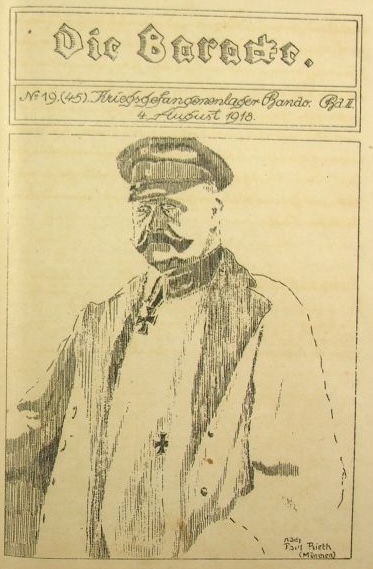
More meaningfully, however, they also demonstrate the intense emotional investment of the POWs with the German state, the German war effort, and with German war nationalism more generally. Kaiser Wilhelm II’s birthday was celebrated in the camp with lavish festivities, and tributes to the Prussian royal dynasty, Bismarck, and Field Marshal Paul von Hindenburg became a regular feature in Die Baracke. (Fig. 4)

Fig. 4: A special cover of Die Baracke celebrating the hero of Tannenberg Field Marshal Paul von Hindenburg. By 1918 a veritable cult of personality had coalesced around Hindenburg in Germany, and apparently in Bandō as well. Die Baracke II, no. 19 (4 August 1918), 489. SBB-PK. Bandō-Sammlung A 2-2.

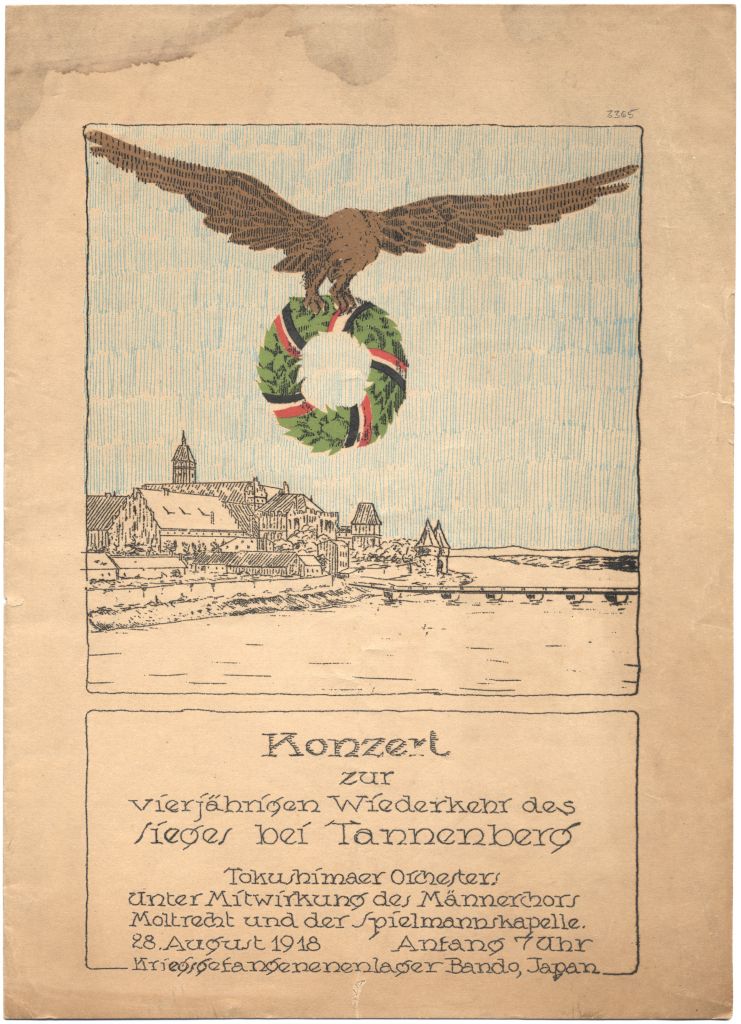
Notable battles from earlier in the war, such as the Battle of Tannenberg, were commemorated with special concerts. (Fig. 5) Nor were the residents of Bandō content to be mere observers, their circumstances notwithstanding; they (re)mobilized themselves as active participants in the war effort through fundraisers on behalf of their fellow German POWs in Siberia. It is not entirely surprising that the war would have been on the minds of these men; what is noteworthy, however, are the patterns revealed by their consumption of news and propaganda as an integral element of their performance as good and loyal Germans.

Fig. 5: Program for a concert by the Tokushimaer Orchestra in commemoration of the fifth anniversary of the Battle of Tannenberg. SBB-PK. Bandō-Sammlung E 3-17.

The German and Austrian POWs held in Japan during the First World War were determined to not be forgotten by their political leaders and fellow countrymen. Accordingly, they documented their lives in Japan, their thoughts on the war, and their feelings towards German culture and national identity in a variety of sources. This research was conducted as part of a broader project examining the POW camps in Japan as sites of cultural engagement and exchange, but also transformation as the prisoners were forced to reconcile their previous relationship to the German nation with the reality of defeat and decolonization.


Frau Prof. Sarah Panzer, Missouri State University, war im Rahmen des Stipendienprogramms der Stiftung Preußischer Kulturbesitz im Jahr 2025 als Stipendiatin an der Staatsbibliothek zu Berlin. Forschungsprojekt: „German-Austrian Prisoners of War (POWs) in Japan during the First World War“

Vortrag im Rahmen von CrossAsia Talks am 04.09.2025

Dieser Beitrag erschien zuerst im SBB-Blog.


https://blog.crossasia.org/wp-content/uploads/2025/09/CrossAsia-Blogbeitraege-2025-1.png 1080 1920 CrossAsia CrossAsia2025-09-23 15:02:152025-10-30 14:32:08Highlighting a ‘Forgotten’ Perspective on the First World War: German POWs in Japan and the Bandō-Sammlung
Seite 1 von 512345

CrossAsia Blog

  • Startseite

Themen

CrossAsia Talks

26.10.2026, Philipp Kohl, Counter-Revolutionary Dinosaurs“: A Popular History of the Gobi Paleontological Expeditions under Socialism

27.11.2026, Björn Reichhardt, Mongolian Milk Worlds

3.12.2026, Joshua A. Fogel, Back to Babel: The Esperanto Movements in Japan and China

28.01.2027, Bolormaa Boldbaatar, Imagery in the facade decoration of the Chinggis Khan Museum – the conveyed meaning

Alle Termine

Newsletter

Nr. 37 | Juli 2026
 (HTML)

Nr. 36 | Februar 2026
 (HTML)

Nr. 35 | Oktober 2025
 (HTML)

Nr. 34 | Juli 2025
 (HTML)

Nr. 33 | Dezember 2024
 (HTML)

Nr. 32 | Juli 2024
 (HTML)

Nr. 31 | Februar 2024
 (HTML)

Nr. 30 | September 2023
 (HTML)|(PDF)

Alle Newsletter

Suche im Blog

Search Search

Recent Posts

  • Job Opening: Spezialist:in (w/d/m) für Lizenz- und Datenmanagement FID Asien / CrossAsia
  • Kein Zugang: 20th Century Media Information Database
  • CrossAsia Talks: Philipp Kohl 26.10.2026
  • Wartungsarbeiten 22. Oktober 2026 – Einschränkungen auf CrossAsia Suche
  • Abgeschlossen: 20. Oktober 2026: Wartungsarbeiten am CrossAsia Open Access Repository

Zugang nach Datum

RSS Feed Logo RSS Feed Logo Abonnierenden RSS Feed
Nach oben scrollen Nach oben scrollen Nach oben scrollen
Ein Dienst der
Logo der Staatsbibliothek zu Berlin
In Zusammenarbeit mit
unseren Partnerinstitutionen
Gefördert durch
Logo Deutsche Forschungsgemeinschaft
  • ©2026 Copyright CrossAsia
  •  
  •  
  •  
  • Kontakt
  • Über CrossAsia
  • Seitenübersicht
  • Datenschutz
  • Barrierefreiheit
  • Impressum