Veranstaltungen

CrossAsia DH Lunchtalks – Structures of Knowing an Empire: Building Digital Analytical Tools for Chinese Local Gazetteers and Spanish Relaciones Geográficas

Dear users,

On May 21st at 12:30 pm (CEST), we are pleased to host the fourth session of the CrossAsia DH Lunchtalks 2026. This session will feature a joint presentation by Dr. CHEN Shih-Pei and Dr. Mariana Favila Vázquez, titled Structures of Knowing an Empire: Building Digital Analytical Tools for Chinese Local Gazetteers and Spanish Relaciones Geográficas.” In this talk, Dr. Chen and Dr. Favila Vázquez will present and compare their digital approaches to analyzing geographical knowledge in early modern China and the Spanish Empire.

How did early modern empires come to know their vast territories, especially the remote regions at their peripheries? In a recent book titled “Knowing an Empire: Early Modern Chinese and Spanish Worlds in Dialogue”, scholars explore how the Spanish and the Chinese empires developed comparable ways to gather, organize, and use knowledge about their local worlds. The Spanish Empire compiled the Relaciones Geográficas (trans. relational geographies) that surveyed the indigenous peoples, lands, and natural resources of its newly acquired, remote territories. In parallel, the Chinese officials compiled difangzhi 地方志 (local gazetteers) since the 12th century to document the local landscapes, people, flora, and fauna of each regions within the vast empire.

In this CrossAsia DH Lunch talk, two authors who contributed to this book will talk about how they each designed digital analytical tools to help grasp the overall structures of these two genres, given their large amount and rich contents. Shih-Pei Chen will introduce a quantitative analysis based on the section headings of local gazetteers within LoGaRT (Local Gazetteers Research Tools). She argues, the sections headings of each local gazetteer are conscious selection made by its compilers as to how to best describe and document a region, and thus they should be treated as knowledge categories. In this session, she will show how it looks like when analyzing all the section headings from 4000 gazetteers together: it reveals a dynamic structure of “local knowledge” of historical China that is jointly defined by imperial guidelines and local officials across geographical regions over 800 years.

Mariana Favila Vázquez will introduce the case of the sixteenth-century Relaciones Geográficas, a documentary corpus produced in response to a questionnaire of fifty questions circulated in 1577. The questionnaire was commissioned by King Philip II and distributed through the Council of the Indies as part of a broader effort by the Spanish Crown to gather systematic information about its American territories. The instructions and interrogatory were prepared under the direction of the royal cosmographer-chronicler Juan López de Velasco and sent to local authorities in New Spain, who were responsible for compiling the responses.

This session will present a case study based on the information contained in the responses from the former Bishopric of Michoacán, with particular attention to references to inland bodies of water. It will also outline the methodology of Geographical Text Analysis, which enables the creation of digital annotations using historically relevant semantic categories and the linking of identified toponyms to their corresponding geographic coordinates, making it possible to conduct subsequent spatial analyses.

The works featured in this talk can also be found at “Part 2: Structures of Knowing” in Knowing an Empire, which is open access and can be read online at Fulcrum.org.

About the speakers:

Dr. CHEN Shih-pei is a Senior Research Scholar at the Max Planck Institute for the History of Science (MPIWG) and a specialist in Digital Humanities. She desgins digital research methods, tools, and infrastructures to help historians engage with digitized historical materials from new perspectives. She has led the development of several DH projects, including the Local Gazetteers Research Tools (LoGaRT); CHMap as a website hosting open-access historical maps of China (in collaboration with Shanghai Jiao Tong University);  RISE & SHINE as an API protocols for the standardized exchange of digital texts among digital tools and content providers. At MPIWG, she is now leading another research project: “Common Knowledge and Its Sources in the Sinosphere, 14th–20th Centuries,” which investigate how the Chinese daily-use encyclopedias to examine how “common knowledge” in Chinese history evolved and diverged from elite and literati genres.

Dr. Mariana Favila Vázquez is an archaeologist, and holds an MA and a PhD in Mesoamerican Studies from the National Autonomous University of Mexico (UNAM). Her research focuses on pre-Hispanic and colonial navigation, cultural landscapes, and the use of digital technologies and spatial analysis in historical research. She is the author of Veredas de Mar y Río. Navegación prehispánica y colonial en Los Tuxtlas, Veracruz (UNAM, 2016) and Navegación prehispánica en Mesoamérica (BAR Publishing, 2020), as well as several articles and book chapters. She has held postdoctoral fellowships at Lancaster University and at UNAM’s Institute of Geography. She is currently Associate Professor at the Centre for Research and Advanced Studies in Social Anthropology (CIESAS), Mexico City Unit, in the area of Ethnohistory, where she is developing a project on lacustrine landscapes and digital humanities. She is a member of Mexico’s National System of Researchers (SNII), Level 1.

The lecture will be held in English. If you have any questions, please contact us at ostasienabt@sbb.spk-berlin.de.

The lecture will be streamed and recorded via Webex*. You can take part in the lecture using your browser without having to install a special software. Please click on the respective button “To the lecture” below, follow the link “join via browser,” and enter your name.

You can find the full programm of CrossAsia DH Lunchtalks 2026 here. Further talks will also be announced on our blog as well as on Mastodon and BlueSky.

Yours,

CrossAsia Team


*By participating, you grant the Stiftung Preußischer Kulturbesitz and its subordinate institutions free of charge all rights of usage of pictures and videos taken of you during this lecture presentation. This declaration of consent is valid in terms of time and space without restrictions and for usage in all media, including analogue and digital usage. It includes image processing and the usage of photos in composite illustrations. German law will apply.

CrossAsia Talks: Eric Schluessel 18.06.2026

(See English below)

Wir freuen uns sehr, Dr. Eric Schluessel (University of Oxford) am 18.06.2026 ab 18 Uhr (Berliner Zeit) zu seinem mittlerweile zweiten CrossAsia Talk mit dem Titel The Ürümchi Mutiny of 1864: Revisiting the Muslim Uprisings and State in North Xinjiang  zu begrüßen. Während sein erster CrossAsia Talk noch hybrid stattgefunden hat, wird dieser hier eine reine Onlineveranstaltung sein.

1864 erschütterten zahlreiche Gewaltausbrüche Xinjiang. Der Vortrag deutet diese Ereignisse nicht als geheimnisvollen „muslimischen Aufstand“, sondern als Meuterei – vergleichbar mit den Geschehnissen in Indien im Jahr 1857. Durch die erneute Auswertung von Quellen in chinesischer, tschagataischer, persischer, russischer, manjurischer und arabischer Sprache, von denen viele seit über 140 Jahren von der Forschung nicht mehr herangezogen wurden, beleuchtet Eric Schluessel die sozialen und wirtschaftlichen Ursachen, die Soldaten der Grünen-Standard-Armee und ihre Familien zu gewaltsamem Protest bewegten.

In Xinjiang, Qing Central Asia, in 1864, dozens of incidents of intercommunal and anti-state violence broke out seemingly all at once. Scholars have typically referred to these events as the “Muslim uprising(s)” and attributed their origins to a vast and secret conspiracy against the empire. In fact, the leaders of these uprisings were almost all among the Qing’s most favoured and celebrated representatives in the region, including successful military leaders. This is especially the case of the violence in North Xinjiang, which we think of as being led by Sino-Muslims. This talk reexamines these events not as a mysterious “uprising,” but instead as a munity not unlike that which took place in India in 1857. By revisiting sources in Chinese, Chaghatay, Persian, Russian, Manchu, and Arabic—many of which have not been consulted by scholars in over 140 years—it establishes the social conditions that led members of the Qing’s Green Standard army and their families to engage in violent protest against changing economic policies. It retells the story of the North Xinjiang uprisings and the emergence of a Sino-Muslim-led state.

Die Vortragssprache ist Englisch. Bei Fragen kontaktieren Sie uns unter: ostasienabt@sbb.spk-berlin.de.

Der Vortrag wird via Webex gestreamt und aufgezeichnet*. Sie können am Vortrag über Ihren Browser ohne Installation einer Software teilnehmen. Klicken Sie dazu unten auf „Zum Vortrag“, folgen dem Link „Über Browser teilnehmen“ und geben Ihren Namen ein.

Alle bislang angekündigten Vorträge finden Sie hier. Die weiteren Termine kündigen wir in unserem Blog und auf unserem Mastodon und BlueSky an.

We are delighted to welcome Prof. Dr. Eric Schluessel (University of Oxford) to his second CrossAsia Talk, “The Ürümchi Mutiny of 1864: Revisiting the Muslim Uprisings and the State in North Xinjiang,” on June 18, 2026, starting at 6:00 p.m. (Berlin time). While his first CrossAsia Talk was held in a hybrid format, this one will be an online-only event.

In Xinjiang, Qing Central Asia, in 1864, dozens of incidents of intercommunal and anti-state violence broke out seemingly all at once. Scholars have typically referred to these events as the “Muslim uprising(s)” and attributed their origins to a vast and secret conspiracy against the empire. In fact, the leaders of these uprisings were almost all among the Qing’s most favoured and celebrated representatives in the region, including successful military leaders. This is especially the case of the violence in North Xinjiang, which we think of as being led by Sino-Muslims. This talk reexamines these events not as a mysterious “uprising,” but instead as a munity not unlike that which took place in India in 1857. By revisiting sources in Chinese, Chaghatay, Persian, Russian, Manchu, and Arabic—many of which have not been consulted by scholars in over 140 years—it establishes the social conditions that led members of the Qing’s Green Standard army and their families to engage in violent protest against changing economic policies. It retells the story of the North Xinjiang uprisings and the emergence of a Sino-Muslim-led state.

The lecture will be held in English. If you have any questions, please contact us: ostasienabt@sbb.spk-berlin.de.

The lecture will be streamed and recorded via Webex*. You can take part in the lecture using your browser without having to install a special software. Please click on the respective button “To the lecture” below, follow the link “join via browser” (“über Browser teilnehmen”), and enter your name.

You can find all previously announced lectures here. We will announce further dates in our blog and on Mastodon and BlueSky.


*Mit Ihrer Teilnahme an der Veranstaltung räumen Sie der Stiftung Preußischer Kulturbesitz und ihren nachgeordneten Einrichtungen kostenlos alle Nutzungsrechte an den Bildern/Videos ein, die während der Veranstaltung von Ihnen angefertigt wurden. Dies schließt auch die kommerzielle Nutzung ein. Diese Einverständniserklärung gilt räumlich und zeitlich unbeschränkt und für die Nutzung in allen Medien, sowohl für analoge als auch für digitale Verwendungen. Sie umfasst auch die Bildbearbeitung sowie die Verwendung der Bilder für Montagen. / By participating, you grant the Stiftung Preußischer Kulturbesitz and its subordinate institutions free of charge all rights of usage of pictures and videos taken of you during this lecture presentation. This declaration of consent is valid in terms of time and space without restrictions and for usage in all media, including analogue and digital usage. It includes image processing and the usage of photos in composite illustrations. German law will apply.

CrossAsia Talks: Anna Turanskaya und Alexander Zorin

(See English below)

Wir freuen uns, dass am 23.04. ab 18 Uhr Dr. Anna Turanskaya (University of Inner Mongolia, Hohhot) und Dr. Alexander Zorin (Hebrew University of Jerusalem) in ihrem Onlinevortrag „From Dzungaria to Berlin: Tibetan and Mongolian Folios in the Holdings of the Staatsbibliothek“ neue Erkenntnisse zu den mongolischen und tibetischen Kanjurfolios aus Ablai Kit aus den Beständen der Staatsbibliothek vorstellen werden.

Between 1717 and 1721, two Oirat monasteries—usually called Sem Palat (Russian for “Seven Chambers”) and Ablai-kit—were encountered by Russian expeditions in what was then the frontier zone of Dzungaria and is now eastern Kazakhstan. The monasteries had been abandoned by the Oirats following internal conflicts, and most of their cultural treasures were lost. Only a small number of artefacts survived, among them approximately 1,500 folios of Buddhist texts in Tibetan and Mongolian.

While the largest portion of these materials is preserved in Saint Petersburg, several European institutions also hold folios originating from these monasteries. These manuscripts represent some of the earliest Tibetan and Mongolian texts to enter European collections. The Staatsbibliothek zu Berlin preserves a particularly notable group: 23 Mongolian and 23 Tibetan folios, almost all of them from Ablai-kit.

In this talk, we will trace the history of these manuscripts. In particular, they are connected with the work of German scholars of Asian languages, Johann Christoph Christian Rüdiger and Bernhard Jülg, as well as with the most influential historical Tibetan typeface, produced by Ferdinand Theinhardt for Heinrich August Jäschke’s Tibetan Dictionary (1881). We will also discuss the significance of these folios for the study of the Tibetan and Mongolian Buddhist canons.

Die Vortragssprache ist Englisch. Bei Fragen kontaktieren Sie uns unter: ostasienabt@sbb.spk-berlin.de.

Der Vortrag wird darüber hinaus via Webex gestreamt und aufgezeichnet*. Sie können am Vortrag über Ihren Browser ohne Installation einer Software teilnehmen. Klicken Sie dazu unten auf „Zum Vortrag“, folgen dem Link „Über Browser teilnehmen“ und geben Ihren Namen ein.

Alle bislang angekündigten Vorträge finden Sie hier. Die weiteren Termine kündigen wir in unserem Blog und auf Mastodon und BlueSky an.

We are delighted that on 23 April at 6 p.m., Dr. Anna Turanskaya (University of Inner Mongolia, Hohhot) and Dr. Alexander Zorin (Hebrew University of Jerusalem) will present new findings on the Mongolian and Tibetan Kanjurfolios from Ablai Kit in the Staatsbibliothek’s holdings in their online lecture „From Dzungaria to Berlin: Tibetan and Mongolian Folios in the Holdings of the Staatsbibliothek.“

Between 1717 and 1721, two Oirat monasteries—usually called Sem Palat (Russian for “Seven Chambers”) and Ablai-kit—were encountered by Russian expeditions in what was then the frontier zone of Dzungaria and is now eastern Kazakhstan. The monasteries had been abandoned by the Oirats following internal conflicts, and most of their cultural treasures were lost. Only a small number of artefacts survived, among them approximately 1,500 folios of Buddhist texts in Tibetan and Mongolian.

While the largest portion of these materials is preserved in Saint Petersburg, several European institutions also hold folios originating from these monasteries. These manuscripts represent some of the earliest Tibetan and Mongolian texts to enter European collections. The Staatsbibliothek zu Berlin preserves a particularly notable group: 23 Mongolian and 23 Tibetan folios, almost all of them from Ablai-kit.

In this talk, we will trace the history of these manuscripts. In particular, they are connected with the work of German scholars of Asian languages, Johann Christoph Christian Rüdiger and Bernhard Jülg, as well as with the most influential historical Tibetan typeface, produced by Ferdinand Theinhardt for Heinrich August Jäschke’s Tibetan Dictionary (1881). We will also discuss the significance of these folios for the study of the Tibetan and Mongolian Buddhist canons.

The lecture will be held in English. If you have any questions, please contact us: ostasienabt@sbb.spk-berlin.de.

The lecture will also be streamed and recorded via Webex*. You can take part in the lecture using your browser without having to install a special software. Please click on the respective button “To the lecture” below, follow the link “join via browser” (“über Browser teilnehmen”), and enter your name.

You can find all previously announced lectures here. We will announce further dates in our blog and Mastodon and BlueSky.


*Mit Ihrer Teilnahme an der Veranstaltung räumen Sie der Stiftung Preußischer Kulturbesitz und ihren nachgeordneten Einrichtungen kostenlos alle Nutzungsrechte an den Bildern/Videos ein, die während der Veranstaltung von Ihnen angefertigt wurden. Dies schließt auch die kommerzielle Nutzung ein. Diese Einverständniserklärung gilt räumlich und zeitlich unbeschränkt und für die Nutzung in allen Medien, sowohl für analoge als auch für digitale Verwendungen. Sie umfasst auch die Bildbearbeitung sowie die Verwendung der Bilder für Montagen. / By participating, you grant the Stiftung Preußischer Kulturbesitz and its subordinate institutions free of charge all rights of usage of pictures and videos taken of you during this lecture presentation. This declaration of consent is valid in terms of time and space without restrictions and for usage in all media, including analogue and digital usage. It includes image processing and the usage of photos in composite illustrations. German law will apply.

CrossAsia Talks: Patrick Hällzon 28. Mai 2026

(See English below)

Freuen Sie sich mit uns auf Dr. Patrick Hällzon (Uppsala University) und seinen Online-Vortrag am 28. Mai 2026 ab 18 Uhr (Berliner Zeit) zum Thema „The use of domestic and wild animals in public performances in the oases of Eastern Turkestan„.

This online presentation deals with public performances involving animals in Eastern Turkestan during the late 19th and early 20th centuries. Several traditional pastimes in the region, such as pigeon fancying, falconry, and various games related to horsemanship fit into this description. The focus of this presentation, however, will be on the usage of domestic and wild animals in performed entertainment in public places.

Die Vortragssprache ist Englisch. Bei Fragen kontaktieren Sie uns unter: ostasienabt@sbb.spk-berlin.de.

Der Vortrag wird darüber hinaus via Webex gestreamt*. Sie können am Vortrag über Ihren Browser ohne Installation einer Software teilnehmen. Klicken Sie dazu unten auf „Zum Vortrag“, folgen dem Link „Über Browser teilnehmen“ und geben Ihren Namen ein.

Alle bislang angekündigten Vorträge finden Sie hier. Die weiteren Termine kündigen wir in unserem Blog und auf Mastodon und BlueSky an.

Dr. Patrick Hällzon (Uppsala University) will give a talk on 28 May 2026 at 6 pm (Berlin time), offering an insight into his current research under the title ‘The use of domestic and wild animals in public performances in the oases of Eastern Turkestan’. The lecture will take place online.

This online presentation deals with public performances involving animals in Eastern Turkestan during the late 19th and early 20th centuries. Several traditional pastimes in the region, such as pigeon fancying, falconry, and various games related to horsemanship fit into this description. The focus of this presentation, however, will be on the usage of domestic and wild animals in performed entertainment in public places.

The lecture will be held in English. If you have any questions, please contact us: ostasienabt@sbb.spk-berlin.de.

The lecture will also be streamed via Webex*. You can take part in the lecture using your browser without having to install a special software. Please click on the respective button “To the lecture” below, follow the link “join via browser” (“über Browser teilnehmen”), and enter your name.

You can find all previously announced lectures here. We will announce further dates in our blog and on Mastodon and BlueSky.


*Mit Ihrer Teilnahme an der Veranstaltung räumen Sie der Stiftung Preußischer Kulturbesitz und ihren nachgeordneten Einrichtungen kostenlos alle Nutzungsrechte an den Bildern/Videos ein, die während der Veranstaltung von Ihnen angefertigt wurden. Dies schließt auch die kommerzielle Nutzung ein. Diese Einverständniserklärung gilt räumlich und zeitlich unbeschränkt und für die Nutzung in allen Medien, sowohl für analoge als auch für digitale Verwendungen. Sie umfasst auch die Bildbearbeitung sowie die Verwendung der Bilder für Montagen. / By participating, you grant the Stiftung Preußischer Kulturbesitz and its subordinate institutions free of charge all rights of usage of pictures and videos taken of you during this lecture presentation. This declaration of consent is valid in terms of time and space without restrictions and for usage in all media, including analogue and digital usage. It includes image processing and the usage of photos in composite illustrations. German law will apply.

CrossAsia DH Lunchtalks – Reimagining Humanities Education: Interdisciplinary Cultivation in the Era of Digital Intelligence

Dear users,

On April 21st at 12:30 pm (CEST), we are pleased to host the third session of the CrossAsia DH Lunchtalks 2026. The talk will be given by Dr. Beibei Zhan and is titled “Reimagining Humanities Education: Interdisciplinary Cultivation in the Era of Digital Intelligence.” Dr. Zhan will share her experience developing a structured pedagogical approach for integrating AI and digital methods into humanities teaching in the era of “Digital Intelligence.”

In the „Digital Intelligence“ era, the rapid evolution of AI and Big Data is fundamentally reshaping the production and dissemination of knowledge, necessitating a transition in humanities education from traditional paradigms to an integrated, technology-enhanced ecosystem. This lecture proposes a transformative framework for cultivating humanities students under the „New Liberal Arts“ initiative, aiming to bridge the gap between classical erudition and computational science through a Six-Dimensional Structural Model. This model integrates problem-solving, knowledge synthesis, tool literacy, task practice, organizational collaboration, and ethical governance into a cohesive strategy, driving research through authentic socio-cultural inquiries while balancing technical proficiency with rigorous responsibility.

Central to this pedagogical shift are the practical innovations at Yuelu Academy (Hunan University), specifically the „Digital Intelligence Micro-course Cluster“ and the „Humanities-AI Seminar“. The Micro-course Cluster operates on a three-tiered conceptual framework: first, establishing General Digital Literacy to foster computational thinking and a critical understanding of AI tools; second, developing Discipline-Specific Core Reflection, where students utilize digital methods such as metadata encoding and text mining to innovate traditional tasks like version tracing and semantic analysis; and third, encouraging Interdisciplinary Frontier Exploration, which empowers students to lead original research in cutting-edge fields such as Linguistic Intelligence, Cultural Visualization, and Digital Geography (GIS). Complementing this structured approach, the Humanities-AI Seminar offers a self-organized, „Human-in-the-loop“ community where students, experts, and industry engineers co-create knowledge through real-world case studies, such as utilizing OpenAI APIs for structured knowledge extraction from historical archives. By synthesizing systematic training with open-ended collaborative research, these models demonstrate how humanities students can evolve into versatile scholars capable of navigating and shaping the global digital landscape.

About the speaker:

Dr. Beibei Zhan is an Associate Professor and Director of the Digital Humanities Center at Yuelu Academy, Hunan University, holding dual doctorates in Computer Vision (Kingston University) and Sinology (SOAS University of London). Her research focuses on the intersection of Ming-Qing history, Digital Humanities and Humanistic Intelligence. She currently serves as an Executive Member of the Technical Committee on Computing Applications, China Computer Federation (CCF), and as a Council Representative of the Digital Humanities Development Alliance of China.

The lecture will be held in English. If you have any questions, please contact us at ostasienabt@sbb.spk-berlin.de.

The lecture will be streamed via Webex*. You can take part in the lecture using your browser without having to install a special software. Please click on the respective button “To the lecture” below, follow the link “join via browser,” and enter your name.

You can find the full programm of CrossAsia DH Lunchtalks 2026 here. Further talks will also be announced on our blog as well as on Mastodon and BlueSky.


Yours,

CrossAsia Team


*By participating, you grant the Stiftung Preußischer Kulturbesitz and its subordinate institutions free of charge all rights of usage of pictures and videos taken of you during this lecture presentation. This declaration of consent is valid in terms of time and space without restrictions and for usage in all media, including analogue and digital usage. It includes image processing and the usage of photos in composite illustrations. German law will apply.

CrossAsia Talks: Martin Weiser 26.03.2026

(See English below)

Wir laden Sie herzlich ein zum Onlinevortrag „Closing in on the Unknown: Measuring DPRK/North Korea’s publication output traced through library holdings, ISBN and the domestic registration number“ am 26. März 2026 ab 18 Uhr. Martin Weiser (FU Berlin) wird der Frage nachgehen, wie sich die Publikationslandschaft Nordkoreas durch die systematische Auswertung von Bibliotheksbeständen, ISBNs und bislang unerschlossenen im Land vergebenen  Registrierungsnummern erfassen lässt.

Comparatively little is known about the DPRK, and its print publications remain a key source for academics. But little to no tools exist to deal with the limited but nonetheless overwhelming number of publications we now have access to and the diverse information they contain. This presentation will look at one particular kind of information those publications provide: changes in the country’s publication output. It begins with a comparison of library holdings in Seoul and the USA with the Staatsbibliothek zu Berlin, and then decodes information included in ISBN assignments and the domestic registration numbering gathered from several thousand print publications to provide new insights into changes in publication output. The domestic numbering was not decoded before neither by scholars nor librarians, although it provides minute insights into yearly outputs divided by field as well as the delay between registration and eventual publishing. These three measures are then combined to give a fuller view of the DPRK publishing scene and developments which the traditional method of merely consulting libraries for available publications would have missed.

Die Vortragssprache ist Englisch. Bei Fragen kontaktieren Sie uns unter: ostasienabt@sbb.spk-berlin.de.

Der Vortrag wird via Webex gestreamt*. Sie können am Vortrag über Ihren Browser ohne Installation einer Software teilnehmen. Klicken Sie dazu unten auf „Zum Vortrag“, folgen dem Link „Über Browser teilnehmen“ und geben Ihren Namen ein.

Alle bislang angekündigten Vorträge finden Sie hier. Die weiteren Termine kündigen wir in unserem Blog und auf unserem X-Account, Mastodon und BlueSky an.

We cordially invite you to attend the online lecture ‘Closing in on the Unknown: Measuring DPRK/North Korea’s publication output traced through library holdings, ISBN and the domestic registration number’ by Martin Weiser (FU Berlin) on March 26, 2026 at 6 p.m. The speaker will explore how North Korea’s publication landscape can be captured through the systematic evaluation of library holdings, ISBN assignments and previously untapped domestic registration numbers.

Comparatively little is known about the DPRK and its print publications remain a key source for academics. But little to no tools exist to deal with the limited but nonetheless overwhelming number of publications we now have access to and the diverse information they contain. This presentation will look at one particular kind of information those publications provide: changes in the country’s publication output. It begins with a comparison of library holdings in Seoul and the USA with the Staatsbibliothek zu Berlin, and then decodes information included in ISBN assignments and the domestic registration numbering gathered from several thousand print publications to provide new insights into changes in publication output. The domestic numbering was not decoded before neither by scholars nor librarians, although it provides minute insights into yearly outputs divided by field as well as the delay between registration and eventual publishing. These three measures are then combined to give a fuller view of the DPRK publishing scene and developments which the traditional method of merely consulting libraries for available publications would have missed.

The lecture will be held in English. If you have any questions, please contact us: ostasienabt@sbb.spk-berlin.de.

The lecture will be streamed and Webex*. You can take part in the lecture using your browser without having to install a special software. Please click on the respective button “To the lecture” below, follow the link “join via browser” (“über Browser teilnehmen”), and enter your name.

You can find all previously announced lectures here. We will announce further dates in our blog and on X, Mastodon and BlueSky.


*Mit Ihrer Teilnahme an der Veranstaltung räumen Sie der Stiftung Preußischer Kulturbesitz und ihren nachgeordneten Einrichtungen kostenlos alle Nutzungsrechte an den Bildern/Videos ein, die während der Veranstaltung von Ihnen angefertigt wurden. Dies schließt auch die kommerzielle Nutzung ein. Diese Einverständniserklärung gilt räumlich und zeitlich unbeschränkt und für die Nutzung in allen Medien, sowohl für analoge als auch für digitale Verwendungen. Sie umfasst auch die Bildbearbeitung sowie die Verwendung der Bilder für Montagen. / By participating, you grant the Stiftung Preußischer Kulturbesitz and its subordinate institutions free of charge all rights of usage of pictures and videos taken of you during this lecture presentation. This declaration of consent is valid in terms of time and space without restrictions and for usage in all media, including analogue and digital usage. It includes image processing and the usage of photos in composite illustrations. German law will apply.

CrossAsia DH Lunchtalks – Getting the Lines Right: Layout Analysis as the Critical First Step for Tibetan Newspaper HTR

Dear users,

On March 24th at 12:30 pm (CET), we are pleased to host the second session of the CrossAsia DH Lunchtalks 2026. The talk will be given by Dr. Franz Xaver Erhard and is titled “Getting the Lines Right: Layout Analysis as the Critical First Step for Tibetan Newspaper HTR.” Dr. Erhard will introduce his the Divergent Discourses project, as well as TransYolo, a custom Python workflow to solve the layout analysis bottleneck in digitizing historical Tibetan newspapers.

Handwritten Text Recognition (HTR) has matured rapidly in recent years, and for many document types, the core recognition task is largely solved. Yet when researchers turn to historical Tibetan newspapers, progress stalls — not because HTR models fail, but because the lines are never correctly identified in the first place. This talk argues that layout analysis, not transcription, is the true bottleneck in Tibetan newspaper digitization, and that no single off-the-shelf tool is adequate for the task.

Tibetan newspapers such as the Tibet Daily (TID) collection present a combination of challenges that expose the limits of general-purpose layout tools: dense multi-column page designs with inconsistent column spacing, mixed scripts (Tibetan, Chinese, Latin), varying typefaces and handwriting styles across issues and periods, and the physical realities of digitized print — page skew, gutter distortion, and uneven illumination. These properties interact in ways that defeat standard segmentation approaches, producing incorrect line detections, boundary bleed-across, and broken reading order — all before a single character is recognized.

Transkribus, the dominant platform for historical HTR in the humanities, offers built-in layout analysis through its field models. These work well for their intended use cases, but Tibetan newspaper material sits well outside that scope: column layouts confuse region assignment, high line density triggers false positives, and the platform’s limited configurability makes targeted correction difficult. The lesson is not that Transkribus falls short, but that specialized material demands specialized solutions.

To meet this need, the talk introduces TransYolo, a custom Python workflow developed within the Divergent Discourses project (AHRC/DFG). TransYolo uses a YOLO model trained specifically on Tibetan newspaper pages to detect text lines, assigns detections to text regions previously detected with Transkribus, reconstructs reading order, and exports Transkribus-compatible PAGE XML. The example shows what becomes possible when layout analysis is treated as a problem in its own right.

About the speaker:

Dr. Franz Xaver Erhard is a Tibetologist specializing in Tibetan literature, biography, and cultural history, with close to a decade of fieldwork experience in Lhasa. He is the Principal Investigator of the DFG/AHRC cooperative project „Divergent Discourses: Processes of Narrative Construction in Tibet, 1955–1962,“ which compiles and analyses the first modern corpus of historical Tibetan newspapers using digital humanities methods, including computational tools for text recognition and natural language processing, to trace how divergent narratives emerged and evolved in PRC and exile publications during one of the most consequential periods of Tibetan history.

The lecture will be held in English. If you have any questions, please contact us at ostasienabt@sbb.spk-berlin.de.

The lecture will be streamed and recorded via Webex. You can take part in the lecture using your browser without having to install a special software. Please click on the respective button “To the lecture” below, follow the link “join via browser,” and enter your name.

You can find the full programm of CrossAsia DH Lunchtalks 2026 here. Further talks will also be announced on our blog as well as on Mastodon and BlueSky.


Yours,

CrossAsia Team

Newsletter 36 – CrossAsia News zum Start ins Jahr des Feuerpferdes

Liebe CrossAsia Nutzer:innen,

das CrossAsia Team wünscht Ihnen alles Gute für das Jahr des Feuerpferdes!

Den Eigenschaften des Feuerpferdes ganz entsprechend, sind wir nach einem sehr aktiven Jahresende energiegeladen in das neue Jahr gestartet: Gerade veröffentlicht haben wir das neue Themenportal: Die „Meiji-Portraits“. Unsere erfolgreiche CrossAsia DH Lunchtalks-Reihe ist mit vielen spannenden Veranstaltungen zurück. Und mit den CrossAsia Talks erwartet Sie auch in diesem Jahr ein vielfältiges Programm zu aktuellen Forschungen mit und über Objekte und Themen unserer Sammlungen.

Ein Hinweis für alle, die aktuelle Artikel aus der VR China benötigen: Aktuelle chinesische Fachzeitschriften sind über VIP Weipu 维普 zugänglich. Der Wechsel von China Academic Journals (CAJ) zu Weipu wurde notwendig, nachdem CNKI den Lizenzvertrag Ende 2023 gekündigt hatte. Der Anbieter war nicht mehr in der Lage, die erforderlichen Metadaten und Volltexte zu vergleichbaren Konditionen bereitzustellen. Wir empfehlen allen Nutzer:innen, Weipu 维普 künftig als primäre Anlaufstelle für chinesische akademische Zeitschriften zu verwenden! Wir hatten bereits über den Umstieg berichtet und werden auch künftig mehr zu VIP Weipu 维普 informieren.

Neues Themenportal: Die „Meiji-Portraits“

Die transformative Meiji-Periode (1868-1912) war grundlegend für Japans moderne Entwicklung. Die Verbindungen mit dem Ausland intensivierten sich in dieser Zeit. Das Themenportal „Meiji-Portraits“ umfasst Informationen zu Personen, die die Meiji-Ära in Japan durch ihre Tätigkeit beeinflusst haben. Vorgestellt werden sowohl Japaner, die zur Qualifizierung ins Ausland gegangen sind als auch ausländische Personen, die in Japan aktiv waren. Die Daten wurden zusammengestellt von Bernd Lepach, der schwerpunktmäßig den Zeitraum von 1868 bis 1905 bearbeitet hat. Darüber hinaus werden die Biografien sowie eine Chronologie der Meiji-Zeit mit philatelistischen Stücken verknüpft. Ebenfalls dokumentiert sind Firmen, in denen einzelne Personen tätig waren. Praktisch für die Recherche: Alle Angaben zu Personen und Firmen können im Volltext gesucht werden, so dass man neben den Datensätzen zu Personen auch alle weiteren Erwähnungen des Namens in anderen Einträgen findet und ganze Netzwerke untersuchen kann. Den Link zum Forschungsdatensatz, weitere Informationen und Hintergründe zum Projekt sowie allen Beteiligten finden Sie im Themenportal selbst und in unserem Blog.

CrossAsia Veranstaltungshighlights


DH Lunchtalks

Die CrossAsia DH Lunchtalks Veranstaltungsreihe ist zurück! Am 24. März spricht Dr. Franz Xaver Erhard von der Universität Leipzig zum Thema: „Getting the Lines Right: Layout Analysis as the Critical First Step for Tibetan Newspaper HTR”. Von Februar bis Juni organisieren wir einmal im Monat eine Veranstaltung, zu der wir Sie herzlich einladen. Den Auftakt zu dieser Reihe machte am 3. Februar Dr. Yan Hon Michael Chung, von der Hong Kong University of Science and Technology, der in seinem spannenden Vortrag „AI for the Humanities: A Case of Manchu OCR“ den Entwicklungsprozess zur Erstellung eines OCR-Modells für manjurische Dokumente präsentierte. Das dynamische Forschungsfeld der Digital Humanities lebt von der aktiven Beteiligung der Asien-Community, für die wir mit CrossAsia eine möglichst interaktive Plattform für den Informations- und Wissensaustausch anbieten wollen.

Das gesamte Programm der CrossAsia DH Lunchtalks 2026 finden Sie hier: https://blog.crossasia.org/crossasia-dh-lunchtalks/

CrossAsia Talks

Auch dieses Jahr setzen wir unsere CrossAsia Talks fort. Am 26. März geht Martin Weiser von der FU Berlin der Frage nach, wie sich die Publikationslandschaft Nordkoreas durch die systematische Auswertung von Bibliotheksbeständen, ISBNs und bislang unerschlossenen im Land vergebenen Registrierungsnummern erfassen lässt.

Im Januar sprach Prof. Dr. Hermann Kreutzmann von der FU Berlin über europäische Expeditionen und geopolitische Verflechtungen entlang der südlichen Seidenstraße im 19. Jahrhundert.  Niklas Leverenz stellte seine Forschungen zu einem kürzlich in der Sammlung der Staatsbibliothek wiederentdeckten Set photolithographischer Reproduktionen der ursprünglich in Paris angefertigten Schlachtkupfer vor.

Kommende Vorträge und unser Archiv aller bisherigen Veranstaltungen finden Sie auf unserem Blog. Videos vergangener Vorträge finden Sie auch in unserer CrossAsia Talks Playlist auf Youtube zum Nachhören. Vier Vorträge haben wir in den letzten Wochen online gestellt. Schauen Sie gern rein, falls Sie eine Veranstaltung verpasst haben.

Kuzushiji Workshop 2026

Wir freuen uns sehr über die Kooperation mit dem National Institute of Japanese Literature und der European Association of Japanese Resource Specialists. Gemeinsam organisieren wir vom 25.-27. Februar einen Workshop zur Einführung in das Lesen kursiv geschriebener bzw. gedruckter vormoderner japanischer Texte (kuzushiji) mit Materialien aus der Sammlung der SBB. Die Anmeldefrist ist bereits vorbei. Eine Nachlese veröffentlichen wir auf unserem Blog.

CrossAsia Classroom


Unser regional und inhaltlich reichhaltiges Schulungsprogramm ist für das Wintersemester 2025/2026 abgeschlossen. Das Schulungsangebot für das Sommersemester 2026 kündigen wir rechtzeitig zu Beginn des neuen Semesters auf unserer Webseite, sowie über die Mailingliste und Social Media Kanäle auf Bluesky und Mastodon an. Kommen Sie gern auf uns zu, wenn Sie Bedarf an speziellen Schulungen für Ihr Institut oder ein Seminar haben. Wir berücksichtigen es bestmöglich in unserer Planung.

Aktiv in der Community


Unser Ziel bei CrossAsia: die Informations- und Serviceangebote stets auf die Bedarfe der Wissenschafts-, Forschungs- und Fachcommunity hin auszurichten und weiterzuentwickeln. In unterschiedlichen Formaten haben wir uns in den letzten Monaten dazu ausgetauscht. Im Januar fand unser diesjähriges Fachbeiratstreffen in Berlin statt, im November 2025 unser UserMeeting. Ebenfalls im November haben wir gemeinsam mit dem Verein Deutscher Bibliothekarinnen und Bibliothekare (VDB) eine Online-Fortbildung für 48 Fachreferent:innen und Bibliothekar:innen der Asienwissenschaften organisiert. Unsere Handreichung zum Nachlesen finden Sie in unserem CrossAsia Open Access Repository. Wir danken allen Beteiligten für ihr aktives Mitgestalten und die wertvollen Anregungen.

CrossAsia News


Datenbanken

  • 当代中文报纸数据库 Contemporary Chinese newspaper full-text database, eine Datenbank mit mehr als 700 regionalen und überregionalen Tages-, Abend- und Wochenzeitungen aus China; Sie können nach Zeitungen stöbern oder aber gezielt nach Artikeln, Seiten und Bildern (mithilfe der Bildunterschriften) suchen.
  • SSAP E-Book Plattform先晓书院, die Datenbank enthält seit den 1970er Jahren veröffentlichte Medien des Verlags Social Sciences Academic Press (China) – 15.000 E-Books, 300.000 Artikel, 700.000 Bilder, über 1 Mio. Grafiken und 3.000 Stunden Audio/Video. Sie deckt alle Geistes- und Sozialwissenschaften ab, inklusive Blaubücher, Sammelbände und Editionen, und wird täglich aktualisiert.
  • Preview: Ab März 2026 können zwei weitere Segmente aus dem so genannten „JKBooks“-Bereich der Datenbank JapanKnowledge lizenziert werden: Die Nanbokuchō Ibun 南北朝遺文 und Teil 4 von Shiryō Sanshū 史料纂集 (第4期). Bei beiden Inhalten handelt es sich um Materialsammlungen historischer Dokumente aus unterschiedlichen Zeitperioden. Sobald die Lizenzierung abgeschlossen ist, informieren wir Sie über unseren Blog und Sie können sich wie üblich in JapanKnowledge einloggen, um die neuen Segmente auszuprobieren.
  • Testzugang zur Datenbank Zhongguo Gongchandang sixiang lilun ziyuan shujuku 中国共产党思想理论资源数据库: Der am 12. Februar ausgelaufene Testzugang wurde bis 30. April verlängert und wird in Kürze wieder zugänglich sein. Wir halten Sie dazu auf dem Laufenden. Die Datenbank enthält in 14 Subdatenbanken nahezu 19.000 Werke und Dokumente zur Ideologie und Theorie der Kommunistischen Partei Chinas seit ihrer Gründung im Jahr 1921, darunter u.a. 1.650 Titel aus der Zeit der Kulturrevolution. Die Titel erschienen überwiegend im Verlag 人民出版社. Als besonderes Tool bietet die Datenbank unter dem Reiter 经典著作引文比对 die Möglichkeit zum Abgleich von Zitaten aus den „Klassischen Schriften“ des Marxismus bzw. Sozialismus chinesischer Prägung. Die Datenbank ist im Volltext durchsuchbar. Wir wünschen Ihnen weiterhin viel Spaß beim Ausprobieren und freuen uns über Ihre Rückmeldungen.


Über 500 Einträge im CrossAsia Open Access Repository!

Zu den neuen Publikationen zählen der im Spätherbst 2025 frei geschaltete Jahrgang 2023 des Jahrbuchs der Vereinigung für sozialwissenschaftliche Japanforschung (VSJF) mit Beiträgen zur gegenwärtigen Politik, Gesellschaft und Wirtschaft in Japan. Im Bereich China erschien der Artikel „Transformations of Buasan 甫阿散 (Middle Chinese: fjyə̆ /fuə̆ ́ ʔa san ) since 958“ von Johannes Kurz sowie im Bereich Tibet das Werk „New Light on Old Seals from Tibet“ von Peter Schwieger. Eben erst veröffentlicht wurde das fünfte der Alliance for Research on East Asia (AREA) Ruhr Working Papers mit dem Titel „Recent Trends in Taiwan Studies: Digital Applications for Education and Research“ herausgegeben von Hsu Yu-Yin und „Entrepreneurial Inclinations Among Taiwan’s Students and Young Professionals“ von Florian Paulsen.

Wir freuen uns, dass die 500er Marke nun geknackt ist! Vielen Dank für die Beiträge aus Ihrer Forschung für die Forschung! Wenn Sie ebenfalls Interesse haben im CrossAsia Open Access Repository zu publizieren, informieren Sie sich gerne direkt auf der Webseite über den Ablauf oder fragen Sie uns via x-asia@sbb.spk-berlin.de.

Neue Schenkung von 180 Büchern in Thailändisch

Von der Deutsch-Thailändischen Gesellschaft e.V. wurden uns Bücher in Thailändisch aus der Sammlung des 2023 verstorbenen aus Thailand stammenden Arztes Dr. Suam Choke Kanokvichitra als Schenkung angeboten.

Aus der umfangreichen Sammlung haben wir über 180 Bücher auswählen können, die eine außerordentliche Themenvielfalt umfassen: Traditionelle Chinesische und Thailändische Medizin, Psychologie, Alterssoziologie, Buddhismus, Politik, Recht, Geschichte, Astrologie, Literatur und Humor, Sprachwissenschaften, Sprachführer, Namenskunde, Musik und Tanz, Übersetzungen von Sigmund Freuds Forschungen zur Psychoanalyse, Das Kapital von Karl Marx, die Bibel, der Koran u.v.m.

Detailliertere Informationen zu den ausgewählten Büchern finden Sie in unserem Blog.

Neues Erschließungsprojekt zum Nachlass der Tibetologin Dr. Isrun Engelhardt

In Kooperation mit der Professur für Geschichte und Kulturen Zentralasiens am Institut für Asien- und Afrikawissenschaften (IAAW) der HU Berlin haben wir ein Erschließungsprojekt zur Aufarbeitung des Nachlasses der Tibetologin Dr. Isrun Engelhardt (1941-2022) gestartet.

Dr. Isrun Engelhardt (1941-2022) war eine renommierte deutsche Tibetologin und unabhängige Forscherin. Der Nachlass umfasst umfangreiches Quellenmaterial, darunter Akten, Fotografien und weitere Unterlagen zur Schäfer-Expedition nach Tibet (1938-1939), eine vollständige Kopie der tibetischen Zeitung „Melong“ (1925-1963) sowie die Quellen für ihre Forschung zu Nikolai Roerich.

Detailliertere Informationen zum Projekt finden Sie in unserem Blog. Wenn Sie bereits jetzt Interesse haben mit den Materialien aus dem Nachlass von Dr. Engelhardt zu arbeiten, dann wenden Sie sich gern an antje.ziemer@sbb.spk-berlin.de.


Vielen Dank für Ihr Interesse und Ihre Unterstützung! Wir freuen uns auf ein ereignisreiches Jahr 2026 mit Ihnen!

Ihr CrossAsia Team
 

P.S. Das Jahr des Feuerpferdes

Uns hat der Beginn des neuen Mondjahrs übrigens inspiriert, nach Pferden in unseren Sammlungen Ausschau zu halten. Hier unser kleines Blitzlicht:

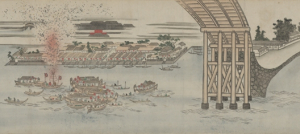
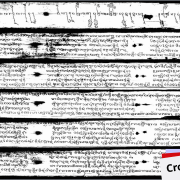
  • Das Newsletterbild ist ein Ausschnitt aus der Kopie einer Rolle mit Pferden und Kranichen von Kanō Tan’yū (狩野探幽, 1602-1674) aus dem japanischen Werk Gakō senran (画巧潜覧, 1740 (Genbun 5)), einem Kompendium zu den Werken und Malern der Kanō-Schule, zusammengestellt von einem ihrer Schüler, Ōoka Shunboku (大岡春朴, 1680-1763). Aus dem gleichen Band gibt es auch noch weitere Pferdemotive.
  • Eine Zeichnung von Albert Grünwedel, dem Leiter der ersten „Turfan-Expedition“, aus der Zeichnungssammlung, die wir neben den Akten und Fotos der Expeditionen in unserem Themenportal „Die Turfanexpeditionen“ digital zur Verfügung gestellt haben.
  • Wie in der Medizingeschichte anhand von Pferdezähnen das Alter der Tiere bestimmt wurde, zeigt eine Zeichnung aus der Sammlung des Medizinhistorikers Prof. Paul U. Unschuld.
  • In der Mongolei hat das Pferd den Status eines Nationaltieres und die buddhistischen Gebetsfahnen heißen übersetzt „Windpferd“. Stöbern Sie gern selbst in unserer Mongolischen und Tibetischen Sammlung.
  • Zahlreiche Pferdemotive sind auch in unseren thailändischen astrologischen Handschriften zu finden, hier ein Beispiel

In den Ländern des Theravada-Buddhismus, zu denen Thailand gehört, beginnt das neue Jahr übrigens Mitte April und wird 3 Tage lang gefeiert.

CrossAsia Talks: Niklas Leverenz 12. Februar 2026

(See English below)

Freuen Sie sich mit uns auf den 12. Feburar! Niklas Leverenz wird im Rahmen unserer CrossAsia Talks ab 18 Uhr zum Thema „Resurfaced in our collection: The Lithographs of the East-Turkestan Engravings (Shanghai, 1891), originally printed in Paris between 1767 and 1774“ referieren. Der Onlinevortrag behandelt ein kürzlich in der Sammlung der Staatsbibliothek wiederentdecktes Set photolithographischer Reproduktionen der ursprünglich in Paris angefertigten Schlachtenkupfer.

Reproductions of the famous East Turkestan engravings made in Paris around 1770 were printed in Shanghai in 1891 using the then new technology of photolithography. About twenty sets of these prints seem to exist, but very little is known about them.

The collection of the Staatsbibliothek zu Berlin owns one set of these unique prints which it acquired in 1965. The set was misplaced but could just recently be reallocated with the help of an article published by the speaker of this session, Niklas Leverenz, in the latest issue of the journal Orientations.

In this session, Niklas Leverenz will explain the historic background of the East Turkestan campaign in 1755-1760 which resulted in the subjugation of large territories in Central Asia that include much of the present-day Xinjiang Uyghur Autonomous Region. To celebrate his victory, the Qianlong emperor (r. 1735-1796) commissioned numerous artefacts, including sixteen monumental battle paintings, each measuring approximately four by eight metres. They were hung on the walls of the Ziguangge (Hall of Imperial Splendour) in the gardens to the west of the Forbidden City in Beijing.

Four Jesuit missionary painters working at the Qing court at the time drew reduced versions of these monumental battle paintings measuring c. 60 by 90 centimetres. These were to serve as model drawings for engravings to be made in France. The production of the sixteen conquest engravings in Paris between 1767 and 1774 attracted much public attention. One of these sets is known to have been in the Jesuit orphanage in Tushanwan, in the historically Catholic district of Shanghai, part of the area also called Xujiahui or Zikawei. This set was presumably the model for the photolithographic copies made by the German photographer Herman Salzwedel (active c. 1877–1904) in 1890.

The introduction of lithography in Shanghai in the late nineteenth century led to an increasing demand for images. From 1884 on the illustrated newspaper Dianshizhai Pictorial was published three times a month, successfully reproducing battle scenes from i.e. the Sino-French War. In this situation the Salzwedel print project was conceived.

Die Vortragssprache ist Englisch. Bei Fragen kontaktieren Sie uns unter: ostasienabt@sbb.spk-berlin.de.

Der Vortrag wird via Webex gestreamt*. Sie können am Vortrag über Ihren Browser ohne Installation einer Software teilnehmen. Klicken Sie dazu unten auf „Zum Vortrag“, folgen dem Link „Über Browser teilnehmen“ und geben Ihren Namen ein.

Alle bislang angekündigten Vorträge finden Sie hier. Die weiteren Termine kündigen wir in unserem Blog und auf unserem X-Account, Mastodon und BlueSky an.

On 12 February at 6 p.m., we look forward to an online lecture by Niklas Leverenz on the topic ‘Resurfaced in our collection: The Lithographs of the East-Turkestan Engravings (Shanghai, 1891), originally printed in Paris between 1767 and 1774’. The lecture will focus on a recently rediscovered set of photolithographic reproductions from the State Library’s collection, which were produced in Shanghai in 1891 based on Parisian copperplate engravings of the Qianlong conquest campaigns.

Reproductions of the famous East Turkestan engravings made in Paris around 1770 were printed in Shanghai in 1891 using the then new technology of photolithography. About twenty sets of these prints seem to exist, but very little is known about them.

The collection of the Staatsbibliothek zu Berlin owns one set of these unique prints which it acquired in 1965. The set was misplaced but could just recently be reallocated with the help of an article published by the speaker of this session, Niklas Leverenz, in the latest issue of the journal Orientations.

In this session, Niklas Leverenz will explain the historic background of the East Turkestan campaign in 1755-1760 which resulted in the subjugation of large territories in Central Asia that include much of the present-day Xinjiang Uyghur Autonomous Region. To celebrate his victory, the Qianlong emperor (r. 1735-1796) commissioned numerous artefacts, including sixteen monumental battle paintings, each measuring approximately four by eight metres. They were hung on the walls of the Ziguangge (Hall of Imperial Splendour) in the gardens to the west of the Forbidden City in Beijing.

Four Jesuit missionary painters working at the Qing court at the time drew reduced versions of these monumental battle paintings measuring c. 60 by 90 centimetres. These were to serve as model drawings for engravings to be made in France. The production of the sixteen conquest engravings in Paris between 1767 and 1774 attracted much public attention. One of these sets is known to have been in the Jesuit orphanage in Tushanwan, in the historically Catholic district of Shanghai, part of the area also called Xujiahui or Zikawei. This set was presumably the model for the photolithographic copies made by the German photographer Herman Salzwedel (active c. 1877–1904) in 1890.

The introduction of lithography in Shanghai in the late nineteenth century led to an increasing demand for images. From 1884 on the illustrated newspaper Dianshizhai Pictorial was published three times a month, successfully reproducing battle scenes from i.e. the Sino-French War. In this situation the Salzwedel print project was conceived.

The lecture will be held in English. If you have any questions, please contact us: ostasienabt@sbb.spk-berlin.de.

The lecture will be streamed via Webex*. You can take part in the lecture using your browser without having to install a special software. Please click on the respective button “To the lecture” below, follow the link “join via browser” (“über Browser teilnehmen”), and enter your name.

You can find all previously announced lectures here. We will announce further dates in our blog and on X, Mastodon and BlueSky.


*Mit Ihrer Teilnahme an der Veranstaltung räumen Sie der Stiftung Preußischer Kulturbesitz und ihren nachgeordneten Einrichtungen kostenlos alle Nutzungsrechte an den Bildern/Videos ein, die während der Veranstaltung von Ihnen angefertigt wurden. Dies schließt auch die kommerzielle Nutzung ein. Diese Einverständniserklärung gilt räumlich und zeitlich unbeschränkt und für die Nutzung in allen Medien, sowohl für analoge als auch für digitale Verwendungen. Sie umfasst auch die Bildbearbeitung sowie die Verwendung der Bilder für Montagen. / By participating, you grant the Stiftung Preußischer Kulturbesitz and its subordinate institutions free of charge all rights of usage of pictures and videos taken of you during this lecture presentation. This declaration of consent is valid in terms of time and space without restrictions and for usage in all media, including analogue and digital usage. It includes image processing and the usage of photos in composite illustrations. German law will apply.

CrossAsia DH Lunchtalks – AI for the Humanities: A Case of Manchu OCR

Dear users,

On February 3rd at 12:30 pm (CET), we are pleased to host the first session of the CrossAsia DH Lunchtalks 2026. The talk will be given by Dr. Yan Hon Michael Chung and is titled “AI for the Humanities: A Case of Manchu OCR.” Dr. Chung will introduce the development pipeline for creating an OCR model for Manchu-language documents and share his reflections on applying AI to humanities research.

Manchu, today an endangered language, was once the official language of China’s last imperial dynasty, the Qing (1644–1911). The Qing state produced an enormous corpus of Manchu-language documents, many of which have been digitized and made publicly available by archives and libraries worldwide. Despite this abundance of scanned materials, there is still no reliable, publicly accessible optical character recognition (OCR) system for Manchu, posing a major bottleneck for historical research.

This presentation introduces an end-to-end Manchu OCR system developed by fine-tuning a vision–language model (VLM), and uses it as a case study to reflect on the broader challenges of applying AI to humanities research. It identifies three structural constraints that distinguish humanities-oriented AI development from commercial or industrial settings: the scarcity of labeled training data, the unusually high accuracy requirements demanded by scholarly research, and the limited computational resources available to most humanities scholars.

To address these constraints, the project adopts a small-model, data-centric strategy. The OCR model is trained using a combination of large-scale synthetic data and carefully curated historical samples. Specifically, a LLaMA-3.2-11B Vision model is fine-tuned using approximately 60,000 synthetic Manchu images alongside 20,000 Manchu word images extracted from real Qing-era documents. The resulting model achieves up to 96% accuracy on unseen, real-world scanned Manchu sources.

The OCR pipeline is further enhanced through a custom Manchu word detection and segmentation model, combined with a post-processing large language model for typographical correction. Together, these components form a complete, practical Manchu OCR system built with state-of-the-art vision–language and language models. Beyond presenting technical results, this presentation argues that carefully constrained, accuracy-driven AI systems offer a viable and sustainable path for AI research in the humanities.

About the speaker:

Dr. Michael Chung is an Assistant Professor in Digital Humanities at the Hong Kong University of Science and Technology. Chung received his PhD in history from Emory University in 2025, and his BA and MPhil from the Chinese University of Hong Kong in 2012 and 2016 respectively. Chung’s research centers on the early Qing dynasty, with a focus on the transfer of European artillery technology and the formation of the Hanjun Eight Banners. As a digital humanist, Chung is currently developing a Manchu OCR system based on a fine-tuned vision-language model.


The lecture will be held in English. If you have any questions, please contact us at ostasienabt@sbb.spk-berlin.de.

The lecture will be streamed and recorded via Webex. You can take part in the lecture using your browser without having to install a special software. Please click on the respective button “To the lecture” below, follow the link “join via browser,” and enter your name.

You can find the full programm of CrossAsia DH Lunchtalks 2026 here. Further talks will also be announced on our blog as well as on Mastodon and BlueSky.


Yours,

CrossAsia Team