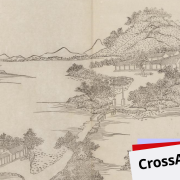
CrossAsia Talks: Huiyi Wu, Mackenzie Cooley, Shih-Pei Chen 4. Dezember 2025

(See English below)

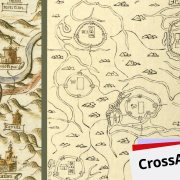
Zum Jahresabschluss der CrossAsia Talks am 4. Dezember ab 18 Uhr geben Mackenzie Cooley (Hamilton College, USA), Huiyi Wu (Centre Alexandre Koyré, Frankreich), and Shih-Pei Chen (Max-Planck-Institut für Wissenschaftsgeschichte, Berlin) in ihrem Onlinevortrag “Knowing an Empire: Early Modern Chinese and Spanish Worlds in Dialogue” einen Einblick in den gleichnamigen Sammelband.

This collective book, edited by Cooley and Wu, brings leading scholars across Latin American and Asian Studies to write about how two early modern, vast empires – the Spanish and the Chinbese, despite being, separated by thousands of miles, developed comparable systems to gather, order, and write knowledge about their local worlds. Through a new methodology of “juxtapositional comparison,” this book reads the difangzhi 地方志 (local gazetteers) of China and the relaciones geográficas of the Spanish world in parallel. Knowing an Empire does not see the conveyance of information across an empire as a top-down process with an active center as a knowledge-maker. Instead, it amplifies a blend of voices that speak as much to imperial bureaucracy as to the rich local and Indigenous cultures, revealing these two early modern empires as diverse polities whose equilibria were constantly rebalanced among local powers.

This talk will also give glimpses into some of the book chapters to demonstrate how the juxtapositional comparison is done.

Die Vortragssprache ist Englisch. Bei Fragen kontaktieren Sie uns unter: ostasienabt@sbb.spk-berlin.de.

Der Vortrag wird via Webex gestreamt*. Sie können am Vortrag über Ihren Browser ohne Installation einer Software teilnehmen. Klicken Sie dazu unten auf „Zum Vortrag“, folgen dem Link „Über Browser teilnehmen“ und geben Ihren Namen ein.

Alle bislang angekündigten Vorträge finden Sie hier. Die weiteren Termine kündigen wir in unserem Blog und auf unserem X-Account, Mastodon und BlueSky an.

To mark the year-end conclusion of the CrossAsia Talks on December 4, at 6 p.m., Mackenzie Cooley (Hamilton College, USA), Huiyi Wu (Centre Alexandre Koyré, France), and Shih-Pei Chen (Max Planck Institute for the History of Science, Berlin) will give in their online lecture entitled “Knowing an Empire: Early Modern Chinese and Spanish Worlds in Dialogue” and share insights into their recent publication of the same title.

This collective book, edited by Cooley and Wu, brings leading scholars across Latin American and Asian Studies to write about how two early modern, vast empires – the Spanish and the Chinbese, despite being, separated by thousands of miles, developed comparable systems to gather, order, and write knowledge about their local worlds. Through a new methodology of “juxtapositional comparison,” this book reads the difangzhi 地方志 (local gazetteers) of China and the relaciones geográficas of the Spanish world in parallel. Knowing an Empire does not see the conveyance of information across an empire as a top-down process with an active center as a knowledge-maker. Instead, it amplifies a blend of voices that speak as much to imperial bureaucracy as to the rich local and Indigenous cultures, revealing these two early modern empires as diverse polities whose equilibria were constantly rebalanced among local powers.

This talk will also give glimpses into some of the book chapters to demonstrate how the juxtapositional comparison is done.

The lecture will be held in English. If you have any questions, please contact us: ostasienabt@sbb.spk-berlin.de.

The lecture will be streamed via Webex*. You can take part in the lecture using your browser without having to install a special software. Please click on the respective button “To the lecture” below, follow the link “join via browser” (“über Browser teilnehmen”), and enter your name.

You can find all previously announced lectures here. We will announce further dates in our blog and on X, Mastodon and BlueSky.


*Mit Ihrer Teilnahme an der Veranstaltung räumen Sie der Stiftung Preußischer Kulturbesitz und ihren nachgeordneten Einrichtungen kostenlos alle Nutzungsrechte an den Bildern/Videos ein, die während der Veranstaltung von Ihnen angefertigt wurden. Dies schließt auch die kommerzielle Nutzung ein. Diese Einverständniserklärung gilt räumlich und zeitlich unbeschränkt und für die Nutzung in allen Medien, sowohl für analoge als auch für digitale Verwendungen. Sie umfasst auch die Bildbearbeitung sowie die Verwendung der Bilder für Montagen. / By participating, you grant the Stiftung Preußischer Kulturbesitz and its subordinate institutions free of charge all rights of usage of pictures and videos taken of you during this lecture presentation. This declaration of consent is valid in terms of time and space without restrictions and for usage in all media, including analogue and digital usage. It includes image processing and the usage of photos in composite illustrations. German law will apply.

CrossAsia Talks: Niklas Leverenz 12. Februar 2026

(See English below)

Freuen Sie sich mit uns auf den 12. Feburar! Niklas Leverenz wird im Rahmen unserer CrossAsia Talks ab 18 Uhr zum Thema “Resurfaced in our collection: The Lithographs of the East-Turkestan Engravings (Shanghai, 1891), originally printed in Paris between 1767 and 1774” referieren. Der Onlinevortrag behandelt ein kürzlich in der Sammlung der Staatsbibliothek wiederentdecktes Set photolithographischer Reproduktionen der ursprünglich in Paris angefertigten Schlachtenkupfer.

Reproductions of the famous East Turkestan engravings made in Paris around 1770 were printed in Shanghai in 1891 using the then new technology of photolithography. About twenty sets of these prints seem to exist, but very little is known about them.

The collection of the Staatsbibliothek zu Berlin owns one set of these unique prints which it acquired in 1965. The set was misplaced but could just recently be reallocated with the help of an article published by the speaker of this session, Niklas Leverenz, in the latest issue of the journal Orientations.

In this session, Niklas Leverenz will explain the historic background of the East Turkestan campaign in 1755-1760 which resulted in the subjugation of large territories in Central Asia that include much of the present-day Xinjiang Uyghur Autonomous Region. To celebrate his victory, the Qianlong emperor (r. 1735-1796) commissioned numerous artefacts, including sixteen monumental battle paintings, each measuring approximately four by eight metres. They were hung on the walls of the Ziguangge (Hall of Imperial Splendour) in the gardens to the west of the Forbidden City in Beijing.

Four Jesuit missionary painters working at the Qing court at the time drew reduced versions of these monumental battle paintings measuring c. 60 by 90 centimetres. These were to serve as model drawings for engravings to be made in France. The production of the sixteen conquest engravings in Paris between 1767 and 1774 attracted much public attention. One of these sets is known to have been in the Jesuit orphanage in Tushanwan, in the historically Catholic district of Shanghai, part of the area also called Xujiahui or Zikawei. This set was presumably the model for the photolithographic copies made by the German photographer Herman Salzwedel (active c. 1877–1904) in 1890.

The introduction of lithography in Shanghai in the late nineteenth century led to an increasing demand for images. From 1884 on the illustrated newspaper Dianshizhai Pictorial was published three times a month, successfully reproducing battle scenes from i.e. the Sino-French War. In this situation the Salzwedel print project was conceived.

Die Vortragssprache ist Englisch. Bei Fragen kontaktieren Sie uns unter: ostasienabt@sbb.spk-berlin.de.

Der Vortrag wird via Webex gestreamt*. Sie können am Vortrag über Ihren Browser ohne Installation einer Software teilnehmen. Klicken Sie dazu unten auf „Zum Vortrag“, folgen dem Link „Über Browser teilnehmen“ und geben Ihren Namen ein.

Alle bislang angekündigten Vorträge finden Sie hier. Die weiteren Termine kündigen wir in unserem Blog und auf unserem X-Account, Mastodon und BlueSky an.

On 12 February at 6 p.m., we look forward to an online lecture by Niklas Leverenz on the topic ‘Resurfaced in our collection: The Lithographs of the East-Turkestan Engravings (Shanghai, 1891), originally printed in Paris between 1767 and 1774’. The lecture will focus on a recently rediscovered set of photolithographic reproductions from the State Library’s collection, which were produced in Shanghai in 1891 based on Parisian copperplate engravings of the Qianlong conquest campaigns.

Reproductions of the famous East Turkestan engravings made in Paris around 1770 were printed in Shanghai in 1891 using the then new technology of photolithography. About twenty sets of these prints seem to exist, but very little is known about them.

The collection of the Staatsbibliothek zu Berlin owns one set of these unique prints which it acquired in 1965. The set was misplaced but could just recently be reallocated with the help of an article published by the speaker of this session, Niklas Leverenz, in the latest issue of the journal Orientations.

In this session, Niklas Leverenz will explain the historic background of the East Turkestan campaign in 1755-1760 which resulted in the subjugation of large territories in Central Asia that include much of the present-day Xinjiang Uyghur Autonomous Region. To celebrate his victory, the Qianlong emperor (r. 1735-1796) commissioned numerous artefacts, including sixteen monumental battle paintings, each measuring approximately four by eight metres. They were hung on the walls of the Ziguangge (Hall of Imperial Splendour) in the gardens to the west of the Forbidden City in Beijing.

Four Jesuit missionary painters working at the Qing court at the time drew reduced versions of these monumental battle paintings measuring c. 60 by 90 centimetres. These were to serve as model drawings for engravings to be made in France. The production of the sixteen conquest engravings in Paris between 1767 and 1774 attracted much public attention. One of these sets is known to have been in the Jesuit orphanage in Tushanwan, in the historically Catholic district of Shanghai, part of the area also called Xujiahui or Zikawei. This set was presumably the model for the photolithographic copies made by the German photographer Herman Salzwedel (active c. 1877–1904) in 1890.

The introduction of lithography in Shanghai in the late nineteenth century led to an increasing demand for images. From 1884 on the illustrated newspaper Dianshizhai Pictorial was published three times a month, successfully reproducing battle scenes from i.e. the Sino-French War. In this situation the Salzwedel print project was conceived.

The lecture will be held in English. If you have any questions, please contact us: ostasienabt@sbb.spk-berlin.de.

The lecture will be streamed via Webex*. You can take part in the lecture using your browser without having to install a special software. Please click on the respective button “To the lecture” below, follow the link “join via browser” (“über Browser teilnehmen”), and enter your name.

You can find all previously announced lectures here. We will announce further dates in our blog and on X, Mastodon and BlueSky.


*Mit Ihrer Teilnahme an der Veranstaltung räumen Sie der Stiftung Preußischer Kulturbesitz und ihren nachgeordneten Einrichtungen kostenlos alle Nutzungsrechte an den Bildern/Videos ein, die während der Veranstaltung von Ihnen angefertigt wurden. Dies schließt auch die kommerzielle Nutzung ein. Diese Einverständniserklärung gilt räumlich und zeitlich unbeschränkt und für die Nutzung in allen Medien, sowohl für analoge als auch für digitale Verwendungen. Sie umfasst auch die Bildbearbeitung sowie die Verwendung der Bilder für Montagen. / By participating, you grant the Stiftung Preußischer Kulturbesitz and its subordinate institutions free of charge all rights of usage of pictures and videos taken of you during this lecture presentation. This declaration of consent is valid in terms of time and space without restrictions and for usage in all media, including analogue and digital usage. It includes image processing and the usage of photos in composite illustrations. German law will apply.

CrossAsia Talks: Joan Judge 20.11.2025

(See English below)

Am 20. November 2025 ab 18 Uhr wird Prof. Joan Judge (York University) in einem Onlinevortrag mit dem Titel “New Conceptions: Modes of Knowing in Chinese Encyclopedias for Everyday Life” neue Perspektiven auf die alltägliche Nutzung medizinischer Praktiken im vormodernen China präsentieren. Neben gedruckten Materialien werden auch Handschriften aus der Sammlung Unschuld berücksichtigt.

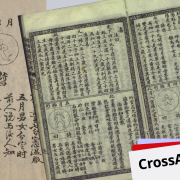
Scholars have debated the epistemic status of the Comprehensive Compendia of Myriad Treasures (wanbao quanshu  萬寶全書), a genre of daily-use texts widely reproduced in China from the sixteenth through the early twentieth centuries. This presentation seeks to deepen our understanding of both the content and the potential readership for these texts in the late imperial and Republican Chinese contexts. It does so by engaging in a close and contextualized examination of one section of the compendia that remained remarkably stable over the course of this period, the section on “Pregnancy” (Zhongzi men 種子門).

I first probe the sources for this section in an effort to determine the register of knowledge that it reproduced. This requires unraveling a complex amalgam of what could be characterized as works on bedchamber arts on the one hand, and scholarly medical treatises on the other. I then examine the different components of the section: its crude illustrations and mnemonic verses which both describe the development of the embryo, together with numerical calculations for determining the health and sex of the fetus, and recipes for managing the various ailments that might afflict the gestating woman.

Throughout this analysis, I use intratextual methods to attempt to determine who the potential users of the text might have been: who, for example, would have been best served by the illustrations, the poems, the recipes, or a combination of them. I will also use intertextual methods to search for the audience for the “Zhongzi men.” Here I will examine a hand-written gynecological manuscript from the Unschuld Collection that copied the contents of the section almost verbatim. This manuscript offers some sense of who read and valued the material on “Gestation” in the myriad treasures enough to use it as an authoritative source.

Die Vortragssprache ist Englisch. Bei Fragen kontaktieren Sie uns unter: ostasienabt@sbb.spk-berlin.de.

Der Vortrag wird via Webex gestreamt. Sie können am Vortrag über Ihren Browser ohne Installation einer Software teilnehmen. Klicken Sie dazu unten auf „Zum Vortrag“, folgen dem Link „Über Browser teilnehmen“ und geben Ihren Namen ein.

Alle bislang angekündigten Vorträge finden Sie hier. Die weiteren Termine kündigen wir in unserem Blog und auf unserem X-Account, Mastodon und BlueSky an.

On 20 November 2025 from 6 pm, Prof. Joan Judge (York University) will  present an online lecture entitled ‘New Conceptions: Modes of Knowing in Chinese Encyclopedias for Everyday Life’ providing new perspectives on the everyday medical practices in pre-modern China. Besides printed materials manuscripts from the Unschuld Collection will also be considered.

Scholars have debated the epistemic status of the Comprehensive Compendia of Myriad Treasures (Wanbao quanshu  萬寶全書), a genre of daily-use texts widely reproduced in China from the sixteenth through the early twentieth centuries. This presentation seeks to deepen our understanding of both the content and the potential readership for these texts in the late imperial and Republican Chinese contexts. It does so by engaging in a close and contextualized examination of one section of the compendia that remained remarkably stable over the course of this period, the section on “Pregnancy” (Zhongzi men 種子門).

I first probe the sources for this section in an effort to determine the register of knowledge that it reproduced. This requires unraveling a complex amalgam of what could be characterized as works on bedchamber arts on the one hand, and scholarly medical treatises on the other. I then examine the different components of the section: its crude illustrations and mnemonic verses which both describe the development of the embryo, together with numerical calculations for determining the health and sex of the fetus, and recipes for managing the various ailments that might afflict the gestating woman.

Throughout this analysis, I use intratextual methods to attempt to determine who the potential users of the text might have been: who, for example, would have been best served by the illustrations, the poems, the recipes, or a combination of them. I will also use intertextual methods to search for the audience for the “Zhongzi men.” Here I will examine a hand-written gynecological manuscript from the Unschuld Collection that copied the contents of the section almost verbatim. This manuscript offers some sense of who read and valued the material on “Gestation” in the myriad treasures enough to use it as an authoritative source.

The lecture will be held in English. If you have any questions, please contact us: ostasienabt@sbb.spk-berlin.de.

The lecture will also be streamed via Webex. You can take part in the lecture using your browser without having to install a special software. Please click on the respective button “To the lecture” below, follow the link “join via browser” (“über Browser teilnehmen”), and enter your name.

You can find all previously announced lectures here. We will announce further dates in our blog and on X, Mastodon and BlueSky.


CrossAsia Talks: Martin Weiser 26.03.2026

(See English below)

Wir laden Sie herzlich ein zum Onlinevortrag “Closing in on the Unknown: Measuring DPRK/North Korea’s publication output traced through library holdings, ISBN and the domestic registration number” am 26. März 2026 ab 18 Uhr. Martin Weiser (FU Berlin) wird der Frage nachgehen, wie sich die Publikationslandschaft Nordkoreas durch die systematische Auswertung von Bibliotheksbeständen, ISBNs und bislang unerschlossenen im Land vergebenen  Registrierungsnummern erfassen lässt.

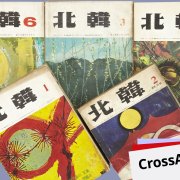
Comparatively little is known about the DPRK, and its print publications remain a key source for academics. But little to no tools exist to deal with the limited but nonetheless overwhelming number of publications we now have access to and the diverse information they contain. This presentation will look at one particular kind of information those publications provide: changes in the country’s publication output. It begins with a comparison of library holdings in Seoul and the USA with the Staatsbibliothek zu Berlin, and then decodes information included in ISBN assignments and the domestic registration numbering gathered from several thousand print publications to provide new insights into changes in publication output. The domestic numbering was not decoded before neither by scholars nor librarians, although it provides minute insights into yearly outputs divided by field as well as the delay between registration and eventual publishing. These three measures are then combined to give a fuller view of the DPRK publishing scene and developments which the traditional method of merely consulting libraries for available publications would have missed.

Die Vortragssprache ist Englisch. Bei Fragen kontaktieren Sie uns unter: ostasienabt@sbb.spk-berlin.de.

Der Vortrag wird via Webex gestreamt und aufgezeichnet*. Sie können am Vortrag über Ihren Browser ohne Installation einer Software teilnehmen. Klicken Sie dazu unten auf „Zum Vortrag“, folgen dem Link „Über Browser teilnehmen“ und geben Ihren Namen ein.

Alle bislang angekündigten Vorträge finden Sie hier. Die weiteren Termine kündigen wir in unserem Blog und auf unserem X-Account, Mastodon und BlueSky an.

We cordially invite you to attend the online lecture ‘Closing in on the Unknown: Measuring DPRK/North Korea’s publication output traced through library holdings, ISBN and the domestic registration number’ by Martin Weiser (FU Berlin) on March 26, 2026 at 6 p.m. The speaker will explore how North Korea’s publication landscape can be captured through the systematic evaluation of library holdings, ISBN assignments and previously untapped domestic registration numbers.

Comparatively little is known about the DPRK and its print publications remain a key source for academics. But little to no tools exist to deal with the limited but nonetheless overwhelming number of publications we now have access to and the diverse information they contain. This presentation will look at one particular kind of information those publications provide: changes in the country’s publication output. It begins with a comparison of library holdings in Seoul and the USA with the Staatsbibliothek zu Berlin, and then decodes information included in ISBN assignments and the domestic registration numbering gathered from several thousand print publications to provide new insights into changes in publication output. The domestic numbering was not decoded before neither by scholars nor librarians, although it provides minute insights into yearly outputs divided by field as well as the delay between registration and eventual publishing. These three measures are then combined to give a fuller view of the DPRK publishing scene and developments which the traditional method of merely consulting libraries for available publications would have missed.

The lecture will be held in English. If you have any questions, please contact us: ostasienabt@sbb.spk-berlin.de.

The lecture will be streamed and recorded via Webex*. You can take part in the lecture using your browser without having to install a special software. Please click on the respective button “To the lecture” below, follow the link “join via browser” (“über Browser teilnehmen”), and enter your name.

You can find all previously announced lectures here. We will announce further dates in our blog and on X, Mastodon and BlueSky.


*Mit Ihrer Teilnahme an der Veranstaltung räumen Sie der Stiftung Preußischer Kulturbesitz und ihren nachgeordneten Einrichtungen kostenlos alle Nutzungsrechte an den Bildern/Videos ein, die während der Veranstaltung von Ihnen angefertigt wurden. Dies schließt auch die kommerzielle Nutzung ein. Diese Einverständniserklärung gilt räumlich und zeitlich unbeschränkt und für die Nutzung in allen Medien, sowohl für analoge als auch für digitale Verwendungen. Sie umfasst auch die Bildbearbeitung sowie die Verwendung der Bilder für Montagen. / By participating, you grant the Stiftung Preußischer Kulturbesitz and its subordinate institutions free of charge all rights of usage of pictures and videos taken of you during this lecture presentation. This declaration of consent is valid in terms of time and space without restrictions and for usage in all media, including analogue and digital usage. It includes image processing and the usage of photos in composite illustrations. German law will apply.

CrossAsia Talks: Hermann Kreutzmann 29.01.2026

(See English below)

Wir laden herzlich zum ersten CrossAsia Talk im neuen Jahr ein. Prof. Dr. Hermann Kreutzmann (FU Berlin) wird am Donnerstag, den 29.01.2026, ab 18 Uhr zum Thema “Passages to Kashgar and Yarkand – 19th century cross-mountain connections and relations” sprechen. Der Vortrag wird  die europäischen Expeditionen und geopolitischen Verflechtungen entlang der südlichen Seidenstraße im 19. Jahrhundert beleuchten. Im Mittelpunkt stehen dabei einerseits die Bemühungen von Forschern, die Handelsstädte Kashgar und Yarkand zu erreichen, andererseits die Rivalität der Kolonialmächte um Einfluss und wirtschaftliche Vorteile in Zentralasien zu jener Zeit.

The term ‘Silk Road’ first appeared in Carl Ritter’s ‘Geography of Asia’ in 1838 and was further developed and popularised by Friedrich Freiherr von Richthofen in 1877. Subsequently, geographical exploration and the search for economic advantages went hand in hand with imperial ambitions as interest increasingly focused on the Celestial Mountains and oases of the southern Silk Road. The Tianshan Mountains and Kashgar became coveted destinations for European explorers who were denied access to forbidden cities by local potentates. The prominent Berlin geographers Alexander von Humboldt and Carl Ritter motivated young scholars such as the Schlagintweit brothers to explore the roads to Kashgar and Yarkand. In addition, Pyotr Semenov participated in the Berlin nestors-led initiative to expand geographical knowledge of South and Central Asia and support its manifestation in topographical maps.

The talk focuses on efforts to reach Kashgar and Yarkand in the second half of the 19th century. The competition between Adolph Schlagintweit and Chokan Valikhanov, the role of indigenous intermediaries in gathering knowledge, and the desire to tap into the potential of valuable local commodities have shaped our perception of the southern Silk Roads. Kashgar and Yarkand were hubs for trade between Afghanistan, Semirechia, Kashmir, and British India. The Xinjiang Triangle represents a less significant case within the colonial opium regime, but with significant local impact on consumers, trade and profit. The exchange corridors were characterised by long-distance routes connecting rival empires, represented by Chinese administrative officials, British and Russian consuls, with Kashgar and Yarkand. The archival material presented, spanning a century from the 1850s, was recorded by European representatives on site and provides insights into the external perception of these oases on the Silk Road. Comparisons of favourable routes led to dreams of infrastructure projects to cross the Karakorum Mountains and Kunlun Shan, which were realised in the second half of the 20th century.

Die Vortragssprache ist Englisch. Bei Fragen kontaktieren Sie uns unter: ostasienabt@sbb.spk-berlin.de.

Der Vortrag wird via Webex gestreamt*. Sie können am Vortrag über Ihren Browser ohne Installation einer Software teilnehmen. Klicken Sie dazu unten auf „Zum Vortrag“, folgen dem Link „Über Browser teilnehmen“ und geben Ihren Namen ein.

Alle bislang angekündigten Vorträge finden Sie hier. Die weiteren Termine kündigen wir in unserem Blog und auf unserem X-Account, Mastodon und BlueSky an.

We cordially invite you to the first CrossAsia Talk of the new year. Prof. Dr. Hermann Kreutzmann (Freie Universität Berlin) will speak on Thursday, January 29, 2026, at 6 p.m. on the topic Passages to Kashgar and Yarkand – 19th-Century Cross-Mountain Connections and Relations.”

The lecture will explore European expeditions and geopolitical entanglements along the southern Silk Road in the 19th century. It will focus on the efforts of researchers to reach the trading cities of Kashgar and Yarkand, as well as on the rivalry among colonial powers for influence and economic advantage in Central Asia at that time.

The term ‘Silk Road’ first appeared in Carl Ritter’s ‘Geography of Asia’ in 1838 and was further developed and popularised by Friedrich Freiherr von Richthofen in 1877. Subsequently, geographical exploration and the search for economic advantages went hand in hand with imperial ambitions as interest increasingly focused on the Celestial Mountains and oases of the southern Silk Road. The Tianshan Mountains and Kashgar became coveted destinations for European explorers who were denied access to forbidden cities by local potentates. The prominent Berlin geographers Alexander von Humboldt and Carl Ritter motivated young scholars such as the Schlagintweit brothers to explore the roads to Kashgar and Yarkand. In addition, Pyotr Semenov participated in the Berlin nestors-led initiative to expand geographical knowledge of South and Central Asia and support its manifestation in topographical maps.

The talk focuses on efforts to reach Kashgar and Yarkand in the second half of the 19th century. The competition between Adolph Schlagintweit and Chokan Valikhanov, the role of indigenous intermediaries in gathering knowledge, and the desire to tap into the potential of valuable local commodities have shaped our perception of the southern Silk Roads. Kashgar and Yarkand were hubs for trade between Afghanistan, Semirechia, Kashmir, and British India. The Xinjiang Triangle represents a less significant case within the colonial opium regime, but with significant local impact on consumers, trade and profit. The exchange corridors were characterised by long-distance routes connecting rival empires, represented by Chinese administrative officials, British and Russian consuls, with Kashgar and Yarkand. The archival material presented, spanning a century from the 1850s, was recorded by European representatives on site and provides insights into the external perception of these oases on the Silk Road. Comparisons of favourable routes led to dreams of infrastructure projects to cross the Karakorum Mountains and Kunlun Shan, which were realised in the second half of the 20th century.

The lecture will be held in English. If you have any questions, please contact us: ostasienabt@sbb.spk-berlin.de.

The lecture will be streamed via Webex*. You can take part in the lecture using your browser without having to install a special software. Please click on the respective button “To the lecture” below, follow the link “join via browser” (“über Browser teilnehmen”), and enter your name.

You can find all previously announced lectures here. We will announce further dates in our blog and on X, Mastodon and BlueSky.


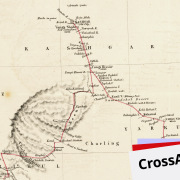
Caption for Mirza’s exploration map:

The ‘Map of the route from Badakhshan across the Pamir-Steppe to Kashgar with the southern branch of the Upper Oxus from the survey made by the Mirza in 1868-69’ accompanied a paper read at the Royal Geographical Society on April 24, 1871 by Thomas Montgomerie and was published in the society’s journal in the same year. It shows Mirza Shuja’s explorations along his route from Badakhshan to Shahidulla via Kashgar.

Source: Thomas George Montgomerie 1871: Report of ‘The Mirza’s’ Exploration from Caubul to Kashgar’ in Journal of the Royal Geographical Society of London 41, page 132 opposite.

Source: Reproduced in Pamirian Crossroads (2015: 213); Courtesy Pamir Archive Collection


*Mit Ihrer Teilnahme an der Veranstaltung räumen Sie der Stiftung Preußischer Kulturbesitz und ihren nachgeordneten Einrichtungen kostenlos alle Nutzungsrechte an den Bildern/Videos ein, die während der Veranstaltung von Ihnen angefertigt wurden. Dies schließt auch die kommerzielle Nutzung ein. Diese Einverständniserklärung gilt räumlich und zeitlich unbeschränkt und für die Nutzung in allen Medien, sowohl für analoge als auch für digitale Verwendungen. Sie umfasst auch die Bildbearbeitung sowie die Verwendung der Bilder für Montagen. / By participating, you grant the Stiftung Preußischer Kulturbesitz and its subordinate institutions free of charge all rights of usage of pictures and videos taken of you during this lecture presentation. This declaration of consent is valid in terms of time and space without restrictions and for usage in all media, including analogue and digital usage. It includes image processing and the usage of photos in composite illustrations. German law will apply.

Newsletter 35 – Blätter, Bytes und Begegnungen: der Herbst mit CrossAsia ist bunt!

Liebe CrossAsia-Nutzer:innen,


der Herbst ist bunt: Wir treffen uns beim CrossAsia User Meeting 2025, schulen uns in der VDB Online Fortbildung für Fachreferent:innen und Bibliothekar:innen der Asienwissenschaften, starten mit einem frischen Classroom-Programm ins Wintersemester 25/26 und diskutieren aktuelle Forschung in den CrossAsia Talks. Ganz gleich, ob Sie sich weiterbilden, lehren oder forschen – es gibt viele Gelegenheiten, CrossAsia neu zu entdecken und aktiv mitzugestalten!


CrossAsia Events im Herbst


VDB Online-Fortbildung für Fachreferent:innen und Bibliothekar:innen der Asienwissenschaften 2025

Am 4. und 5. November 2025 findet eine VDB-Onlinefortbildung für Fachreferent:innen und Bibliothekar:innen statt, zu der wir Sie herzlich einladen. Wir informieren ausführlich über den FID Asien und CrossAsia, das Angebot und sämtliche Services. Alle relevanten Informationen zu Ablauf und Anmeldung finden Sie in unserem Blog.


AI and Knowledge in Action – CrossAsia and the Stabi Lab

Die Staatsbibliothek zu Berlin untersucht im Rahmen zweier Laborinitiativen innovative Ansätze zur Weiterentwicklung bibliothekarischer Dienstleistungen. Das CrossAsia Lab widmet sich der Erforschung des Potenzials künstlicher Intelligenz zur Verbesserung des Zugangs zu Wissen. Im Fokus steht die Entwicklung von Methoden zur Aufbereitung und Bereitstellung mehrsprachiger, lizenzierter und urheberrechtlich geschützter Materialien, um den Zugang zu umfangreichen Sammlungen in verschiedenen Sprachen und Schriften zu erleichtern.

Das Stabi Lab konzentriert sich auf den Wissenstransfer und die Förderung kollaborativer Forschungspraktiken. Ziel ist die Schaffung eines experimentellen Raums, der Innovationen ermöglicht und vielfältige Formen der Co-Creation sowie zukünftiger Partnerschaften unterstützt. Hier werden neue Ansätze zur Ideenentwicklung, Wissensvermittlung und Kooperation erprobt.

Gemeinsam demonstrieren diese Laborinitiativen in diesem Online-Workshop das Engagement der Staatsbibliothek zu Berlin für die aktive Gestaltung der Zukunft des Wissensmanagements und die Weiterentwicklung ihrer Rolle als zentrale Infrastruktur für Forschung und Bildung. Weitere Informationen finden Sie auch im Blog der Staatsbibliothek.

Die Veranstaltung findet in englischer Sprache statt. Referenten: Hou-Ieong Ho, Roman Kuhn, John Woitkowitz

Online-Workshop am Donnerstag, 6.11.2025, 14:00-15:30 Uhr

Link zum Meeting


CrossAsia User Meeting 2025

Es ist wieder soweit! Wir laden Sie herzlich zu unserem CrossAsia User Meeting 2025 ein. Nach den positiven Erfahrungen der vergangenen Jahre (20212023) freuen wir uns darauf auch in diesem Jahr wieder direkt mit Ihnen in den Austausch zu treten.

Wann und wo?

Datum: Dienstag, 11. November 2025

Zeit: 15:00-16:30 Uhr

Format: Online via Webex, ohne Voranmeldung

Ihre Stimme zählt!

Das User Meeting steht ganz im Zeichen des Dialogs zwischen unserem CrossAsia-Team und Ihnen als unsere Nutzenden. Wir möchten von Ihnen erfahren:

  • Wie zufrieden sind Sie mit unseren aktuellen Services?
  • Welche Wünsche und Anregungen haben Sie für die Weiterentwicklung?
  • Wo sehen Sie Verbesserungsvorschläge?
  • Welche neuen Features würden Ihre Arbeit erleichtern?

Interaktives Format mit Breakout Sessions

Um einen intensiven Austausch zu ermöglichen, planen wir Breakout Sessions zu verschiedenen Themenbereichen. So haben Sie die Möglichkeit, sich gezielt zu den Aspekten zu äußern, die für Ihre Arbeit besonders relevant sind. Wir planen sowohl Breakout Sessions zu den einzelnen Regionen als auch verschiedenen thematischen Schwerpunkten, beispielsweise unseren Services wie den Blauen Leihverkehr und DoD sowie Digital Humanities.


Nehmen Sie als Nutzendenvertretung am Fachbeiratstreffen 2026 teil!

Werden Sie Nutzendenvertretung im CrossAsia-Fachbeirat! Das nächste Fachbeiratstreffen findet im Januar 2026 vor Ort in Berlin statt. Hier haben Sie die Chance, die strategische Entwicklung von CrossAsia aktiv mitzugestalten und den Standpunkt der Community zu vertreten.

Möchten Sie die Community als Nutzendenvertretung repräsentieren? Dann senden Sie uns jetzt Ihren Kurzlebenslauf (max. 150 Wörter) – gerne mit Angabe Ihres regionalen Schwerpunkts. Aus allen Bewerbungen wählen wir zwei Personen aus, die die Nutzendenperspektive während des Fachbeirates vertreten werden. Der Fachinformationsdienst (FID) Asien übernimmt die Kosten für An- und Abreise sowie eine Übernachtung in Berlin. Näheres über den FID Asien sowie dessen Fachbeirat erfahren Sie hier.


CrossAsia Talks

Auch in 2026 wird unsere Talks-Reihe fortgesetzt. Aktuelle Informationen zu den anstehenden Talks finden Sie immer hier.

Und bis zum Jahresende erwarten Sie noch folgende Highlights:

  • 20.11.2025: Prof. Joan Judge (York University) wird in einem Onlinevortrag mit dem Titel „New Conceptions: Modes of Knowing in Chinese Encyclopedias for Everyday Life“ neue Perspektiven auf die alltägliche Nutzung medizinischer Praktiken im vormodernen China präsentieren. Neben gedruckten Materialien werden auch Handschriften aus der Sammlung Unschuld berücksichtigt.
  • 04.12.2025: Mackenzie Cooley (Hamilton College, USA), Huiyi Wu (Centre Alexandre Koyré, Frankreich), Shih-Pei Chen (Max-Planck-Institut für Wissenschaftsgeschichte, Berlin) werden in ihrem Onlinevortrag mit dem Titel „Knowing an Empire: Early Modern Chinese and Spanish Worlds in Dialogue“ einen Einblick in ihre interdisziplinäre Arbeit zum Spanischen und zum Chinesischen Reich geben.

Haben Sie Lust bekommen, selbst einen Talk zu halten? Alle Infos dazu finden Sie in unserem Call for Talks.


CrossAsia Classroom

Wir starten mit einem frischen Classroom-Programm ins Wintersemester 25/26. Das vollständige Programm finden Sie wie immer in unserem Classroom. Wir führen gerne auch Schulungen auf Anfrage durch. Kontaktieren Sie uns unter: x-asia@sbb.spk-berlin.de


DH Lunch Talk Series startet im Februar 2026

Wir freuen uns, die nächste Runde der DH Lunch Talk Series für Februar 2026 anzukündigen! Nach der erfolgreichen Premiere in den Jahren 2023/2024 und der gemeinsamen Konferenz „Charting the European D-SEA: Digital Scholarship in East Asian Studies“ im Juli 2024 (mit 150 Teilnehmenden aus 19 Ländern) setzen wir unsere Bemühungen zur Förderung der digitalen Wissenschaft fort.

Ab Februar 2026 laden wir Sie monatlich zu Online-Vorträgen während der Mittagspause ein. Jede Sitzung umfasst einen 60-minütigen Vortrag inklusive Diskussion. Geplante Themen sind u. a. Manchu OCR, konfuzianische Akademien, KI-Methoden für historische Datenbanken und Ortsverzeichnisse.

Möchten Sie Ihre eigene Forschung im Bereich der Digital Humanities vorstellen oder ein Tutorial zu Ihren digitalen Tools anbieten? Wir laden Wissenschaftlerinnen und Wissenschaftler ein, die digitale Methoden in den Asienwissenschaften einsetzen, sich als Sprecher zu bewerben. Kontaktieren Sie uns bei Interesse unter x-asia@sbb.spk-berlin.de.

Das vollständige Programm wird im Januar 2026 auf CrossAsia veröffentlicht. Für regelmäßige Updates zu den digitalen Asienwissenschaften abonnieren Sie gerne unsere Mailingliste unter d-sea@listserv.dfn.de.


CrossAsia News


Neue Publikationen im CrossAsia Open Access Repository

Zwei neue sinologische Beiträge wurden freigeschaltet: Zum Einen die englische Übersetzung eines Beitrags aus der Zeitschrift „Asien“ von Jörg Rodenwaldt und Alexis Stanimiroudis „Tourism between Taiwan and China: Bridge or Obstacle to Cultural and Political Dialog?”. Zum Anderen die Monographie „China’s landless peasants and the role of state-led rural urbanization” von Isabel Heger-Laube. Im Bereich Japan sind nun alle Blogbeiträge des gleichnamigen abgeschlossenen DFG-Projekts „Urban-rural migration and rural revitalization in Japan“ bis einschließlich Mai 2025 veröffentlicht. Darüber hinaus ist Band 4 der Alliance for Research on East Asia (AREA) Ruhr Working Papers erschienen, der eine Round Table Diskussion zum Thema „Perspectives on the State and Future of Environmental History in Japan and Germany” enthält. Stephan Köhn hat einen japanischen Beitrag zum Onna setsuyō mojibukuro verfasst mit dem Titel 『女節用文字袋』における語彙集編纂の再検討. Und last, but not least lassen sich die Folien der Beiträge von Ursula Flache beim diesjährigen Japanologentag rund um „Publizieren im Open Access Repository sowie Schlaglichter auf Sonderbestände der Stabi Berlin“ und „Forschungsdaten“ nachlesen.

Das CrossAsia Team bedankt sich für die Einreichungen! Open Access soll wissenschaftliche Literatur für alle Menschen frei zugänglich und nachnutzbar machen, kostenlos und möglichst ohne technische und rechtliche Barrieren. Open Access ist somit ein zentraler Teil von Open Science und trägt zu einer transparenten, wissensbasierten Gesellschaft bei. Weiterführende Informationen zu Open Access bietet die Webseite des open-access.network.

Das CrossAsia Open Access Repository zeichnet sich aus durch:

  • langfristige Archivierung
  • DOI/URN-Vergabe
  • Fachrepositorium für die Asienwissenschaften (DFG-White List für fachspezifische Repositorien).
  • gute Auffindbarkeit via CrossAsia Suche und einschlägigen Recherche-Tools
  • Erst- und Zweitveröffentlichungen sowie Forschungsdaten willkommen
  • kostenfreien Service

Bei Fragen sprechen Sie uns gerne an unter x-asia@sbb.spk-berlin.de


Entdecken Sie den AI Explorer von CrossAsia: Testen Sie zwei neue Funktionen, um relevante Artikel in verschiedenen Sprachen zu finden

Wir haben dem CrossAsia Newspaper Explorer zwei neue KI-gestützte Funktionen hinzugefügt: Eine davon ist eine Erweiterung der Ergebnismengen, die Sie durch einen oder mehrere Suchbegriffe aus einer oder mehreren Quellen erstellt haben, und zeigt „Ergebnisse nach Ähnlichkeit“ an. Die andere Funktion geht von einem der tatsächlichen Titel in Ihrer Ergebnismenge aus und löst eine „sprachübergreifende Suche nach ähnlichen Titeln“ aus.

Ausführliche Informationen zum technischen Hintergrund und eine Anleitung zur Verwendung dieser neuen Features finden Sie in unserem Blog.


121 Millionen chinesische Schriftzeichen sind jetzt in unserer digitalisierten Sammlung durchsuchbar: Volltextzugriff dank OCR

Unsere Zusammenarbeit mit der Academia Sinica (Taiwan) hat kürzlich einen bedeutenden Meilenstein erreicht. Dank der großzügigen Unterstützung des Zentrums für digitale Kulturen der Academia Sinica können wir nun Volltextzugriff auf unsere digitale chinesische Sammlung bieten. Diese umfasst 1.937 Titel und über 121 Millionen chinesische Schriftzeichen.

Die Partnerschaft zwischen der Ostasienabteilung der Staatsbibliothek zu Berlin (SBB) und der Academia Sinica wurde am 16. Juli 2024 offiziell gegründet (siehe unseren Blogbeitrag von diesem Tag) und durch eine von beiden Institutionen unterzeichnete Absichtserklärung besiegelt. Die Vereinbarung umreißt unsere gemeinsamen Bemühungen, optische Zeichenerkennung (OCR) auf chinesische Bildtexte anzuwenden und die Ergebnisse – einschließlich gescannter Bilder und maschinell erstellter Transkriptionen – zu teilen, um die nicht-kommerzielle Forschung im Bereich der Digital Humanities, die Lehre und den öffentlichen Zugang in Deutschland und Taiwan zu unterstützen.

Die OCR-verarbeiteten Texte stammen aus der Sammlung „Early Chinese“ der SBB und umfassen sowohl gedruckte Werke als auch Manuskripte. Die frühesten Erwerbungen stammen überwiegend aus dem 17. Jahrhundert und wurden ursprünglich vom Großen Kurfürsten Friedrich Wilhelm von Brandenburg (1620–1688) für seine Privatbibliothek getätigt. Die Sammlung wuchs nur sporadisch, bis im 19. Jahrhundert die ersten systematischen Erwerbsreisen begannen – zunächst durch Karl Friedrich Neumann (1793–1870) und später, zu Beginn des 20. Jahrhunderts, durch Herbert Müller (1885–1966) und Friedrich Wilhelm Karl Müller (1863–1930).

Weitere Informationen dazu in Sie in unserem Blog.


Neue Datenbank auf CrossAsia: SSAP E-Book Plattform先晓书院

Bis zum 30.11.2025 haben Sie die Gelegenheit, die Datenbank SSAP E-Book Plattform先晓书院 zu testen. Sie enthält nahezu sämtliche Medien, die der Verlag Social Sciences Academic Press seit den 1970er Jahren veröffentlicht hat: Dies sind nahezu 15.000 E-Books, 300.000 Artikel, 700.000 Bilder, über 1 Million Diagramme und Grafiken sowie mehr als 3.000 Stunden Audio- und Videomaterial. Die Inhalte werden täglich in Echtzeit automatisch aktualisiert. Rund 95% der Printausgaben liegen mittlerweile digital vor.

Enthalten sind Blaubücher, Sammelbände und großangelegte Materialsammlungen und Editionen. Die Inhalte decken das gesamte Spektrum der Geistes- und Sozialwissenschaften ab, darunter die Belt-and-Road-Initiative, Marxismus, chinesische Modernisierung, soziologische Studien, Länder- und Regionalforschung, Global Governance, die in Großbritannien aufbewahrten Dunhuang-Dokumente sowie Bibliographien. Darüber hinaus bietet die Plattform Materialien für regionale Studien, Branchenentwicklungsforschung sowie Forschung zu Schlüssel- und aktuellen Themen.


Highlighting a ‘Forgotten’ Perspective on the First World War: German POWs in Japan and the Bandō-Sammlung

Prof. Sarah Panzer von der Missouri State University war im Frühling 2025 im Rahmen des Stipendienprogramms der Stiftung Preußischer Kulturbesitz an der Staatsbibliothek in der Ostasienabteilung zu Gast und hat sich intensiv mit der Bandō-Sammlung beschäftigt. In einem Gastbeitrag berichtet sie in unserem Blog über Ihre Forschung.


Artikel zur Philippinen-Sammlung der Staatsbibliothek erschienen

In diesem Jahr waren die Philippinen erstmals Ehrengast der Frankfurter Buchmesse. Aus diesem Anlass stellt unsere Südostasien-Referentin Dr. Claudia Götze-Sam die Philippinen-Sammlung der Staatsbibliothek in dem aktuellen Themenschwerpunkt der Zeitschrift BuB – Forum Bibliothek und Information vor. Die Ausgaben werden jeweils drei Monate nach ihrem Erscheinen auf BuB online gestellt.

Götze-Sam, Claudia: Vielfalt in Sprache, Kultur und Literatur: Ein Blick in die Philippinen-Sammlung der Berliner Staatsbibliothek als Teil des Fachinformationsdienstes Asien. In: BuB. Forum Bibliothek und Information 77(2025), 10, S. 480-483.


Meet CrossAsia

Kommen Sie mit uns ins Gespräch! Unser Team wird auf folgenden Konferenzen vertreten sein:

07.-09.11.2025: „(Un)Democratic Futures: Japan and  Global Trajectories towards an (Un)Equal World“, Jahrestagung der Vereinigung für sozialwissenschaftliche Japanforschung (VSJF) an der Universität Wien.

21.-23.11.2025: XXXVI. Jahrestagung der Deutschen Vereinigung für Chinastudien „Selbstbilder – Fremdbilder“ am Asien-Afrika-Institut der Universität Hamburg


Vielen Dank für Ihr Interesse und Ihre Unterstützung. Wir freuen uns auf einen erkenntnisreichen und vielfältigen Herbst mit Ihnen!

Ihr CrossAsia Team

 

CrossAsia Talks: Marlene Erschbamer 25.09.2025

(See English below)

Wir freuen uns, Sie zum ersten tibetologischen CrossAsia Talk des Jahres einzuladen: Am 25. September 2025, ab 18 Uhr (Berliner Zeit), wird Frau Dr. Marlene Erschbamer in einem Online-Vortrag über “Reading Outside the Lines – Mutterschaft und Mutterrollen in der Barawa Kagyü Tradition des tibetischen Buddhismus” referieren.

Mutterschaft ist eine komplexe und höchst ambivalente Rolle für Frauen. Noch komplexer wird es, wenn Mutterrollen durch eine religiöse Brille betrachtet werden. Dies gilt auch für die Darstellung von Müttern im tibetischen Buddhismus. Um sich ein Bild von Mutterschaft im Laufe der Jahrhunderte zu machen, ist es hilfreich, zwischen den Zeilen, aber auch außerhalb der Zeilen tibetischer Texte zu lesen.
Aus tibetisch-buddhistischer Sicht wird von Frauen erwartet, liebevolle und fürsorgliche Mütter zu sein, idealerweise für alle fühlenden Wesen. Gleichzeitig bedeutet Mutterschaft ein Hindernis auf dem eigenen spirituellen Weg. Mutterschaft spielt sich zwischen Liebe und Mitgefühl ab, ist aber auch mit Herausforderungen, Enttäuschungen und Schwierigkeiten verbunden.
Dieser Vortrag gibt einen Einblick in die verschiedenen Darstellungen von Müttern innerhalb buddhistischer Traditionen, wobei der Schwerpunkt auf der Barawa-Kagyü-Tradition liegt. Es werden Themen angesprochen wie z.B. idealisierte Darstellungen von Empfängnis, Schwangerschaft und Geburt eines buddhistischen Meisters, Geburtshindernisse und Herausforderungen der Mutterschaft sowie die Mutterschaft buddhistischer Nonnen. Außerdem wird untersucht, ob männliche und weibliche Autoren Mütter in buddhistischen Texten unterschiedlich beschreiben und welche Aspekte der Mutterschaft sie jeweils thematisieren. Präsentiert werden Auszüge aus tibetischen, sikkimesischen und bhutanesischen Quellen der Barawa-Kagyü-Tradition, die sich zum Teil im Besitz der Staatsbibliothek zu Berlin befinden.

Die Vortragssprache ist Englisch. Bei Fragen kontaktieren Sie uns unter: ostasienabt@sbb.spk-berlin.de.

Der Vortrag wird darüber hinaus via Webex gestreamt und aufgezeichnet*. Sie können am Vortrag über Ihren Browser ohne Installation einer Software teilnehmen. Klicken Sie dazu unten auf „Zum Vortrag“, folgen dem Link „Über Browser teilnehmen“ und geben Ihren Namen ein.

Alle bislang angekündigten Vorträge finden Sie hier. Die weiteren Termine kündigen wir in unserem Blog und auf unserem X-Account, Mastodon und BlueSky an.

We are delighted to invite you to the first Tibetological CrosAsia Talk of this year: On September 25, 2025, at 6 pm (Berlin time), Dr. Marlene Erschbamer will present an online lecture on “Reading Outside the Lines – Motherhood and the Roles of Mothers within the Barawa Kagyu Tradition of Tibetan Buddhism“.

Motherhood is a complex and highly ambivalent role for women. It becomes even more complicated when the roles of mothers are examined through a religious lens. This applies also to the image of motherhood in Tibetan Buddhism. To get an idea of motherhood through the centuries, it is helpful to read between the lines, but also outside the lines, of Tibetan texts.
From a Tibetan Buddhist perspective, women are expected to be loving and caring mothers, ideally to all sentient beings. At the same time, being a mother means placing obstacles on one’s spiritual path. Motherhood takes place between love and compassion, but also involves challenges, disappointments and hardships.
This lecture provides an insight into the different ways in which mothers have been portrayed in relation to a Buddhist tradition, with a focus on the Barawa Kagyu tradition. Topics include idealised representations of the conception, pregnancy and birth of a Buddhist master, obstacles to childbirth and challenges associated with motherhood, and Buddhist nuns who became mothers. It also asks whether male and female authors differ in the extent to which mothers are described in their texts and what aspects of motherhood they address. Extracts are presented from Tibetan, Sikkimese and Bhutanese sources of the Barawa Kagyu tradition. Some of these sources are part of the Staatsbibliothek zu Berlin.

The lecture will be held in English. If you have any questions, please contact us: ostasienabt@sbb.spk-berlin.de.

The lecture will also be streamed and recorded via Webex*. You can take part in the lecture using your browser without having to install a special software. Please click on the respective button “To the lecture” below, follow the link “join via browser” (“über Browser teilnehmen”), and enter your name.

You can find all previously announced lectures here. We will announce further dates in our blog and on X, Mastodon and BlueSky.


*Mit Ihrer Teilnahme an der Veranstaltung räumen Sie der Stiftung Preußischer Kulturbesitz und ihren nachgeordneten Einrichtungen kostenlos alle Nutzungsrechte an den Bildern/Videos ein, die während der Veranstaltung von Ihnen angefertigt wurden. Dies schließt auch die kommerzielle Nutzung ein. Diese Einverständniserklärung gilt räumlich und zeitlich unbeschränkt und für die Nutzung in allen Medien, sowohl für analoge als auch für digitale Verwendungen. Sie umfasst auch die Bildbearbeitung sowie die Verwendung der Bilder für Montagen. / By participating, you grant the Stiftung Preußischer Kulturbesitz and its subordinate institutions free of charge all rights of usage of pictures and videos taken of you during this lecture presentation. This declaration of consent is valid in terms of time and space without restrictions and for usage in all media, including analogue and digital usage. It includes image processing and the usage of photos in composite illustrations. German law will apply.

CrossAsia Talks: Sarah Panzer 04.09.2025

(See English below)

Wir laden Sie herzlich zum ersten japanologischen CrossAsia Talk nach der Sommerpause ein: Am 4. September 2025 ab 18 Uhr (Berliner Zeit) wird Frau Prof. Sarah Panzer (Missouri State University) Einblicke in ihre Forschungsarbeit “Documenting the Lives of Germany’s ‘Forgotten’ Prisoners of War (POWs): Photographs in the Bandō-Sammlung” geben. Die Vortragende war im Frühling diesen Jahres im Rahmen des Stipendienprogramms der Stiftung Preußischer Kulturbesitz an der Staatsbibliothek in der Ostasienabteilung zu Gast und hat sich intensiv mit der Bandō-Sammlung beschäftigt.

On 7 November, 1914 the German garrison at Tsingtao (Qingdao), following a brief siege, surrendered to Japanese and British colonial troops. The German servicemen captured at Tsingtao were subsequently interned in Japan for the duration of the First World War. After early temporary arrangements—including barracks dating back to the Russo-Japanese War—proved inadequate, a series of POW camps were constructed across Japan. These camps became a kind of wartime ‘Ersatz Deutschland’ for their occupants, with multiple musical and theatrical ensembles organized within the various camps, as well as teams and training groups for popular sports and leisure activities. The differences between the camps notwithstanding, all variously functioned as sites where German identity was translated, represented, and negotiated within the context of extended internment. This fragile connection back to Germany became all the more important as the POWs began to suspect that their existence—to say nothing of their personal sacrifice as prisoners—had been forgotten.

Like their counterparts in Europe, some of the men interned in Japan during the First World War had access to private cameras, which they either brought with them from China or acquired in Japan. They used their cameras to document life in the camps, as well as to capture images of Japan and the Japanese. The photos produced within the camps, whether as discrete albums or as individual snapshots, provide insight into how POWs made sense of their experience in Japan and their ambivalent position as, on the one hand, emissaries of German Kultur, and, on the other, prisoners subject to the authority of the Japanese Empire. Drawing on the work of historians such as Maiken Umbach, who has argued that photographs are often more “usefully thought of as performative props than as documents of historical reality,” in this presentation I interrogate the photos and photo albums created by the German POWs and archived within the Bandō-Sammlung as a window into their understanding of themselves and their relationship to Germany and to Japan.

Die Vortragssprache ist Englisch. Bei Fragen kontaktieren Sie uns unter: ostasienabt@sbb.spk-berlin.de.

Der Vortrag wird darüber hinaus via Webex gestreamt und aufgezeichnet*. Sie können am Vortrag über Ihren Browser ohne Installation einer Software teilnehmen. Klicken Sie dazu unten auf „Zum Vortrag“, folgen dem Link „Über Browser teilnehmen“ und geben Ihren Namen ein.

Alle bislang angekündigten Vorträge finden Sie hier. Die weiteren Termine kündigen wir in unserem Blog und auf unserem X-AccountMastodon und BlueSky an.

We cordially invite you to attend the first japanological CrossAsia Talk after the summer break: On 4 September 2025 from 6 pm (Berlin time), Prof. Sarah Panzer (Missouri State University) will give insights into her research work ‘Documenting the Lives of Germany’s “Forgotten” Prisoners of War (POWs): Photographs in the Bandō Collection’. The lecturer was a guest at the State Library in the East Asia Department in spring 2025 as part of the grant programme of the Stiftung Preußischer Kulturbesitz and worked intensively on the Bandō Collection.

On 7 November, 1914 the German garrison at Tsingtao (Qingdao), following a brief siege, surrendered to Japanese and British colonial troops. The German servicemen captured at Tsingtao were subsequently interned in Japan for the duration of the First World War. After early temporary arrangements—including barracks dating back to the Russo-Japanese War—proved inadequate, a series of POW camps were constructed across Japan. These camps became a kind of wartime ‘Ersatz Deutschland’ for their occupants, with multiple musical and theatrical ensembles organized within the various camps, as well as teams and training groups for popular sports and leisure activities. The differences between the camps notwithstanding, all variously functioned as sites where German identity was translated, represented, and negotiated within the context of extended internment. This fragile connection back to Germany became all the more important as the POWs began to suspect that their existence—to say nothing of their personal sacrifice as prisoners—had been forgotten.

Like their counterparts in Europe, some of the men interned in Japan during the First World War had access to private cameras, which they either brought with them from China or acquired in Japan. They used their cameras to document life in the camps, as well as to capture images of Japan and the Japanese. The photos produced within the camps, whether as discrete albums or as individual snapshots, provide insight into how POWs made sense of their experience in Japan and their ambivalent position as, on the one hand, emissaries of German Kultur, and, on the other, prisoners subject to the authority of the Japanese Empire. Drawing on the work of historians such as Maiken Umbach, who has argued that photographs are often more “usefully thought of as performative props than as documents of historical reality,” in this presentation I interrogate the photos and photo albums created by the German POWs and archived within the Bandō-Sammlung as a window into their understanding of themselves and their relationship to Germany and to Japan.

The lecture will be held in English. If you have any questions, please contact us: ostasienabt@sbb.spk-berlin.de.

The lecture will also be streamed and recorded via Webex*. You can take part in the lecture using your browser without having to install a special software. Please click on the respective button “To the lecture” below, follow the link “join via browser” (“über Browser teilnehmen”), and enter your name.

You can find all previously announced lectures here. We will announce further dates in our blog and on XMastodon and BlueSky.


*Mit Ihrer Teilnahme an der Veranstaltung räumen Sie der Stiftung Preußischer Kulturbesitz und ihren nachgeordneten Einrichtungen kostenlos alle Nutzungsrechte an den Bildern/Videos ein, die während der Veranstaltung von Ihnen angefertigt wurden. Dies schließt auch die kommerzielle Nutzung ein. Diese Einverständniserklärung gilt räumlich und zeitlich unbeschränkt und für die Nutzung in allen Medien, sowohl für analoge als auch für digitale Verwendungen. Sie umfasst auch die Bildbearbeitung sowie die Verwendung der Bilder für Montagen. / By participating, you grant the Stiftung Preußischer Kulturbesitz and its subordinate institutions free of charge all rights of usage of pictures and videos taken of you during this lecture presentation. This declaration of consent is valid in terms of time and space without restrictions and for usage in all media, including analogue and digital usage. It includes image processing and the usage of photos in composite illustrations. German law will apply.

Newsletter 34 – CrossAsia Highlights der ersten Jahreshälfte 2025

Liebe CrossAsia Nutzer:innen,


von filmischen Annäherungen an Tibet über neue Datenbanklizenzen bis hin zu besonderen Schenkungen aus Thailand: Es gibt viel zu berichten. Werfen Sie mit uns in diesem Newsletter einen Blick auf all das, was sich in der ersten Jahreshälfte bei CrossAsia ereignet hat:


Sammlung Wolf Kahlen zum tibetischen Gelehrten Thang-stong-rgyal-po online!

Die Ostasienabteilung der Staatsbibliothek zu Berlin hat die digitalisierte Sammlung des Künstlers und Tibetforschers Wolf Kahlen übernommen. Sie dokumentiert seine Forschungsreisen zwischen 1985 und 1994 durch Tibet, Nepal, China und die Mongolei und umfasst Fotografien, Reisetagebücher und Dokumentarfilme.

Schwerpunkt der Sammlung sind Kahlens Forschungen zu Thang-stong-rgyal-po (1361-1485), einem buddhistischen Gelehrten und Begründer der tibetischen Oper. Die Fotografien stehen für die wissenschaftliche Nutzung frei zur Verfügung, weitere Materialien sind auf Anfrage zugänglich.

Weitere Informationen:


Kontakt: x-asia@sbb.spk-berlin.de


Haben Sie schon den neuen und verbesserten Blauen Leihverkehr genutzt?

Schon seit dem vergangenen Jahr können Sie über den Blauen Leihverkehr sämtliche ausleihfähigen Bestände der Staatsbibliothek anfordern – sowohl die Bestände in ost-, zentral- und südostasiatischen Sprachen als auch die umfassende und stets aktuelle Sammlung westlichsprachiger Forschungsliteratur zu Asien.

Werfen Sie doch direkt mal einen Blick in die CrossAsia Suche!


Neue Publikationen im CrossAsia Open Access Repository

Neben Band 3 der Alliance for Research on East Asia (AREA) Ruhr Working Papers wurden die drei sinologischen Beiträge Xinyatuoluo : Envoy of Dashi or Wuxun, or Muscat or Sohar or…“, „Of Red Parrots from Dashi 大食 Submitted to the Song Court in the Eleventh Century“ und  „Pujiaxin 蒲加心 : an inter-national man of mystery in eleventh century China?” von Johannes Kurz veröffentlicht. Ebenso die Zusammenfassung des bei der Deutschen Forschungsgemeinschaft (DFG) vorgelegten Abschlussberichts für das Forschungsprojekt “Urban-rural migration and rural revitalization in Japan”. Weitere Blogbeiträge des gleichen DFG-Projekts aus dem Zeitraum Juli 2024 bis Juni 2025 befinden sich derzeit in Vorbereitung für die Freischaltung. Darüber hinaus sind Folien einer Schulung von Seiten des FID Asien zum Umgang mit Forschungsdaten einsehbar. Wir bedanken uns bei allen Beitragenden für die Nutzung dieses Angebots! Open Access ermöglicht unbeschränkten und kostenlosen Zugang zu wissenschaftlicher Information. Dies stärkt die Sichtbarkeit von faktenbasiertem Wissen im Internet. Umfangreiche Informationen rund um Open Access bietet die Webseite des open-access.network.


Das CrossAsia Open Access Repository ist das von der Deutschen Forschungsgemeinschaft empfohlene Fachrepositorium für die Asienwissenschaften (DFG-White List für fachspezifische Repositorien). Es bietet langfristige Archivierung sowie gute Auffindbarkeit der Inhalte dank DOI/URN-Vergabe und Nachweis in den einschlägigen Recherche-Tools. Sowohl Erst- und Zweitveröffentlichungen als auch Forschungsdaten können im CrossAsia Open Access Repository publiziert werden. Bei Fragen zu diesem kostenfreien Service kontaktieren Sie uns gerne unter x-asia@sbb.spk-berlin.de


Neue Datenbanken auf CrossAsia

  • 史料纂集 (第3期) Shiryō Sanshū (Teil 3): Bei Shiryō Sanshū (Verlag Yagi Shoten) handelt es sich um eine Materialsammlung historischer Dokumente in moderner Druckschrift. Mit Teil 3 der Onlineausgabe wird das Kokirokuhen mit den Bänden 4-7 der Zeitperioden Muromachi sowie Sengoku fortgesetzt ( 第3期:古記録編 室町・戦国 ④~⑦) und bietet Volltext-Zugriff auf insgesamt 60 Bände der Druckausgabe. Die Datenbank ist über JapanKnowledge abrufbar.


  • Digital Tibetan Archives Bonn (DTAB): Die Datenbank Digital Tibetan Archives Bonn (DTAB), die 4268 tibetische Rechtsdokumente aus verschiedenen Archiven und Privatsammlungen vereint, wird in einer neuen Präsentationsumgebung für Sie zur Nutzung zur Verfügung gestellt. Alle Informationen aus der alten Datenbank wurden dabei übernommen und neu aufbereitet. Darüber hinaus wurde die Datenbank stellenweise mit tibetischer Originalschrift ergänzt.


  • 臺灣時報系列 Taiwan Times: Taiwan Times 臺灣時報 wurde während der japanischen Besatzung (1895-1945) als japanische Zeitschrift vom Taiwanese Governor’s House herausgegeben und enthält Artikel und statistisches Material aus vielen Bereichen. Die Datenbank deckt fast den gesamten Zeitraum der japanischen Besatzung ab und enthält auch den Vorgängerbericht der Taiwan Association, 臺灣協會會報.


  • Gale British Library Newspapers Part VII: Southeast Asia, 1806-1977Diese Datenbank ist der kürzlich veröffentlichte, siebte Teil der digitalen Sammlung British Library Newspapers, der 36 seltene englischsprachige Zeitungen und Zeitschriften umfasst, die auf dem Gebiet der heutigen Staaten Malaysia, Myanmar, Singapur und Thailand über einen Zeitraum von mehr als 170 Jahren – von den frühen 1800er Jahren bis in die späten 1970er Jahre – veröffentlicht wurden.


  • Asahi Shimbun Digital: Als neue Lizenz steht für registrierte Nutzer:innen die japanischen Zeitung Asahi Shimbun Digital zur Verfügung. Darüber hinaus sind für die Asahi Shimbun Cross-Search weitere Inhalte lizenziert worden. Weitere Information finden Sie hier.


  • China on Film: Die Datenbank präsentiert eine Sammlung von Filmen aus dem British Film Institute (BFI), die vom frühen 20. Jahrhundert – mit einigen der frühesten bekannten Filmaufnahmen Chinas – bis zum Ende der 1990er Jahre reicht. Die Filme wurden von verschiedenen westlichen Filmemachern produziert, die in China gereist sind – darunter professionelle Filmschaffende, Touristen, Expatriates der Kolonialzeit und christliche Missionare. Die Sammlung enthält damit sowohl professionelle Produktionen als auch solche von Amateuren und umfasst Reiseberichte, Wochenschauen und Dokumentarfilme. Jeder Film wird von Audio- und Texttranskriptionen begleitet. Sie finden die Datenbank in unserer Datenbankenliste durch Anklicken der Kategorien Images, Objects, Art und dem Regionencluster Chinese Language Regions bzw. durch Auswahl des Ressourcentyps video.


  • UC Berkeley East Asian Library Rubbings: Bis zum 31. August 2025 können Sie die UC Berkeley East Asian Library Rubbings Collection Database testen. Die Datenbank ist durch eine Kooperation der US Berkeley mit dem Verlag der Fudan Daxue 复旦大学出版社 entstanden. Sie untergliedert sich in die acht Teildatenbanken: 摩崖石刻数据库, 碑刻数据库, 墓志、塔铭数据库, 造像数据库, 法帖数据库, 吉金数据库, 画像石数据库 und 砖瓦陶库. Die Abreibungen sind innerhalb der Teildatenbanken chronologisch sortiert. Zu jeder Abreibung finden sich Angaben wie zeitliche Einordnung, Herkunftsort, Abreibungstyp sowie eine kurze Beschreibung der wichtigsten Merkmale. Die Datenbank kann anhand dieser Beschreibungsdaten durchsucht werden. Die Digitalisate sind von ausgezeichneter Qualität.


CrossAsia Talks

Auch in diesem Jahr setzen wir unsere Reihe CrossAsia Talks erfolgreich fort. Bis zum Jahresende erwarten Sie noch einige Highlights:


Es lohnt auch ein Rückblick auf die vergangenen Talks in diesem Jahr:

  • 20.02.2025: Thies Staack (Universität Hamburg) nahm in seinem Vortrag „The Provenance of the Chinese Medical Manuscripts in the Unschuld Collection: New Evidence from an Unpublished Acquisition Notebook“ die umfangreiche Sammlung Unschuld mit chinesischen medizinischen Handschriften in den Blick und widmete sich erstmals und mittels einer bisher unveröffentlichten Quelle aus dem Besitz von Herrn Prof. Paul U. Unschuld der Provenienz dieser Handschriften. (Keine nachträgliche Online-Veröffentlichung)
  • 27.03.2025: Im Vortrag „The plight of expectant officials through the lens of the daily Shenbao“präsentierte Frau Prof. Elisabeth Kaske (Universität Leipzig), wie die Shanghaier Zeitung Shenbao die prekäre Situation der „Erwartungsbeamten der späten Qing-Zeit kommentierte – ihre zunehmende Zahl durch den Verkauf von Amtstiteln, ihre oft unsichere Beschäftigung und die wachsende Kritik an diesem System. Diese Analyse stützt Frau Kaske auf die digitale Auswertung der Shenbao-Archive und die damit verbundenen methodischen Herausforderungen.
  • 05.05.2025: Lukáš Kubík(Karls-Universität, Prag) hielt den Vortrag „(Un)official Korean Sources on late Koryŏ in the Staatsbibliothek zu Berlin’s East Asian Collection“, in dem er die Erkenntnisse aus seiner Forschung in den Berliner Beständen zu historischen Quellen aus der späten Koryŏ-Zeit genauer vorstellte. Während die offizielle Geschichtsschreibung wichtige Ereignisse dokumentiert, bietet eine Reihe inoffizieller Quellen einzigartige, oft persönliche Perspektiven, die unser Verständnis der Vergangenheit bereichern. Dazu gehören Lehrtexte, die in privaten Akademien verwendet werden, oder Sŏwŏn (書院), die die koreanische Geschichte aus früheren Werken zusammenstellen, um für Schüler einen verständlichen Überblick zu schaffen. Ebenso bedeutsam sind die Munjip (文集), die gesammelten Schriften von Gelehrten, Beamten und Literaten, in denen persönliche Überlegungen und Erfahrungen festgehalten sind, die selten in staatlich sanktionierten Aufzeichnungen zu finden sind. Diese verschiedenen Quellen offenbaren ein komplexes und facettenreiches Bild der historischen und intellektuellen Traditionen Koreas und ermöglichen es uns, weithin akzeptierte Darstellungen und individuelle Standpunkte zu untersuchen.


Wie klangen Buddhas Worte im Originalton? – Eine Tripitaka-Schenkung an die Staatsbibliothek

Am 28. April 2025 fand im Dietrich-Bonhoeffer-Saal der Staatsbibliothek die feierliche Übergabe des 80-bändigen Tripitaka-Sets „World Tipitaka Saj-jhā-ya Phonetic Recitation“ der World Tipitaka Foundation statt. Das 80-bändige Werk erschien erstmals 2016 in Thailand als Gedenkausgabe zu Ehren des thailändischen Königs Bhumibol Adulyadej und der Königin Sirikit und wird an ausgewählte Bibliotheken und akademische Einrichtungen in über 30 Ländern übergeben. Die 40-bändige Teilausgabe zu Ehren König Bhumibol Adulyadej des Großen verwendet zur Wiedergabe des Pali Textes außer der thailändischen Schrift eine phonetische Umschrift, die die exakte Aussprache des originalen Pali-Textes ermöglicht. Die ebenfalls 40 Bände umfassende Teilausgabe, die Königin Sirikit gewidmet ist, enthält neben der speziell entwickelten phonetischen Umschrift in lateinischen Buchstaben und der thailändischen Schrift eine Notation mit Musiknoten, die den authentischen Rhythmus und Ton des Pali-Textes nachvollziehbar macht. Weitere Infos zu dieser außergewöhnlichen Schenkung finden Sie in unserem Blog.


Vernetzung durch Koreanistik: ENKRS-Workshop 2025

Der Workshop 2025 des European Network of Korean Resources Specialists (ENKRS) fand vom 21. bis 24. Mai in Olomouc, Tschechien, statt und wurde vom Lehrstuhl für Asienstudien der Palacký-Universität ausgerichtet. Das diesjährige Thema „Korean Studies Librarianship and Digital Humanities: Opportunities and Challenges for Librarians in Supporting the Next Generation of Korean Studies Scholars“ brachte Fachleute zusammen, um Wissen auszutauschen und über die sich wandelnde Rolle von Bibliothekar:innen im digitalen Zeitalter zu diskutieren. Auch CrossAsia war vor Ort. Mehr erfahren Sie hier im Blog.


Buddhismus und Kunst in Thailand – Die Sammlung Heinrich Damm

Heinrich Damm (1947-2016) hatte seit seiner ersten Begegnung mit Thailand in den frühen 1970er Jahren die Begeisterung für das Land gepackt und sie ließ ihn nicht mehr los. Während zahlreicher Aufenthalte befasste er sich intensiv mit der Kultur, der Kunst und der Geschichte des Landes. Er erlernte Thailändisch und verbrachte längere Zeit in thailändischen Klöstern, um den Buddhismus zu studieren. In fast 50 Jahren trugen er, der beruflich als IT-Fachmann tätig war, und seine Frau Anne Heitzer (1955-2022) eine exzellente Literatursammlung mit dem Schwerpunkt Buddhismus und Kunst in Thailand zusammen. Nach dem Tode der Eheleute übernahm die Staatsbibliothek zum größten Teil als Schenkung ca. 260 Bücher aus der Sammlung, davon 57 in Thailändisch. Mehr Infos zur Sammlung Heinrich Damm finden Sie in unserem Blog.

 Meet CrossAsia

Kommen Sie mit uns ins Gespräch! Unser Team wird auf folgenden Konferenzen vertreten sein:

11.08. – 15.08.: International Association for Buddhist Studies (IABS) in Leipzig

20.08. – 22.08.: 19. Deutschsprachiger Japanologentag an der Goethe-Universität Frankfurt

09.09. – 11.09.: 5. Konferenz für Asienforschung der DGA (Deutsche Gesellschaft für Asienkunde) in Bonn

10.09. – 12.09.: 45th EASL conference, London


Und ein Team des FID-Netzwerks Asien wird auf folgenden Veranstaltungen vertreten sein:

08.09. 12.09.: 35. Deutscher Orientalistentag an der FAU Erlangen-Nürnberg

18.09. 20.09.: 5. Turkologentag an der Johannes Gutenberg-Universität Mainz


Wir wünschen Ihnen sonnige Sommermonate und einen erfolgreichen Start ins kommende Wintersemester!

Ihr CrossAsia Team


CrossAsia Talks: Maria Faust 23.10.2025

Am 23.10.2025 ab 18 Uhr hält Dr. Maria Faust (Technische Universität Chemnitz) einen Onlinevortrag mit dem Titel “Digital Senses, Analogue Landscapes? – A De-Westernized Approach of Landscape Epistemologies in Germany and China”, in dem sie untersucht, wie tiefe Mediatisierung und Digitalisierung unsere sinnliche Wahrnehmung von Landschaften in Deutschland und China verändert und zu einer zunehmend zweidimensionalen, von Sehen und Hören dominierten Landschaftserfahrung führt.

Landscape research is often situated in the Anthropocene (Dark Economies Research Group, 2023), and offers only few aspects that touch upon deep mediatization and digitalization (Jorge, 2024; Olwig, 1996; Stäheli, 2021). Moreover, de-Westernized, comparative and especially East Asian approaches are scarce (Djabarouti & Ren, 2024; Taylor & Qing, 2019). Beyond a Western approach – namely Germany –, we place particular emphasis on China as it is leading in climate protection technology with at the same time the most greenhouse gas emissions in total worldwide (Westermann, 2024) Moreover, Cosgrove notes, that the question of landscape epistemologies remains unresolved (Cosgrove, 2004, p. 54), especially under the conditions of deep mediatization. Thus, we have to ask:

Research Question: What are the epistemologies of sensory perception of landscape under the conditions of deep mediatization in both Germany and China?
Consequently, the research objective will unpack how digital media has changed our sensory perceptual experience of landscape and the world we live in and how this relates to aura and authenticity formation of landscape. Through the understanding of visual, auditory, tactile, olfactory, gustatory and equilibrium-related alterations caused by the virtual, will it be possible to contribute to an understanding of the sensory experience of the non-mediated landscape sphere. The findings suggest that the dominance of sight and sound leads to a vanishing of other sensory input forms and landscape perception becomes increasingly two-dimensional. Moreover, this new sensory perceptual experience will manifest new forms of aura and authenticity and create a paradoxical relationship between landscape and digital media. Conclusively, both China and Germany need counter-trends to regain belonging to nature which contributes to an overall improvement of well-being.

Die Vortragssprache ist Englisch. Bei Fragen kontaktieren Sie uns unter: ostasienabt@sbb.spk-berlin.de.

Der Vortrag wird via Webex gestreamt und aufgezeichnet*. Sie können am Vortrag über Ihren Browser ohne Installation einer Software teilnehmen. Klicken Sie dazu unten auf „Zum Vortrag“, folgen dem Link „Über Browser teilnehmen“ und geben Ihren Namen ein.

Alle bislang angekündigten Vorträge finden Sie hier. Die weiteren Termine kündigen wir in unserem Blog und auf unserem X-Account, Mastodon und BlueSky an.

On October 23, 2025, from 6 pm, Dr. Maria Faust (Chemnitz University of Technology) will give an online lecture titled “Digital Senses, Analogue Landscapes? – A De-Westernized Approach of Landscape Epistemologies in Germany and China,” in which she examines how deep mediatization and digitalization are changing our sensory perception of landscapes in Germany and China, leading to an increasingly two-dimensional landscape experience dominated by sight and sound.

Landscape research is often situated in the Anthropocene (Dark Economies Research Group, 2023), and offers only few aspects that touch upon deep mediatization and digitalization (Jorge, 2024; Olwig, 1996; Stäheli, 2021). Moreover, de-Westernized, comparative and especially East Asian approaches are scarce (Djabarouti & Ren, 2024; Taylor & Qing, 2019). Beyond a Western approach – namely Germany –, we place particular emphasis on China as it is leading in climate protection technology with at the same time the most greenhouse gas emissions in total worldwide (Westermann, 2024) Moreover, Cosgrove notes, that the question of landscape epistemologies remains unresolved (Cosgrove, 2004, p. 54), especially under the conditions of deep mediatization. Thus, we have to ask:
Research Question: What are the epistemologies of sensory perception of landscape under the conditions of deep mediatization in both Germany and China?
Consequently, the research objective will unpack how digital media has changed our sensory perceptual experience of landscape and the world we live in and how this relates to aura and authenticity formation of landscape. Through the understanding of visual, auditory, tactile, olfactory, gustatory and equilibrium-related alterations caused by the virtual, will it be possible to contribute to an understanding of the sensory experience of the non-mediated landscape sphere. The findings suggest that the dominance of sight and sound leads to a vanishing of other sensory input forms and landscape perception becomes increasingly two-dimensional. Moreover, this new sensory perceptual experience will manifest new forms of aura and authenticity and create a paradoxical relationship between landscape and digital media. Conclusively, both China and Germany need counter-trends to regain belonging to nature which contributes to an overall improvement of well-being.

The lecture will be held in English. If you have any questions, please contact us: ostasienabt@sbb.spk-berlin.de.

The lecture will be streamed and recorded via Webex*. You can take part in the lecture using your browser without having to install a special software. Please click on the respective button “To the lecture” below, follow the link “join via browser” (“über Browser teilnehmen”), and enter your name.

You can find all previously announced lectures here. We will announce further dates in our blog and on X, Mastodon and BlueSky.


*Mit Ihrer Teilnahme an der Veranstaltung räumen Sie der Stiftung Preußischer Kulturbesitz und ihren nachgeordneten Einrichtungen kostenlos alle Nutzungsrechte an den Bildern/Videos ein, die während der Veranstaltung von Ihnen angefertigt wurden. Dies schließt auch die kommerzielle Nutzung ein. Diese Einverständniserklärung gilt räumlich und zeitlich unbeschränkt und für die Nutzung in allen Medien, sowohl für analoge als auch für digitale Verwendungen. Sie umfasst auch die Bildbearbeitung sowie die Verwendung der Bilder für Montagen. / By participating, you grant the Stiftung Preußischer Kulturbesitz and its subordinate institutions free of charge all rights of usage of pictures and videos taken of you during this lecture presentation. This declaration of consent is valid in terms of time and space without restrictions and for usage in all media, including analogue and digital usage. It includes image processing and the usage of photos in composite illustrations. German law will apply.

References
Cosgrove, D. (2004). Landscape and Landschaft. Bulletin of the German Historical Institute, 35(Fall), 57–73. Retrieved from https://www.ghi-dc.org/publication/bulletin-35-fall-2004
Dark Economies Research Group (2023). Haunted Landscapes: Nature, Super-Nature, and Global Environments. Retrieved from https://darkeconomies.co.uk/haunted-landscapes/
Djabarouti, J., & Ren, Y. (2024). Cultural convergence in heritage landscape conservation: A comparative study of Chinese and English traditions. Arts & Communication, 2(1), 1923. https://doi.org/10.36922/ac.1923
Jorge, A. (2024). (Dis)connected atmospheres: Tourist locations in dead zones in post-pandemic Portugal. Nordicom, University of Gothenburg. https://doi.org/10.48335/9789188855961-16
Olwig, K. R. (1996). Recovering the Substantive Nature of Landscape. Annals of the Association of American Geographers, 86(4), 630–653. https://doi.org/10.1111/j.1467-8306.1996.tb01770.x
Stäheli, U. (2021). Soziologie der Entnetzung. Suhrkamp Taschenbuch Wissenschaft: Vol. 2337. Berlin: Suhrkamp.
Taylor, K., & Qing, X. (2019). Challenging landscape Eurocentrism An Asian perspective. In P. Howard, I. H. Thompson, E. Waterton, & M. Atha (Eds.), Routledge companions. The Routledge companion to landscape studies (pp. 311–328). Abingdon, Oxon: Routledge.
Westermann, R. (2024, September 16). Grün in China investieren. Retrieved from https://eco-city-china.com/newsroom/artikel-1/gruen-in-china-investieren